

When you face production challenges, finding the right rubber supplier feels overwhelming. Most companies focus on price, samples, or lead times when making decisions.
Choosing a custom rubber manufacturer requires more than comparing basic metrics. The key factor is consistency—delivering identical quality across every batch, every shipment, and every production run to ensure your assembly process runs smoothly without costly delays.
After 27 years in this industry, I've seen countless companies make supplier decisions based on the wrong criteria. Let me share what really matters for long-term success.
What Makes Consistency the Most Critical Factor?
Price shopping leads to production nightmares. Sample approval gives false confidence if the supplier can't replicate results.
Consistency means every rubber component performs identically to your approved sample. This prevents assembly issues, sealing failures, and costly production delays that can shut down your entire manufacturing line.
I remember working with a lighting manufacturer who switched suppliers to save 15% on costs. Their previous supplier delivered consistent gaskets for three years. The new supplier's first batch looked perfect. But by the fourth shipment, dimension variations caused assembly line shutdowns.
The real cost? Two weeks of production delays, rework expenses, and emergency air freight charges that exceeded their annual savings. They learned that consistency isn't negotiable.
Our approach treats every project as an engineered solution. We don't just manufacture parts—we solve problems. When you work with us, our technical team collaborates with your engineers to define exact specifications.
| Critical Specification Areas | Our Engineering Focus |
|---|---|
| Material Selection | Silicone, EPDM, NBR, natural rubber based on application |
| Physical Properties | Hardness, tensile strength, elongation parameters |
| Dimensional Tolerances | +/- 0.05mm precision across all critical dimensions |
| Environmental Resistance | Temperature, chemical, UV, ozone compatibility |
| Lifecycle Performance | Compression set, fatigue resistance, aging properties |
We analyze your real application conditions. Operating temperatures, chemical exposure, mechanical stress, and lifecycle expectations all influence our material recommendations and design decisions.
How Do We Deliver Engineered Rubber Solutions?
Most suppliers treat rubber parts as commodities. They focus on basic specifications without understanding your application challenges.
Engineered rubber solutions require deep technical collaboration to optimize material selection, design parameters, and manufacturing processes for your specific application requirements and performance expectations.
Our engineering process starts with understanding your complete application. We don't just ask for drawings—we want to know how the part functions in your assembly.
One automotive client needed vibration mounts for electric vehicle battery packs. Their existing supplier provided standard rubber mounts that worked in testing but failed after six months in real vehicles.
We analyzed the vibration frequencies, temperature cycling, and chemical exposure from battery cooling systems. Our material engineers selected a specialized EPDM compound with enhanced heat resistance and modified the mount geometry to optimize stress distribution.
The result exceeded their expectations. Durability testing showed three times longer service life compared to their previous solution. More importantly, they've never experienced a field failure in two years of production.
Our technical capabilities include complete design support. We provide CAD modeling, finite element analysis for stress concentration areas, and design for manufacturability reviews. This prevents costly design changes during production ramp-up.
| Engineering Service | Technical Capability | Client Benefit |
|---|---|---|
| Material Selection | 20+ rubber compounds, custom formulations | Optimized performance for specific conditions |
| Design Analysis | CAD modeling, stress analysis, tolerance studies | Reduced development time and design risks |
| Prototyping | Rapid tooling, small batch validation | Fast iteration and concept validation |
| Testing Support | Material testing, application simulation | Performance verification before production |
What Quality Control Systems Ensure Production Consistency?
Random quality checks create batch-to-batch variations. Visual inspections miss critical dimensional issues that cause assembly problems.
Systematic quality control requires verified raw materials, stable compound formulation, precision tooling maintenance, and 100% inspection of critical dimensions to guarantee consistent part performance across all production runs.
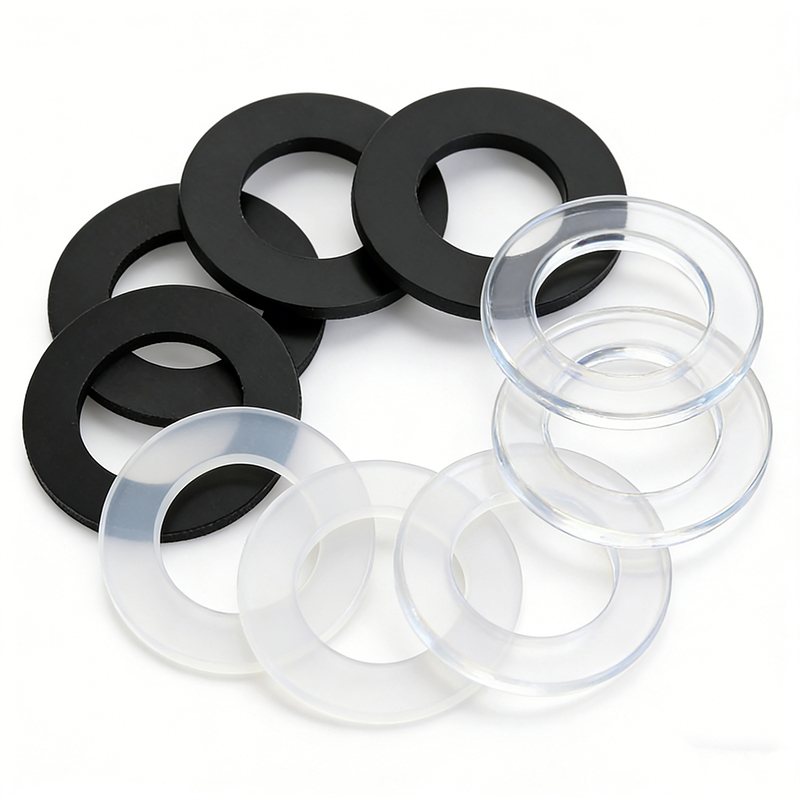
Quality consistency starts with our raw material verification. Every incoming batch gets tested for hardness, viscosity, and cure characteristics before production. We maintain approved supplier lists and conduct regular audits to prevent material variations.
Our compound formulation follows documented recipes with precise mixing procedures. Temperature, mixing time, and ingredient ratios are monitored and recorded for every batch. This eliminates the guesswork that causes property variations.
Tooling maintenance directly impacts part consistency. We inspect molds after every production run and maintain detailed maintenance records. Critical dimensions get verified with calibrated measuring equipment, and we replace worn tooling before it affects part quality.
A medical device manufacturer learned this lesson the hard way. Their previous supplier used worn tooling that gradually changed gasket dimensions. The parts still looked acceptable, but sealing performance degraded over time. Field failures started appearing after eight months.
When they switched to us, we discovered their gasket design was actually excellent—the manufacturing inconsistency was the problem. We rebuilt their tooling with tighter tolerances and implemented statistical process control monitoring.
| Quality Control Stage | Our Process | Consistency Impact |
|---|---|---|
| Incoming Materials | Chemical analysis, physical property verification | Eliminates raw material variations |
| Compound Preparation | Documented mixing procedures, batch tracking | Consistent material properties |
| Molding Process | Temperature monitoring, cycle time control | Repeatable part geometry |
| Final Inspection | 100% dimensional verification, property testing | Guaranteed specification compliance |
How Do We Support Your Long-Term Production Success?
Short-term supplier relationships create supply chain vulnerabilities. Reactive problem-solving leads to production disruptions and emergency costs.
Long-term production success requires proactive engineering support, continuous process improvement, and supply chain partnership that anticipates challenges and prevents problems before they impact your operations.


Our partnership approach focuses on understanding your business goals beyond just part specifications. We track your production volumes, seasonal patterns, and growth projections to ensure adequate capacity and inventory planning.
Continuous improvement is built into our process. We analyze production data to identify optimization opportunities and share recommendations for cost reduction or performance enhancement. This isn't just about selling more parts—it's about making your products more competitive.
One electronics manufacturer has worked with us for eight years across four product generations. We've helped them reduce assembly time by 30% through design improvements and material optimizations. Their procurement team tells me we're the only supplier they never worry about.
We maintain detailed documentation for every project including material certifications, dimensional reports, and process parameters. This ensures seamless production continuity even as your team members change or your requirements evolve.
Our global logistics capabilities support your expansion plans. Whether you need parts delivered to multiple facilities or require special packaging for automated assembly, we adapt our processes to support your operations.
| Partnership Element | Our Commitment | Your Advantage |
|---|---|---|
| Capacity Planning | Dedicated production allocation, inventory buffer | Guaranteed supply availability |
| Technical Evolution | Continuous improvement recommendations | Enhanced product competitiveness |
| Documentation | Complete traceability, regulatory compliance | Simplified audits and certifications |
| Global Support | Multi-location delivery, local technical support | Simplified supply chain management |
Conclusion
Choosing the right custom rubber manufacturer determines your production success. Focus on consistency, engineering capability, and long-term partnership rather than just price comparisons.