

You need rubber extrusion for your project. Most suppliers talk about profiles, tooling, or competitive pricing. But there's one critical factor that determines if your project succeeds or fails.
Dimensional stability is the single most important factor in rubber extrusion manufacturing. Without consistent tolerances and precise dimensions, even the best materials and designs will cause assembly problems, sealing failures, and increased production costs.


After 27 years in rubber manufacturing, I've seen projects fail because suppliers focused on everything except what matters most. Let me share what really makes the difference.
Why Does Dimensional Stability Matter More Than Everything Else?
Most clients think material quality or price determines success. They spend weeks comparing different rubber compounds or negotiating costs. But I've watched projects with premium materials fail completely.
Dimensional stability controls whether your rubber extrusion fits correctly, seals properly, and installs without problems. Even small deviations of 0.1mm can cause major assembly issues, sealing failures, and costly rework.


When dimensions vary across production runs, three major problems occur. First, poor fit during assembly creates gaps and misalignment. Your assembly team wastes time forcing parts together or rejecting components. Second, sealing failure happens when profiles don't maintain consistent cross-sections. Water, dust, or air leaks through gaps that shouldn't exist. Third, installation time and costs increase dramatically. Workers need more time to adjust, modify, or replace inconsistent parts.
I remember working with an automotive supplier who learned this lesson the hard way. They chose a low-cost extrusion supplier for door seals. The material was excellent EPDM rubber with proper durometer ratings. But dimensional variations of just 0.15mm caused installation problems on the assembly line. Workers spent extra minutes per vehicle adjusting seals. The "cost savings" disappeared within the first production week.
Consistency in shape and tolerance keeps production running smoothly. When every meter of extruded profile matches specifications exactly, assembly becomes predictable. Installation time stays consistent. Quality control becomes routine instead of crisis management.
How Do We Control Precision Throughout the Entire Process?
We don't just push rubber through a die and hope for the best. Precision starts with engineering analysis before extrusion begins. Our team evaluates every aspect that affects dimensional stability.
Our engineering process controls dimensional stability through systematic evaluation of profile design, material flow characteristics, and shrinkage requirements. We then optimize tooling design, extrusion parameters, and post-curing processes to maintain tight tolerances.
Profile design and complexity analysis comes first. Complex shapes with thin walls or sharp corners behave differently during extrusion. We use CAD modeling to predict stress points and potential dimensional variations. Simple profiles might maintain ±0.05mm tolerances easily. Complex geometries require special attention to wall thickness ratios and corner radii.
Material flow characteristics vary significantly between silicone, EPDM, NBR, and other compounds. Silicone flows smoothly but can be difficult to control precisely. EPDM provides excellent stability but requires specific temperature control. NBR offers good dimensional stability but needs careful vulcanization timing. We match extrusion parameters to each material's unique behavior.
Shrinkage and tolerance requirements determine our entire approach. Different rubber compounds shrink at different rates during curing. We calculate expected shrinkage for each material and adjust die dimensions accordingly. For critical applications, we create test samples to verify actual shrinkage rates before full production.
Then we optimize three key areas. Tooling design receives special attention because die geometry directly affects dimensional stability. We design dies with proper land lengths, draft angles, and flow distribution. Our in-house mold room allows rapid adjustments when needed. Extrusion parameters include temperature zones, line speed, and pressure settings. We establish standard operating procedures for each material and profile combination. Post-curing and dimensional control ensure final products meet specifications. We use controlled cooling and precise curing cycles to minimize dimensional variations.
What Does Real-World Success Look Like?
Theory matters less than results. Let me share a specific example that shows how dimensional control transforms projects. This case demonstrates exactly what happens when precision becomes the priority.
A client producing LED lighting housings experienced assembly problems due to inconsistent extrusion profiles. We redesigned their tooling and optimized material formulation, resulting in precise fit, improved sealing, and faster assembly times.
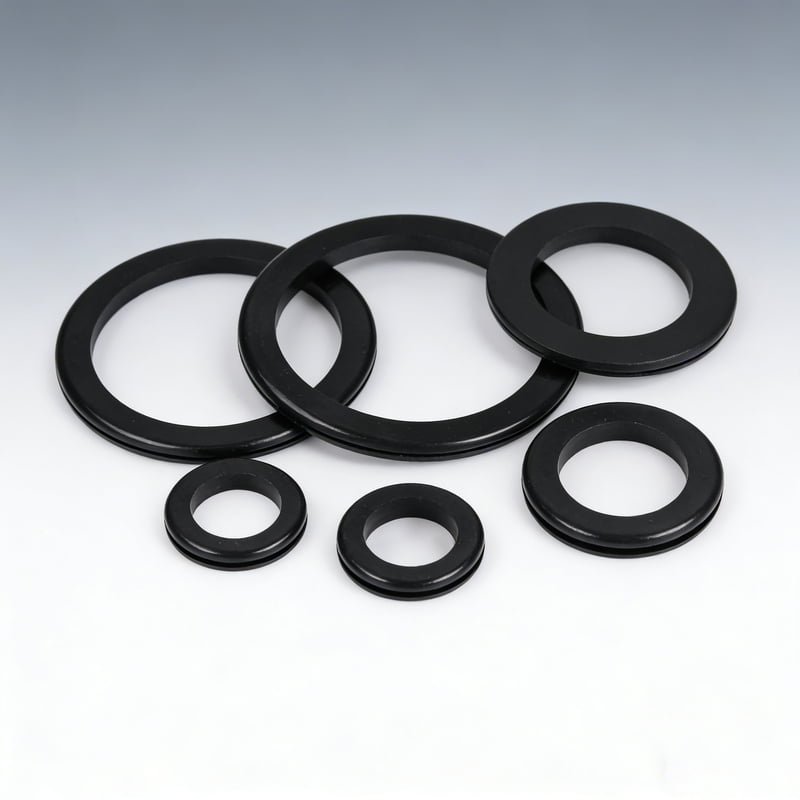
The client contacted us after months of frustration with their existing supplier. Their LED lighting housings required silicone gaskets that sealed against aluminum channels. The original extrusions varied in cross-section dimensions. Some gaskets were too loose and leaked. Others were too tight and damaged during installation. Assembly workers complained about inconsistent installation force requirements.
We analyzed their application requirements and identified three critical issues. The original die design created uneven material flow that caused thickness variations. The silicone compound wasn't optimized for their specific extrusion speed and temperature requirements. Post-extrusion handling allowed dimensional changes before the material fully cured.
Our solution involved complete process redesign. We created new extrusion dies with improved flow distribution and proper land lengths. The material formulation was adjusted for better flow characteristics and dimensional stability. We implemented controlled cooling and handling procedures to maintain dimensions during curing.
The results exceeded expectations. Precise fit with aluminum channels eliminated assembly problems. Every gasket installed with consistent force requirements. Improved sealing performance prevented all water and dust infiltration issues. Faster, more efficient assembly reduced installation time by 30%. Their production manager told me, "Now every meter fits exactly as expected. We haven't had a single assembly issue since switching to your extrusions."
This project taught me that clients don't just buy rubber profiles. They buy predictable assembly processes and reliable performance. When dimensional stability is guaranteed, everything else becomes easier.
How Do We Guarantee Consistent Quality Across Every Production Run?
Quality control isn't something we add at the end. It's built into every step of our extrusion process. Consistent results require systematic monitoring and verification at multiple checkpoints.
We guarantee dimensional stability through comprehensive quality control including raw material verification, continuous dimensional monitoring during extrusion, and final inspection for tolerance and surface quality compliance.


Raw material verification ensures consistency starts with incoming materials. Every batch of rubber compound is tested for viscosity, cure characteristics, and dimensional stability. We maintain detailed records of material lot numbers and performance data. This traceability allows us to identify and correct any variations before they affect production.
Continuous dimensional monitoring happens throughout the extrusion process. Our operators check critical dimensions every 30 minutes using calibrated measuring tools. Any deviation from specifications triggers immediate adjustment of extrusion parameters. We maintain statistical process control charts to identify trends before they become problems.
Final inspection covers tolerance compliance and surface quality. Every production run undergoes comprehensive dimensional verification using precision measuring equipment. We check cross-sectional dimensions, length accuracy, and surface finish quality. Complete documentation packages include dimensional reports, material certifications, and traceability records.
| Quality Control Stage | Frequency | Measurements | Action Threshold |
|---|---|---|---|
| Raw Material Testing | Every Batch | Viscosity, Cure Rate | ±2% from Standard |
| In-Process Monitoring | Every 30 Minutes | Critical Dimensions | ±0.02mm from Target |
| Final Inspection | Every Production Run | Full Dimensional Check | ±0.05mm Tolerance |
| Documentation | Every Shipment | Complete Test Reports | 100% Compliance Required |
This systematic approach ensures every batch delivers the same reliable performance. Our clients receive consistent products whether they order 100 meters or 10,000 meters. Quality becomes predictable instead of variable.
Statistical data from our quality system shows impressive consistency. Over the past year, 99.7% of our extrusions met dimensional specifications on first inspection. Customer complaints related to dimensional issues dropped to less than 0.1% of shipments. These numbers reflect our commitment to precision manufacturing.
Conclusion
Dimensional stability determines the success of every rubber extrusion project, making precision manufacturing the foundation of reliable supply partnerships.