

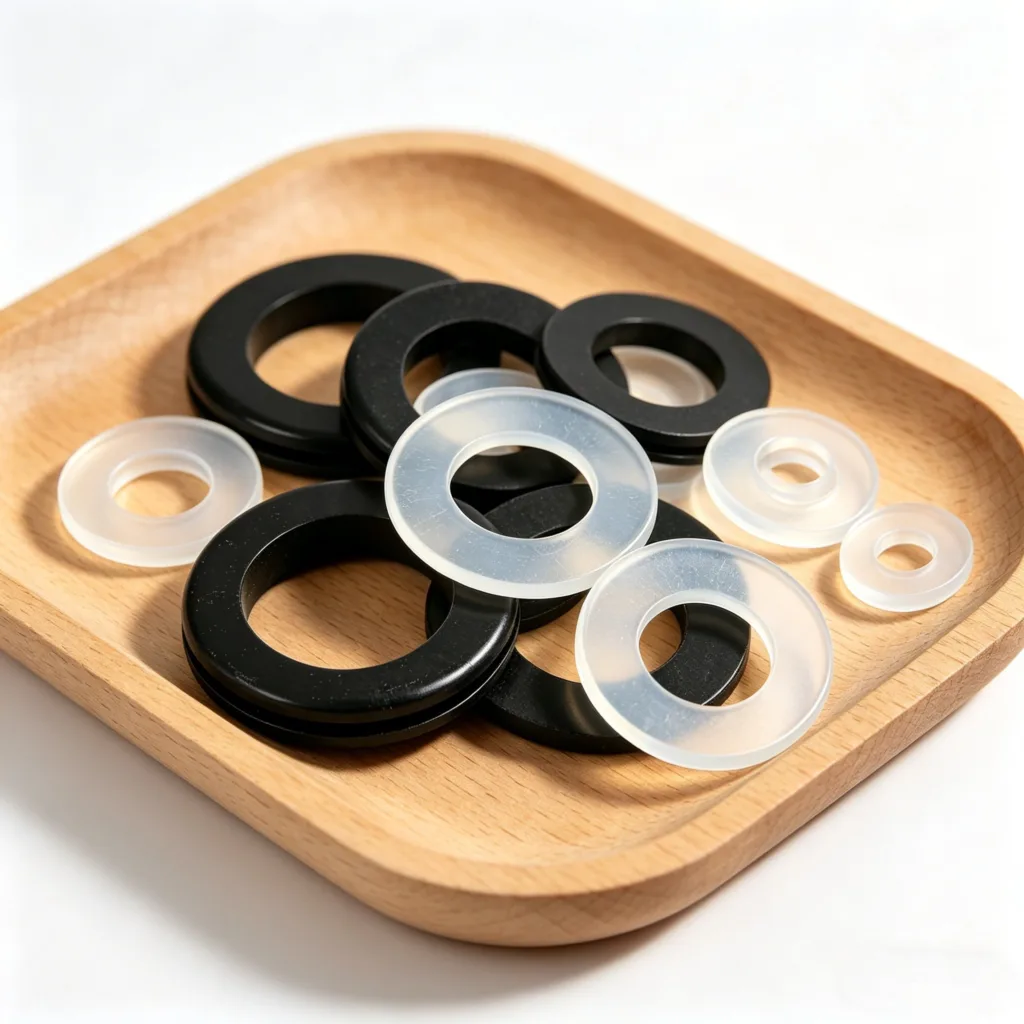
When clients approach us for custom natural rubber parts, they usually focus on price or lead time. But I've learned something different after years in this industry.
The real deciding factor isn't cost or speed—it's performance stability in real use. Custom natural rubber parts must be properly engineered for your specific application, or you'll face premature wear, deformation, and inconsistent performance that costs far more than the initial savings.
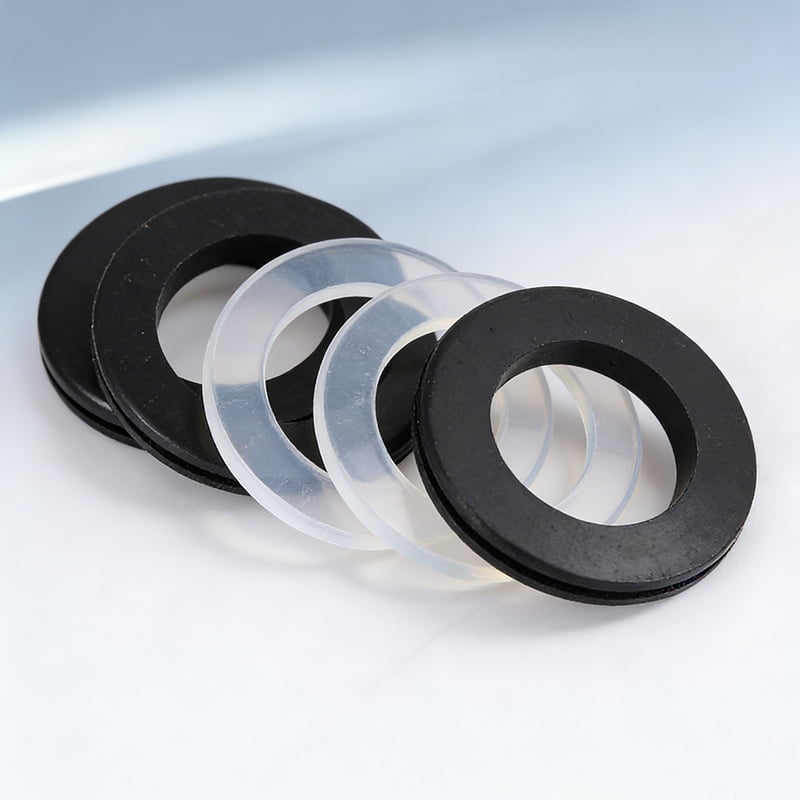
Let me share what I've discovered about making natural rubber parts that actually work in the real world. This isn't just about molding rubber—it's about engineering solutions that perform reliably over time.
Why Does Material Selection Matter More Than You Think?
Most people assume all natural rubber is the same. That's the first mistake I see clients make.
Natural rubber offers excellent elasticity and resilience, but only when the material formulation matches your specific application requirements. Wrong material choices lead to premature failure, increased maintenance costs, and production delays.
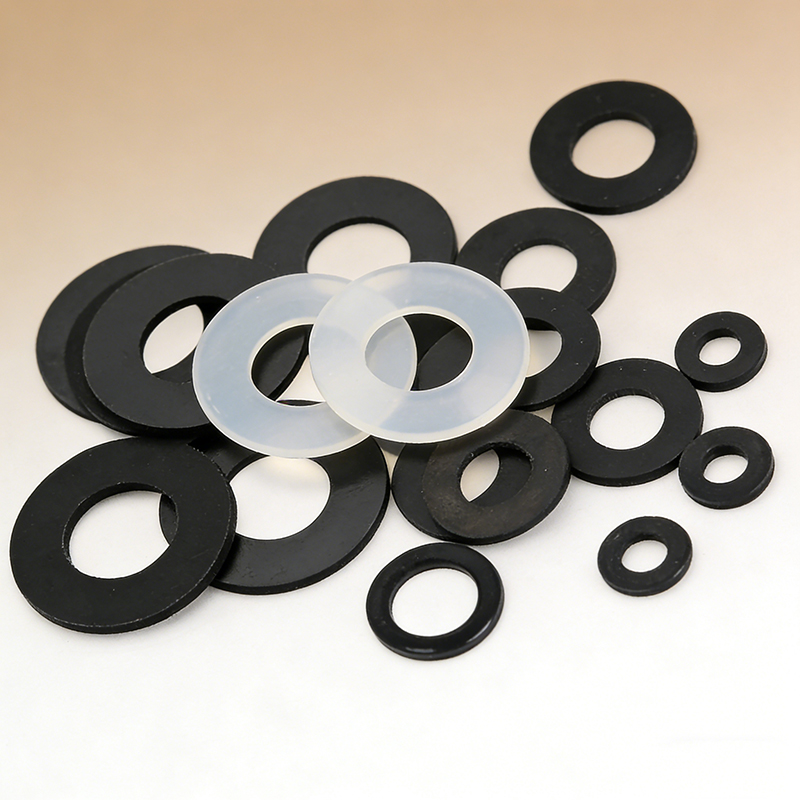
I remember working with a client who needed anti-vibration components for industrial equipment. Their previous supplier used standard natural rubber parts that lost elasticity within months. The problem wasn't the rubber quality—it was the wrong material selection for their specific load and environmental conditions.
We analyzed their actual operating conditions: temperature fluctuations, dynamic loading, and exposure to oils. Then we customized the rubber formulation specifically for these factors. The difference was remarkable—improved vibration absorption, longer service life, and reduced maintenance frequency.
Here's what we evaluate for every custom project:
| Factor | Impact on Performance | Our Solution |
|---|---|---|
| Load conditions | Determines compression set resistance | Custom hardness optimization |
| Temperature range | Affects material stability | Specialized compound selection |
| Environmental exposure | Influences aging characteristics | Protective additives integration |
| Fatigue requirements | Controls service life | Reinforcement design |
The key insight is this: natural rubber's inherent properties are just the starting point. Real performance comes from matching the material formulation to your specific operating environment.
How Do We Engineer Parts for Real Working Conditions?
Engineering custom natural rubber parts isn't about following standard specifications. It's about understanding how your parts will actually be used.
We design parts based on real-world performance requirements, not just dimensional specifications. This means evaluating load patterns, environmental stresses, and expected service life to optimize material properties and part geometry.


Our technical team starts every project with these questions: What forces will this part experience? What environmental conditions will it face? How long does it need to perform reliably?
I've seen too many projects fail because suppliers focused only on making parts that fit, not parts that perform. A gasket might seal perfectly when new, but if it hardens or cracks after six months, it's not a solution—it's a problem waiting to happen.
Our engineering process includes several critical steps. First, we analyze your operating conditions in detail. This includes static and dynamic loads, temperature cycling, chemical exposure, and UV radiation if applicable. Second, we select the optimal rubber compound. Natural rubber can be formulated with different additives to enhance specific properties like ozone resistance, heat aging, or oil resistance.
Third, we optimize the part geometry. Wall thickness, corner radii, and surface textures all affect performance. A part that's too thin might not provide adequate sealing force. Too thick, and it might not compress properly or could buckle under load.
Finally, we validate our design through testing. We don't just check dimensions—we test functional performance under simulated operating conditions. This catches potential issues before they become expensive field failures.
What Quality Control Really Means in Custom Manufacturing?
Quality control for custom natural rubber parts goes far beyond basic dimensional checks. Real quality means consistent performance across every batch.
Effective quality control for custom rubber parts requires testing both material properties and functional performance. This ensures every part meets not just dimensional specifications, but actual performance requirements in your application.


I learned this lesson early in my career when a client received parts that met all dimensional specifications but failed in their application. The Shore A hardness varied slightly between batches—just enough to affect sealing performance. Since then, we've implemented comprehensive testing protocols.
Our quality control process starts with incoming raw materials. We test every batch of rubber compound for consistency in hardness, tensile strength, and elongation properties. Small variations in base materials can lead to significant performance differences in the final parts.
During production, we monitor key process parameters. Cure time, temperature, and pressure all affect final part properties. We maintain detailed records of these parameters for every batch, which allows us to trace any performance issues back to specific production conditions.
Post-production testing includes both dimensional verification and functional testing. We test hardness at multiple points on each part, check for surface defects, and verify compression set resistance. For critical applications, we also perform accelerated aging tests to predict long-term performance.
The documentation package we provide includes material certificates, dimensional reports, and test data. This gives you complete traceability and confidence in part performance. More importantly, it provides baseline data for future orders to ensure consistent quality over time.
How Do We Handle Complex Custom Requirements?
Complex custom requirements are where our experience really makes a difference. Standard approaches don't work when you need unique solutions.
Complex custom rubber parts require integrated design thinking that considers material properties, manufacturing constraints, and performance requirements simultaneously. Success depends on finding the optimal balance between these often competing factors.
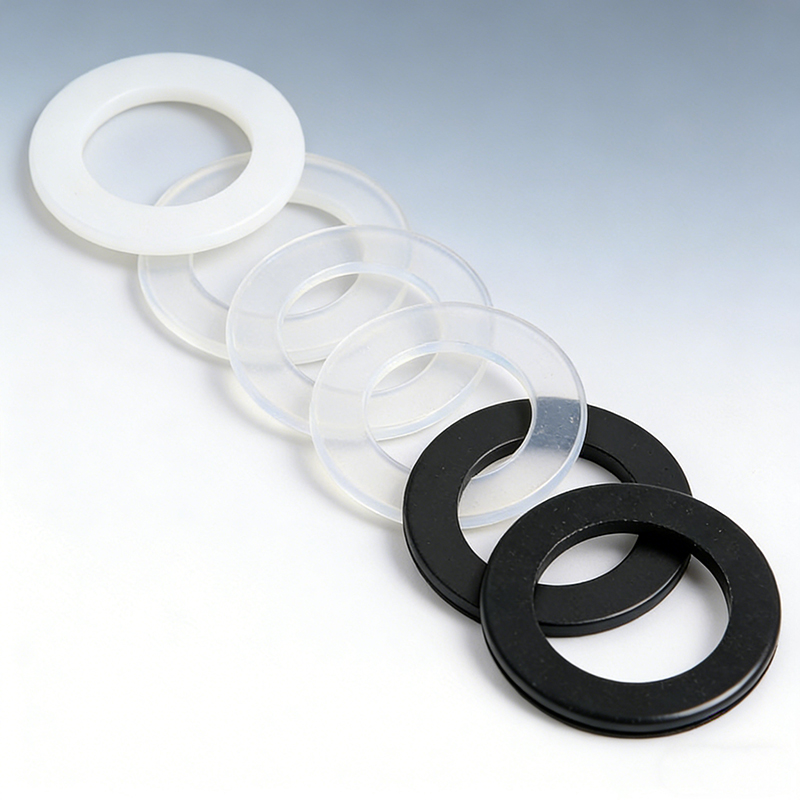
I recently worked on a project requiring rubber components with very specific compression characteristics. The client needed parts that would compress easily under low loads but resist further compression under high loads. This required a unique internal structure design combined with specialized material formulation.
We started by modeling the stress distribution using finite element analysis. This showed us exactly how forces would be distributed through the part under different loading conditions. Based on this analysis, we designed internal cavities and reinforcement ribs that provided the required compression characteristics.
The material selection was equally critical. We needed a compound with specific stress-strain properties that would work with our geometric design. This required custom mixing ratios and specialized additives that aren't available in standard rubber grades.
Manufacturing these parts required custom tooling designed specifically for the complex geometry. Our in-house tool room allowed us to iterate quickly on the mold design and make adjustments based on initial prototypes.
Testing and validation took several iterations to optimize both the design and manufacturing process. But the final result exceeded the client's performance requirements while maintaining manufacturing consistency.
This project reinforced an important principle: complex requirements need integrated solutions. You can't solve performance challenges by focusing on just material selection or just part design. Success requires optimizing the entire system.
Conclusion
Custom natural rubber parts succeed when engineering focuses on real-world performance, not just specifications. Proper material selection, application-specific design, and rigorous quality control ensure reliable, long-term performance in your applications.