

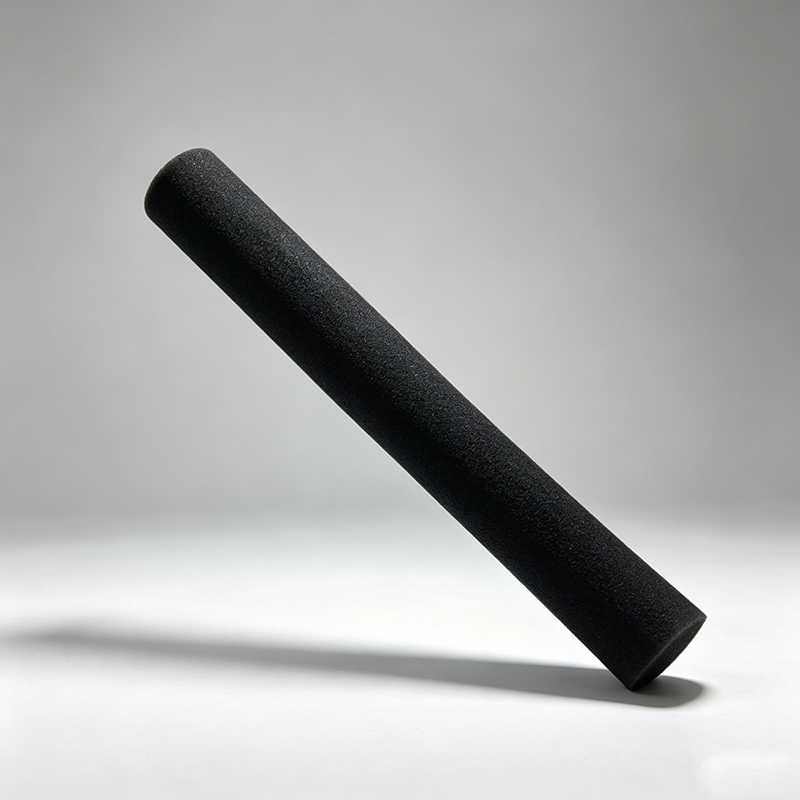
Shock absorption fails when we only think "softer is better." The truth is more complex and dangerous for OEM projects.
Rubber works as a shock absorber not because it's soft, but because it combines elastic deformation with energy dissipation through hysteresis. This creates both spring-like support and controlled damping within specific operating windows.
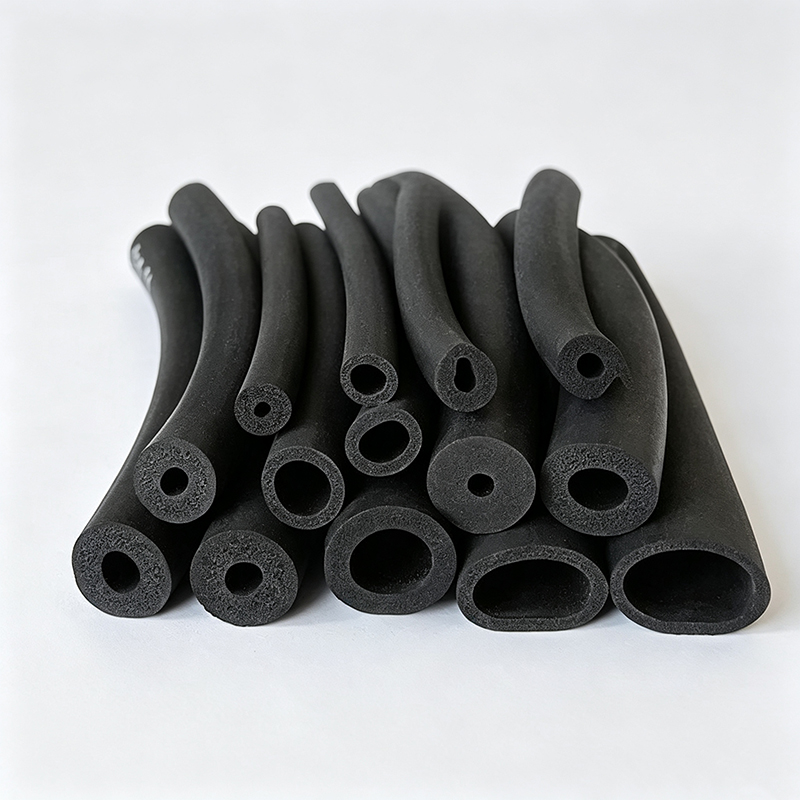
I've seen too many projects fail because teams chose rubber shock absorbers based on hardness alone. The softer material seemed logical for better vibration control. But when the equipment started running, vibrations actually increased. Some frequencies became worse than before. The rubber mounts developed permanent deformation and cracks. What went wrong?
What Makes Rubber Different from Other Shock Absorbing Materials?
Most engineers assume rubber absorbs shocks simply because it compresses easily. This overlooks the real engineering principles.
Rubber functions as a shock absorber through two key mechanisms: elastic energy storage during deformation and internal energy dissipation through molecular friction during loading cycles.


The first mechanism is elastic deformation. When rubber receives an impact, it deforms to store mechanical energy temporarily. This spreads the peak load over time instead of transmitting it directly to rigid structures. Think of it as a mechanical buffer that converts sudden forces into manageable, distributed loads.
The second mechanism is energy dissipation through hysteresis. Rubber isn't a perfect spring. During loading and unloading cycles, some mechanical energy converts to heat through internal molecular friction. This means the energy going in doesn't completely return as mechanical energy. This loss creates the damping effect that reduces vibration transmission.
But here's where projects go wrong. These mechanisms only work within specific design windows. The rubber must have the right stiffness for the system's natural frequency. It needs proper pre-compression to stay in the elastic working range. The geometry must handle the expected loads and displacements. Temperature affects both stiffness and damping properties.
| Property | Effect on Performance | Design Consideration |
|---|---|---|
| Shore A Hardness | Base material stiffness | Must match system requirements |
| Dynamic Stiffness | Actual working stiffness | Frequency and temperature dependent |
| Hysteresis | Energy dissipation rate | Affects damping characteristics |
| Geometry | Load distribution | Controls stress concentration |
| Pre-compression | Working position | Affects dynamic range |
I learned this the hard way on an industrial equipment project. We had 60 Shore A rubber mounts that weren't reducing vibration enough. The logical solution seemed to be switching to 45 Shore A material. Softer should mean better shock absorption, right? Wrong. The softer mounts changed the system's natural frequency. At certain operating speeds, vibrations actually amplified. We ended up in a resonance zone that made things worse than the original design.
How Does Rubber Compare to Metal Springs in Shock Absorption?
Metal springs store and release energy efficiently but provide no damping. Rubber combines both functions in one component.
Metal springs have linear stiffness and near-zero energy loss, while rubber provides variable stiffness with built-in damping through viscoelastic properties.


Metal springs follow Hooke's Law with linear load-deflection relationships. They store mechanical energy during compression and release it completely during extension. This makes them excellent for energy storage but poor for vibration control. Without separate dampers, metal spring systems can oscillate indefinitely.
Rubber behaves differently. Its load-deflection curve shows hysteresis loops. Loading and unloading follow different paths. The area inside the loop represents energy converted to heat instead of returned as mechanical energy. This built-in damping naturally reduces oscillations without additional components.
The stiffness isn't constant either. Rubber stiffness changes with compression amount, loading rate, temperature, and frequency. This variable stiffness can be beneficial or problematic depending on the application. For shock absorption, it allows the material to automatically adjust its response to different loading conditions.
But this complexity creates design challenges. With metal springs, you calculate required spring rate and select accordingly. With rubber, you must consider dynamic stiffness across the operating frequency range, temperature effects on properties, pre-compression effects on working stiffness, and long-term property changes from aging and fatigue.
| Characteristic | Metal Spring | Rubber Mount |
|---|---|---|
| Stiffness | Linear, constant | Non-linear, variable |
| Energy Loss | Near zero | Significant hysteresis |
| Temperature Effect | Minimal | Major impact |
| Frequency Response | Constant | Frequency dependent |
| Damping | Requires separate damper | Built-in damping |
| Design Complexity | Simple calculation | Multi-variable analysis |
I've worked with both materials extensively. Metal springs are predictable but require separate damping. Rubber mounts combine functions but need more careful analysis. The choice depends on space constraints, performance requirements, and design complexity tolerance. For most OEM applications requiring both support and vibration control, properly designed rubber mounts offer better overall solutions.
Why Do Softer Rubbers Sometimes Perform Worse in Shock Absorption?
Lower hardness reduces stiffness, which can shift system natural frequency into problematic ranges where vibration amplifies instead of dampens.
Softer rubber isn't automatically better because shock absorption depends on matching system stiffness to operating frequency, not just maximizing material compliance.
The fundamental mistake is treating rubber hardness as the primary design parameter. Shore A hardness indicates material resistance to indentation under static conditions. But shock absorption performance depends on dynamic system behavior across frequency ranges. These are completely different engineering problems.
When you reduce rubber hardness, you reduce system stiffness. Lower stiffness shifts the natural frequency downward. If this brings the natural frequency closer to operating frequencies, you get resonance amplification instead of isolation. The "softer for better damping" logic backfires spectacularly.
I saw this on a rotating equipment project. The original 60 Shore A mounts allowed noticeable vibration at certain speeds. Engineering decided to try 45 Shore A material for better isolation. Initial static tests looked promising - more compression, seemingly better shock absorption. But during operation, vibrations increased at critical operating speeds. The softer mounts created resonance conditions that amplified rather than reduced transmission.
The physics is straightforward. Vibration isolation requires the disturbing frequency to be well above the system natural frequency. The transmission ratio decreases as the frequency ratio increases. But if reducing rubber hardness brings the natural frequency too close to operating frequencies, you move from the isolation region into the amplification region.
| Parameter | Effect of Softer Rubber | Potential Consequence |
|---|---|---|
| System Stiffness | Decreases | Natural frequency drops |
| Natural Frequency | Moves lower | May approach operating frequency |
| Static Deflection | Increases | Larger initial compression |
| Dynamic Range | Changes | May exceed linear region |
| Pre-load Effect | Amplified | Installation becomes critical |
| Temperature Sensitivity | Increased | Performance varies more with heat |
There's also the compression ratio problem. Softer materials compress more under the same load. If the static compression becomes too large, the rubber operates outside its optimal dynamic range. Large static deflections can cause the material to work in non-linear regions where stiffness changes dramatically with small load variations.
The solution isn't avoiding soft rubbers entirely. It's understanding that hardness must be selected based on system requirements, not isolation assumptions. Sometimes you need higher stiffness to avoid resonance. Sometimes you need specific damping characteristics that don't correlate directly with hardness. The key is matching rubber properties to system dynamics, not choosing based on intuitive softness preferences.
What Are the Critical Design Parameters Beyond Rubber Hardness?
Successful shock absorber design requires controlling geometry, pre-compression, load distribution, and dynamic operating windows in addition to material properties.
Beyond Shore A hardness, critical parameters include dynamic stiffness, compression ratio, contact area, mounting configuration, and temperature stability across the operating envelope.


Geometry controls how loads distribute through the rubber and affects the effective stiffness. A tall, narrow mount has different stiffness characteristics than a short, wide mount made from identical material. The shape factor - ratio of loaded area to free bulging area - significantly influences compression and shear stiffness. Higher shape factors increase compression stiffness but may create stress concentrations.
Pre-compression determines the working position on the load-deflection curve. Proper pre-compression keeps the rubber in its linear operating range during dynamic loading. Too little pre-compression allows the mount to separate under dynamic loads. Too much pre-compression pushes the material into non-linear regions where stiffness changes unpredictably.
Load distribution affects stress patterns and fatigue life. Point loads create stress concentrations that can initiate cracks. Distributed loads allow the full rubber volume to contribute to shock absorption. The mounting hardware design directly impacts how loads enter and exit the rubber element.
Dynamic operating windows define the frequency, amplitude, and temperature ranges where the rubber maintains stable properties. Outside these windows, performance can change dramatically. Temperature affects both stiffness and damping. Frequency affects dynamic stiffness through viscoelastic behavior. Amplitude affects whether the rubber stays in linear response regions.
| Design Parameter | Impact on Performance | Typical Range |
|---|---|---|
| Shape Factor | Compression/shear stiffness ratio | 0.5 to 4.0 |
| Pre-compression | Working position | 10-25% of total travel |
| Aspect Ratio | Load distribution | 0.3 to 2.0 height/diameter |
| Contact Area | Stress levels | Match load requirements |
| Working Temperature | Property stability | Material dependent |
| Dynamic Amplitude | Linearity maintenance | <50% of static deflection |
Installation details matter enormously. Mounting surface flatness affects load distribution. Bolt torque affects pre-compression. Alignment affects whether loads stay axial or introduce unwanted bending moments. These aren't just assembly concerns - they directly impact shock absorption performance.
I've seen projects where identical rubber compounds performed completely differently due to installation variations. One assembly had proper surface preparation and controlled pre-compression. Another had uneven surfaces and inconsistent bolt torques. The performance difference was dramatic, even though the rubber material was identical.
Environmental factors create additional complexity. Ozone exposure can cause surface cracking. UV exposure degrades some rubber compounds. Chemical exposure can cause swelling or hardening. Oil contact can soften certain materials. These factors change both mechanical properties and geometry over time.
The integration challenge is managing all these parameters simultaneously. You can't optimize them independently because they interact. Geometry affects stress distribution, which affects fatigue life, which affects long-term stiffness stability. Pre-compression affects dynamic range, which affects frequency response, which affects isolation performance. Successful designs require system-level optimization rather than component-level parameter selection.
Conclusion
Rubber works as a shock absorber through controlled elastic deformation and energy dissipation, not simple softness. Success requires matching system dynamics to rubber properties across all operating conditions.