

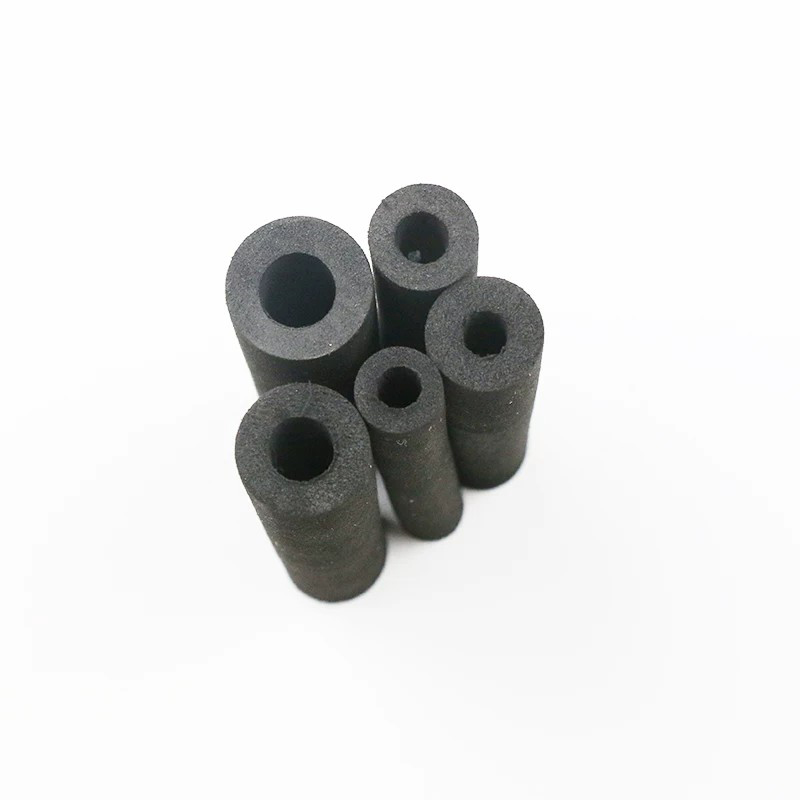
When your OEM project needs vibration isolation or shock absorption, selecting the wrong material can lead to production failures and costly redesigns. Many engineers make the same mistake: assuming softer materials always provide better cushioning.
The key to successful cushioning material selection lies not in choosing the softest option, but in matching material properties to specific load conditions, impact energy, and dynamic requirements. Materials like EPDM, silicone, polyurethane, and various foams each excel in different applications when properly engineered.
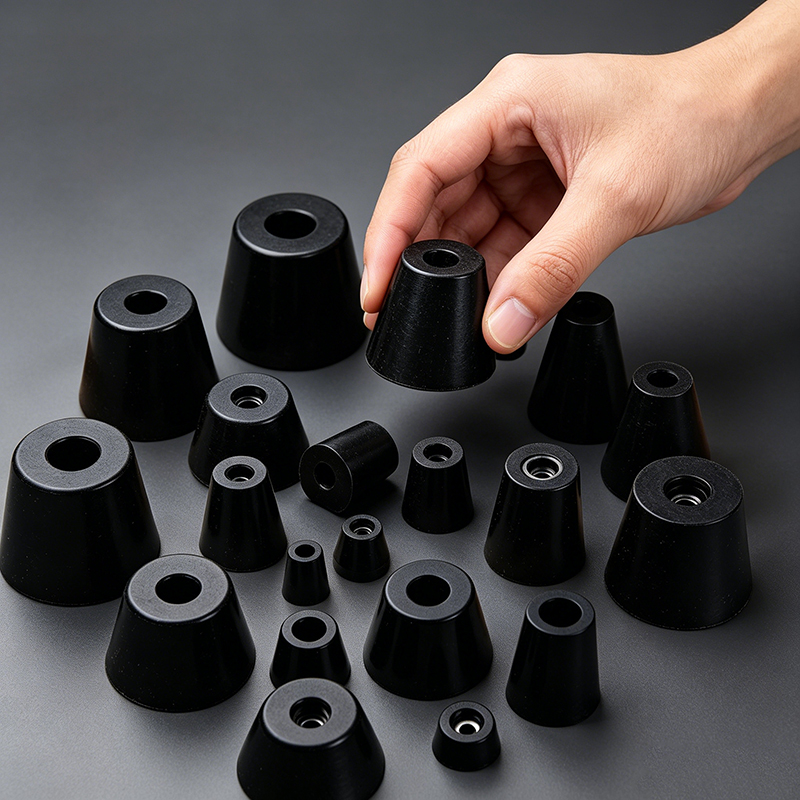
Over my 27 years in rubber manufacturing, I have seen countless projects fail because teams focused on material hardness instead of actual performance requirements. Let me share what really matters when selecting cushioning materials for your next project.
Why do "softer materials" often fail in cushioning applications?
Many project teams start with a dangerous assumption. They believe softer materials automatically provide better shock absorption and vibration isolation. This leads to expensive mistakes.
The biggest misconception is that material softness equals cushioning performance. In reality, effective cushioning depends on material stiffness, damping characteristics, compression recovery, dynamic stiffness, and how these properties interact with your specific load conditions and operating environment.
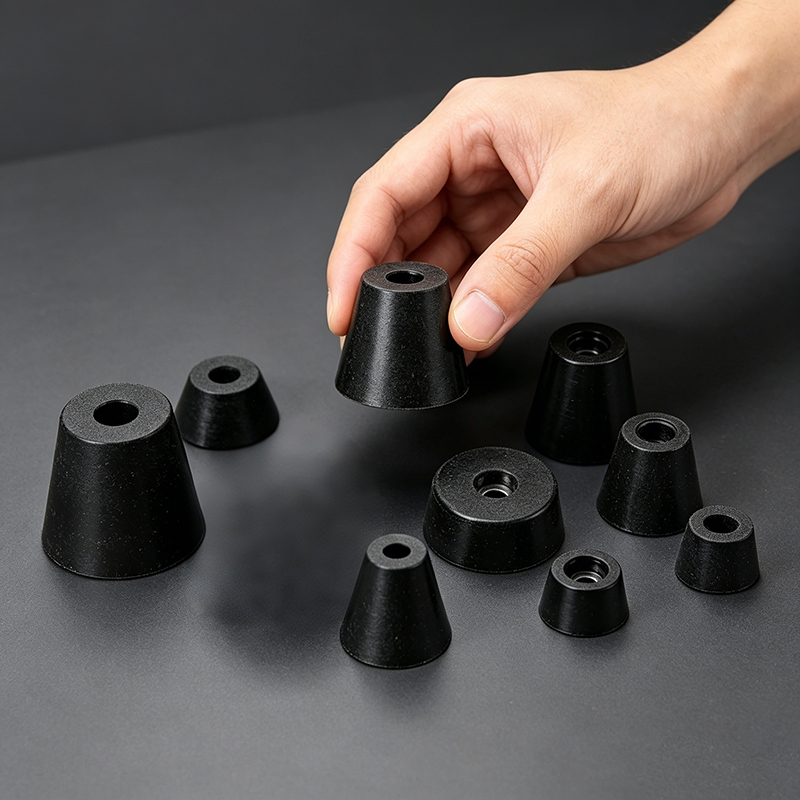
I recently worked with a client who replaced their 60 Shore A rubber mounts with 40 Shore A material, expecting better vibration control. Instead, they experienced increased permanent deformation, changed installation heights, and worse vibration transmission. The problem was not the material quality, but the fundamental misunderstanding of how cushioning actually works.
Impact absorption and vibration isolation are completely different challenges. Impact cushioning deals with short-duration, high-energy inputs like drops, collisions, or mechanical stops. The goal is reducing peak impact forces while consuming energy within limited deformation space. Vibration isolation handles continuous or periodic excitation from motors, pumps, or equipment operation. Here, the focus is preventing energy transfer from the source to protected structures.
A material that excels at absorbing sudden impacts may perform poorly for high-frequency vibration isolation. The reverse is also true. This is why you cannot simply choose materials based on hardness alone. You need to understand your specific application requirements first.
Which material families actually provide effective cushioning?
Different material families offer distinct advantages for cushioning applications. Understanding their characteristics helps you make better selection decisions.
Rubber materials like EPDM, NBR, silicone, and natural rubber each provide specific benefits. EPDM excels in outdoor and water environments, NBR handles oil exposure, silicone works across extreme temperatures, while polyurethane offers superior load-bearing capacity for high-stress applications.


Natural rubber (NR) provides excellent elasticity and dynamic performance, making it ideal for vibration isolation and periodic shock absorption. However, environmental resistance requires careful verification. EPDM offers outstanding weather resistance, ozone resistance, and water compatibility, perfect for outdoor equipment and automotive applications. But do not assume EPDM works with all chemical media.
NBR delivers superior oil resistance for machinery and equipment operating in petroleum environments. Temperature and environmental limits still need verification. Chloroprene rubber (CR) provides balanced general-purpose performance for industrial cushioning, but specific media compatibility requires testing.
Silicone rubber handles extreme temperature ranges and maintains flexibility across wide operating windows. This makes it valuable for electronic equipment and specialized temperature applications. However, silicone's softness does not automatically mean superior dynamic shock absorption compared to other materials.
Polyurethane (PU) and thermoplastic polyurethane (TPU) offer high load-bearing capacity, wear resistance, and energy absorption. These materials excel under high loads, frequent impacts, and demanding mechanical conditions. The main consideration is verifying dynamic fatigue and temperature effects, not just initial softness.
Foam materials including EVA foam, PU foam, EPDM foam, and silicone foam provide large compressible space per unit weight. They work well for packaging cushioning, impact protection, and lightweight structures. The critical risk is compression set - the inability to fully recover original thickness after long-term compression. Foam cushioning projects cannot rely solely on initial compression feel.
How do you avoid the most common specification mistakes?
Material specifications often contain dangerous gaps that lead to project failures. Avoiding these specification traps prevents costly redesigns and production delays.
Effective cushioning specifications must define impact energy, load conditions, compression ratios, temperature ranges, and cycle requirements. Simply specifying "rubber" or "40 Shore A" provides insufficient engineering guidance and almost guarantees material selection problems.
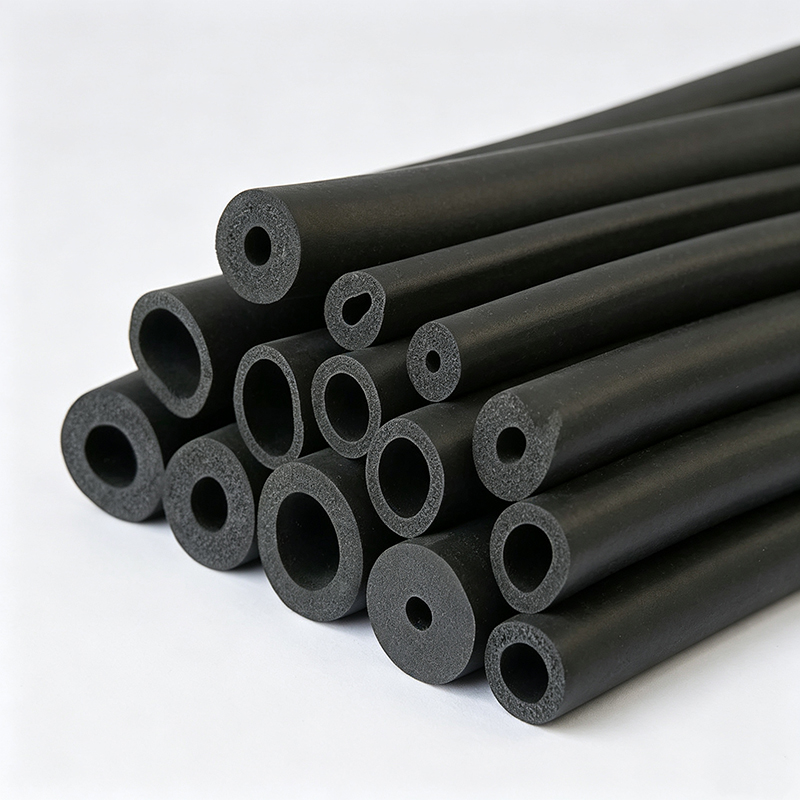
The most dangerous specification approach is writing "Material: Rubber" without defining polymer type, grade, hardness, mechanical properties, dynamic characteristics, temperature range, or environmental conditions. This gives suppliers no meaningful engineering guidance.
Hardness specifications like "40 Shore A" cannot tell suppliers how much energy the product must absorb or guarantee consistent dynamic performance. For critical projects, hardness should serve as a control parameter, not the primary functional requirement.
Dimensional tolerances directly affect actual compression ratios. If your design specifies 20mm height but actual products measure 19.2-20.8mm, installation compression ratios vary significantly. This changes stiffness, load distribution, stroke, contact pressure, and cushioning capability.
You must distinguish between static compression (laboratory measurement), pre-compression (installation loading), dynamic compression (operating conditions), and maximum compression (failure limits). If specifications only state "Compression 30%," suppliers and customers likely interpret different parameters.
Working environment definition cannot be overlooked. Temperature, humidity, oil exposure, water contact, chemical media, UV radiation, dust, impact frequency, and vibration frequency all affect material performance. Room temperature properties do not equal actual operating environment performance.
Test conditions require complete definition beyond "Shock Test: Pass." You need mass, impact velocity, energy levels, stroke limits, temperature conditions, cycle count, installation conditions, and acceptance criteria. Cushioning materials that pass the first impact may fail after one million cycles, so dynamic fatigue testing becomes essential.
For automotive, medical, food, electronic, or outdoor applications, material certifications must be defined during RFQ stages. Discovering regulatory requirements after production starts forces complete project revalidation.
What does successful cushioning material selection look like in practice?
Real project experience shows how proper material selection prevents common failures. Let me share a case where we avoided the "softer is better" trap.
A recent industrial automation project required shock absorption for high-speed mechanical stops. Instead of simply choosing the softest available material, we evaluated impact energy, compression space, load cycles, and temperature conditions to select optimal material properties and geometry.
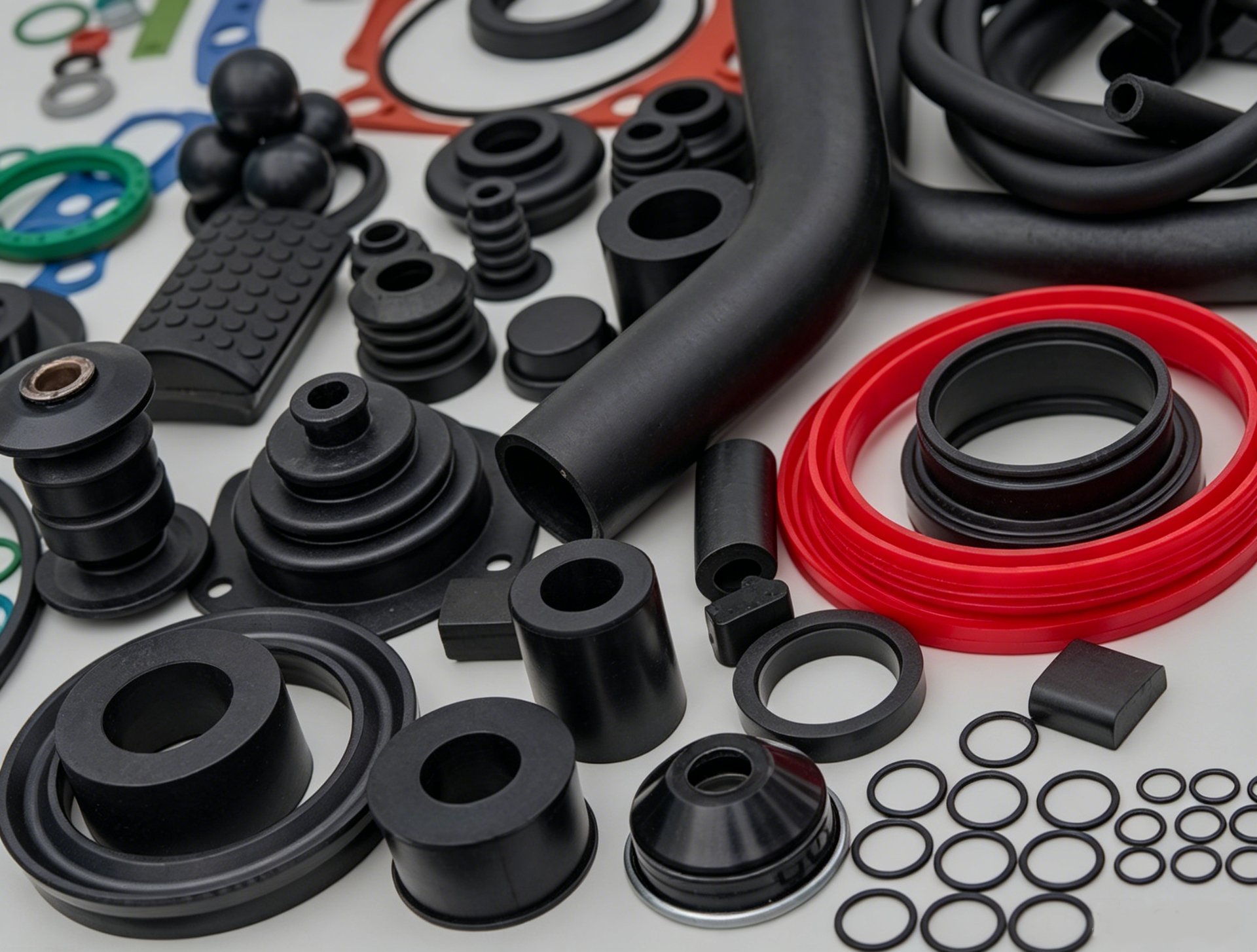
The client initially wanted to reduce mechanical impact noise and vibration while maintaining installation dimensions and preventing permanent deformation. However, their RFQ did not specify impact energy, impact velocity, maximum loads, dynamic displacement, cycle count, operating temperature, allowable permanent deformation, or target peak impact forces.
The original design used 60 Shore A EPDM rubber. When test personnel reported excessive impact noise, purchasing suggested changing to 40 Shore A material, reasoning that softer material should absorb more impact energy. This seemed logical but ignored the fundamental engineering requirements.
Instead of automatically switching to softer material, we established three material options: EPDM 40A, EPDM 50A, and PU 80A. Each underwent static compression, dynamic compression, impact testing, cycle testing, compression set evaluation, and temperature verification.
Testing revealed that 40A EPDM provided softer initial compression but showed significant permanent deformation after extended cycling. The 50A EPDM offered better overall performance balance. The PU option demonstrated superior load-bearing and high-frequency impact resistance under heavy loads, though it required environmental compatibility verification.
The final solution was not the "softest" material, but the material system providing stable performance across impact energy, working loads, cycle count, environmental conditions, and allowable deformation parameters. We also adjusted the structure to increase effective cushioning stroke and redefined maximum working compression ratios.
This approach delivered reduced peak impact forces, stable height after long-term compression, successful cycle testing, temperature compliance, and customer equipment validation. If we had simply chosen 40A material, initial softness would have led to excessive deformation, permanent compression set, changed installation height, altered mechanical clearances, modified impact conditions, and increased equipment noise and vibration.
How should you structure your cushioning material project for success?
Successful cushioning projects require systematic approaches that address technical requirements, material selection, testing validation, and production control.
Effective project management starts with clearly defining whether you need impact absorption or vibration isolation, followed by comprehensive material evaluation, proper testing protocols, and robust production controls to ensure consistent performance throughout the product lifecycle.
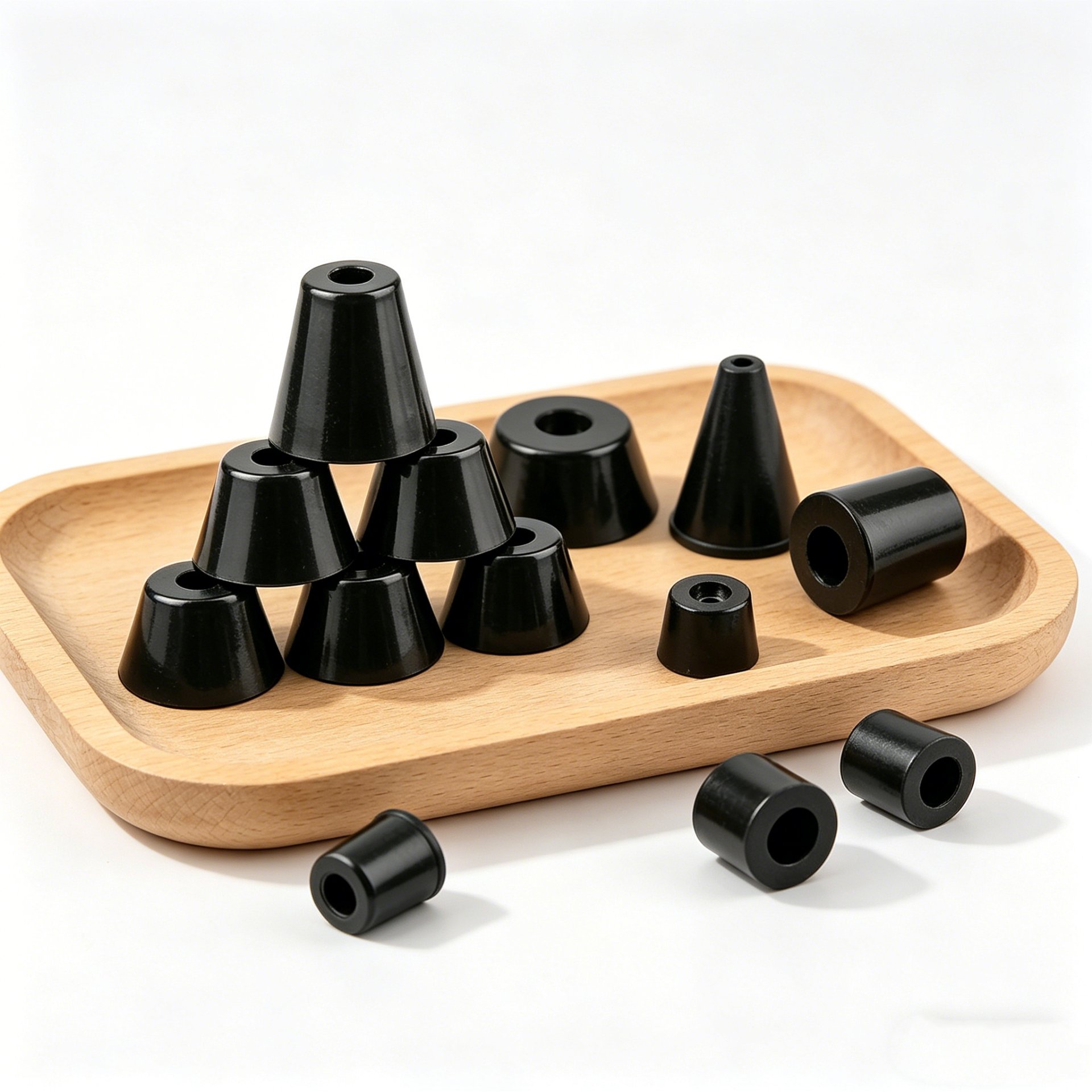
Technical leadership must first distinguish between instantaneous impacts and continuous vibration. If both conditions exist, establish separate test conditions for each requirement. Do not ask "which material provides best shock absorption?" Instead ask "which material delivers required dynamic performance under target loads, frequencies, impact energy, temperature, and cycle count?"
Drawing specifications must define material type, hardness, critical dimensions, compression ratios, installation pre-compression, maximum deformation, maximum loads, and operating temperature ranges. Sample validation should prepare 2-3 candidate material and structure options rather than making the first sample the production solution.
Design verification testing should include impact testing to verify peak load and energy absorption, dynamic compression to verify dynamic response, vibration testing to verify vibration transmission, and temperature testing to verify temperature dependency. Production validation must use different material batches and production lots to confirm that material variation does not change cushioning performance.
Production verification cannot only check dimensions, hardness, and appearance. Critical cushioning components require periodic dynamic performance validation based on risk levels. Supply chain control must carefully manage polymer type, formulation, hardness, density, foam ratio, fillers, curing systems, and production locations. For foam materials, density changes can directly alter cushioning performance.
Establish complete traceability from raw material lots through compound lots, production lots, inspection lots, and shipment lots. When abnormalities occur, this enables rapid determination of whether problems stem from materials, production, or structural issues.
Change management must re-evaluate any modifications to materials, hardness, density, thickness, geometric structure, compression ratios, suppliers, tooling, foaming processes, or curing processes. Never assume "it is just a different material with the same hardness" because identical hardness does not guarantee identical dynamic performance.
Final acceptance should upgrade from material acceptance to functional acceptance, verifying that materials meet specifications, dimensions comply with requirements, installation conditions are correct, impact testing passes, vibration testing passes, and dynamic life testing succeeds.
Conclusion
Effective cushioning material selection requires understanding application requirements, material capabilities, and system integration rather than simply choosing the softest available option for optimal shock and vibration control.