

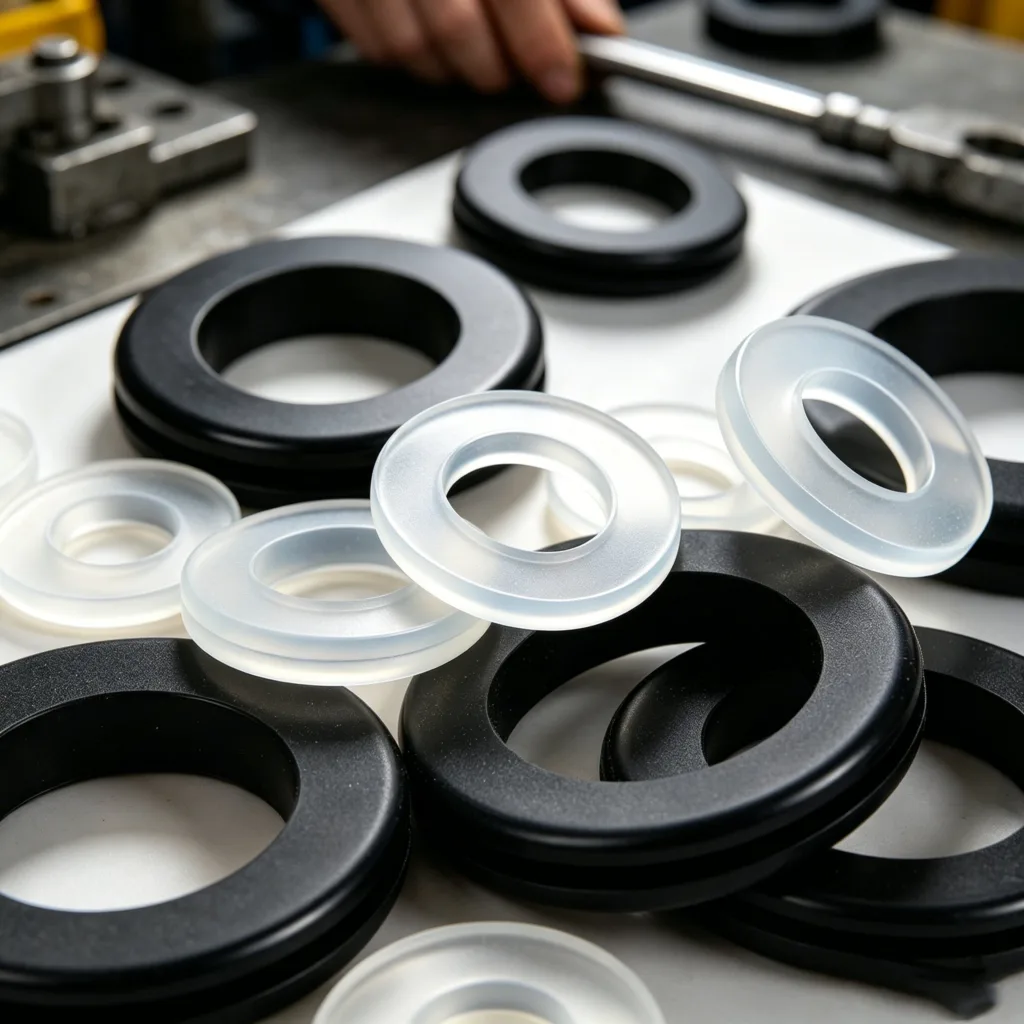
Many OEM projects fail when teams treat material names as performance guarantees. You select EPDM or silicone from your soft gasket material list, samples pass initial tests, but production units leak within months.
The core problem is not wrong material selection but treating material lists as final answers instead of starting points. Real sealing performance depends on specific material properties like compression set, stress relaxation, and aging characteristics - not just material names.


This article examines why material lists alone create project risks and how to build proper material validation systems.
What Makes Material Selection Go Wrong After Successful Prototyping?
Teams often believe material lists provide complete selection guidance. You check NBR for oil resistance, EPDM for outdoor use, silicone for temperature stability, and FKM for chemical compatibility.
However, identical material names can have completely different performance characteristics. Two EPDM suppliers may deliver materials with different Mooney viscosity, filler systems, curing methods, and compression set values that affect long-term sealing performance.
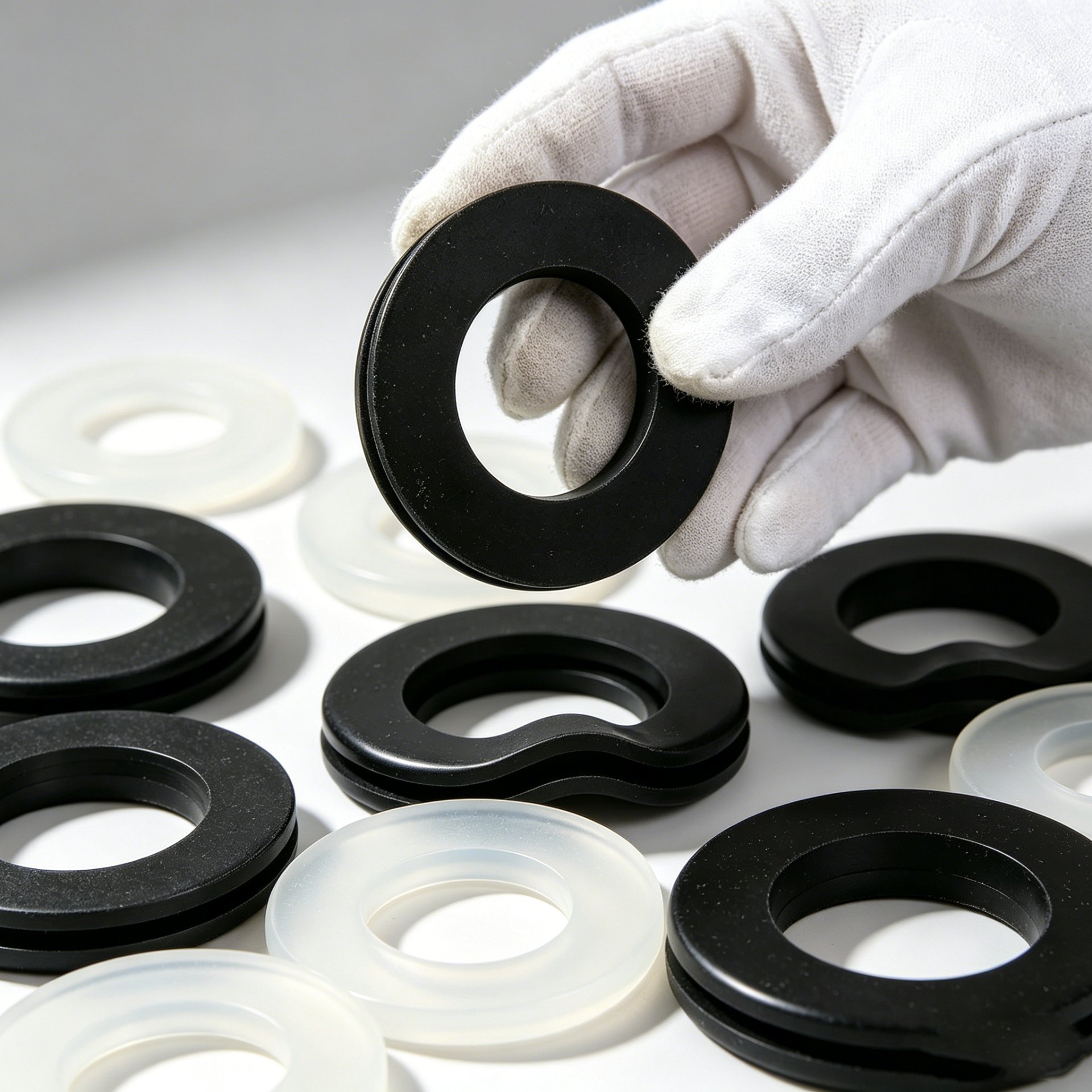
The fundamental issue is that soft gasket material lists categorize by chemistry, not by application-specific performance. This creates a false sense of security during material selection.
Common Material List Categories and Their Hidden Risks
Most engineering teams organize materials by primary characteristics:
| Material Type | Typical Application | Hidden Risk Factor |
|---|---|---|
| NBR (Nitrile) | Oil resistance | Compression set varies 15-60% |
| EPDM | Outdoor exposure | UV stability differs by formulation |
| Silicone | Temperature range | Tear strength varies significantly |
| Neoprene | General sealing | Ozone resistance inconsistent |
| FKM (Viton) | Chemical resistance | Cost vs performance trade-offs |
| PTFE | Low friction | Creep behavior under load |
| Compressed Fiber | High pressure | Thickness stability issues |
| Cork Rubber | Vibration damping | Density variation affects sealing |
| Poron Foam | Compression sealing | Recovery rate differences |
| Closed Cell Foam | Water resistance | Cell structure varies by supplier |
Each category contains dozens of formulations with different performance profiles. Teams selecting "EPDM foam gasket" may receive materials with compression set values ranging from 20% to 70%. This variation directly impacts long-term sealing reliability.
The risk multiplies when teams assume material names guarantee performance. Sample validation may pass with one supplier's formulation, but production materials from different batches or suppliers can fail dramatically.
Why Standard Industry Practice Creates Systematic Failures
Industry practice encourages material selection by application category. Engineering handbooks recommend NBR for petroleum products, EPDM for weathering, silicone for extreme temperatures. This approach works for initial screening but fails for final selection.
The problem emerges during production scaling. Suppliers may change formulations, manufacturing processes, or raw material sources without notification. Teams discover these changes only after field failures occur.
I have seen projects where identical part numbers from the same supplier showed 40% performance differences between batches. The material name remained constant, but compression recovery, aging resistance, and sealing effectiveness varied significantly.
How Real Projects Fail Despite Following Material Lists?
Let me share a case study that illustrates how material list logic creates systematic project risks.
A renewable energy project selected EPDM foam gaskets for outdoor control enclosures based on standard material recommendations. Initial IP67 testing passed, but field units began leaking after 12 months due to compression set failure.
Project Background and Initial Decisions
The project involved 180,000 solar inverter units annually for European markets. The engineering team established their soft gasket material list based on industry standards:
- Outdoor environment: EPDM recommended
- IP67 rating required: Foam gasket specified
- 10-year service life: Standard automotive grade selected
- Cost target: Competitive bidding process
The structural engineer selected EPDM foam following established company procedures. The material choice appeared technically sound and commercially viable.
Why the Selection Logic Seemed Correct
Multiple factors supported the initial decision:
Technical justification: EPDM shows excellent ozone resistance and UV stability. Industry literature consistently recommends EPDM for outdoor sealing applications.
Validation results: Prototype testing achieved IP67 rating with comfortable margins. Water immersion tests, pressure differential tests, and thermal cycling all passed requirements.
Supply chain approval: Three qualified suppliers provided competitive pricing. All samples met dimensional specifications and hardness requirements.
Project timeline: Material selection stayed on schedule without requiring extended validation periods.
The Hidden Risk Factors Nobody Questioned
The project team focused on material category selection but overlooked critical performance parameters:
Compression set limits: No specification existed for long-term compression recovery. The material could permanently deform under continuous load.
Stress relaxation behavior: No testing verified maintained sealing force over time. Gaskets could lose contact pressure gradually.
Aging acceleration: Laboratory tests used short-term exposure. Real outdoor conditions included UV intensity, temperature cycling, and ozone exposure combinations not replicated in testing.
Supplier variability: No controls existed for formulation consistency between production batches.
How the Failure Developed Over Time
The failure pattern followed a predictable sequence:
Months 1-6: All units maintained IP67 rating. No customer complaints occurred.
Months 7-12: Isolated leakage reports emerged from high-temperature regions. Field service attributed issues to installation problems.
Months 13-18: Leakage frequency increased significantly. Pattern analysis revealed correlation with UV exposure and temperature cycling.
Months 19-24: Systematic gasket compression set failure became evident. Material recovery dropped below functional limits.
The root cause investigation revealed that EPDM foam compression set exceeded 40% after 18 months outdoor exposure. Original specifications had not defined compression set limits or test methods.
Project Impact and Resolution Costs
The failure created multiple business impacts:
Field service costs: Over $3 million for gasket replacement in deployed units. Each service call required technician dispatch, part replacement, and re-testing.
Certification delays: IP67 re-qualification required 12 months additional testing with modified materials and specifications.
Customer relationships: European customers experienced equipment failures affecting system reliability and warranty claims.
Supply chain disputes: Suppliers argued that compression set requirements were never specified. Legal resolution required 10 months of negotiation.
Internal process changes: Engineering procedures required complete revision to prevent similar failures in future projects.
The resolution involved developing comprehensive material specifications including compression set limits, stress relaxation requirements, and accelerated aging protocols.
What Successful Projects Do Differently When Using Material Lists?
Successful projects treat soft gasket material lists as screening tools rather than final selection criteria. They build validation systems that verify actual performance under service conditions.
One outdoor energy storage project avoided systematic failure by adding compression set testing and stress relaxation validation to their material selection process, preventing a potential $9 million field failure.
Early Risk Detection and Prevention
The project team identified potential risks during initial material screening:
Material engineer review: Detected that initial silicone foam samples showed compression set values exceeding 40% in preliminary testing.
Specification enhancement: Added compression set limits (≤20%) and stress relaxation requirements to material specifications.
Extended validation: Implemented 1000-hour compression aging tests before design verification approval.
Comprehensive Testing Protocol Development
The team established testing requirements beyond basic material identification:
Accelerated aging tests: 85°C compression aging, thermal cycling from -40°C to +85°C, UV exposure equivalent to 15 years outdoor service.
Performance validation: Long-term compression testing, stress relaxation measurement, sealing force retention after aging.
Quality controls: Batch-to-batch consistency verification, supplier change notification requirements, ongoing production monitoring.
Results and Risk Mitigation
The enhanced validation process prevented systematic failure:
Timeline benefits: Avoided 9-month field failure investigation and remediation cycle.
Cost avoidance: Prevented estimated $9 million in field service, re-certification, and customer claims.
Supply chain stability: Eliminated supplier disputes by establishing clear performance criteria upfront.
Customer satisfaction: Maintained product reliability throughout 15-year service life requirement.
The key difference was validating material performance characteristics rather than relying on material names and categories.
How Do Specification Documents Create Hidden Project Risks?
Most soft gasket material projects fail due to specification gaps rather than wrong material choices. Procurement documents often define material categories without performance requirements.
Common specification errors include defining materials by name only (Material: EPDM), omitting compression set requirements, and failing to specify test conditions for validation, creating supplier interpretation differences that lead to field failures.
Material Definition Inadequacies
Standard specifications typically contain critical gaps:
Generic material naming: Specifications state "Material: EPDM" without defining polymer grade, filler system, or curing method. This allows suppliers to provide any EPDM formulation regardless of performance suitability.
Missing property requirements: Documents omit compression set limits, stress relaxation behavior, and aging characteristics that determine long-term sealing performance.
Incomplete environmental conditions: Specifications fail to define UV exposure, ozone levels, temperature cycling, and chemical contact conditions affecting material selection.
Hardness and Density Specification Problems
Hardness specifications create frequent supplier disputes:
| Specification Issue | Problem Created | Correction Required |
|---|---|---|
| Shore A only | Test method varies | Define ASTM D2240 method |
| No temperature specified | Results vary significantly | Specify 23°C ± 2°C |
| Foam materials | Shore A inappropriate | Use compression deflection |
| No dwell time | Inconsistent readings | Specify 15-second dwell |
Density specifications for foam materials require similar precision. Different test methods yield different results, making supplier comparison impossible.
Dimensional and Tolerance Definition Gaps
Critical specification gaps include:
Free-state dimensions only: Drawings show uncompressed gasket dimensions without defining compressed working thickness or sealing contact area.
Missing compression ratio: No specification for design compression percentage, leaving sealing performance to supplier interpretation.
Tolerance accumulation: No analysis of how dimensional tolerances affect sealing contact pressure and performance.
Environmental and Certification Requirement Omissions
Specifications commonly omit:
Regulatory compliance: UL94 flammability, RoHS compliance, REACH registration, FDA food contact approval requirements undefined.
Service environment: UV intensity, ozone concentration, chemical exposure, temperature cycling parameters not specified.
Performance validation: No requirements for compression set testing, stress relaxation measurement, or accelerated aging validation.
Testing and Validation Specification Deficiencies
Most specifications provide inadequate testing guidance:
Waterproof testing: Requirements state "waterproof passed" without defining pressure differential, test duration, or temperature conditions.
Compression testing: No specification for compression set test methods, conditioning time, or acceptance criteria.
Aging validation: No requirements for thermal aging, UV exposure, or ozone resistance testing.
These gaps create situations where suppliers deliver materials meeting stated requirements but failing in actual service conditions.
What Risk Control Systems Prevent Material Selection Failures?
Effective risk control requires systematic validation processes that verify material performance under actual service conditions rather than relying on material categories or supplier claims.
Successful projects implement multi-stage validation including material property verification, accelerated aging testing, and production batch monitoring to ensure consistent long-term sealing performance throughout product lifecycle.
Technical Leadership Responsibilities
Technical leaders must establish comprehensive material selection standards:
Material selection specification: Develop detailed requirements covering compression set limits, stress relaxation behavior, aging characteristics, and environmental resistance rather than generic material categories.
Validation protocols: Define testing sequences including initial property verification, accelerated aging, and long-term compression testing before design approval.
Change control procedures: Establish requirements for supplier notification and re-validation when formulations, manufacturing processes, or raw materials change.
Procurement and Supply Chain Controls
Procurement teams need enhanced supplier management:
RFQ requirements: Include compression set testing, stress relaxation data, and aging test reports as mandatory supplier submissions rather than optional technical data.
Supplier qualification: Verify testing capabilities, quality systems, and batch consistency controls before supplier approval.
Contract specifications: Define material property requirements, test methods, and performance guarantees with clear acceptance criteria and failure remedies.
Quality Assurance Validation Systems
Quality teams must implement specialized testing protocols:
| Validation Stage | Test Requirements | Acceptance Criteria |
|---|---|---|
| Material qualification | Compression set, stress relaxation, aging | Meet specification limits |
| Design verification | Long-term compression, thermal cycling | Maintain sealing after testing |
| Production validation | Batch testing, dimensional verification | Consistent with qualification |
| Field monitoring | Performance tracking, failure analysis | Early warning system |
Project Management Integration
Project managers need material validation in critical path planning:
Timeline allocation: Include material testing time in project schedules rather than assuming immediate availability of qualified materials.
Risk assessment: Identify material-related risks early and develop mitigation strategies before design freeze.
Cross-functional coordination: Ensure engineering, procurement, quality, and manufacturing teams align on material requirements and validation criteria.
Ongoing Production Risk Management
Continuous monitoring prevents field failures:
Batch traceability: Track material lots from supplier through production to field installation for failure investigation and root cause analysis.
Performance monitoring: Establish early warning indicators including compression set trends, customer complaints, and field service reports.
Supplier auditing: Regular assessment of supplier quality systems, process controls, and material consistency to prevent degradation over time.
Documentation and Knowledge Management
Maintain comprehensive records for future projects:
Material database: Document validated materials, test results, and field performance for reference in similar applications.
Failure analysis records: Capture root causes, corrective actions, and prevention measures for organizational learning.
Best practices documentation: Develop standard procedures based on successful project experiences and lessons learned from failures.
Conclusion
Soft gasket material lists serve as starting points, not final answers, for successful sealing system development requiring comprehensive performance validation beyond material names.