

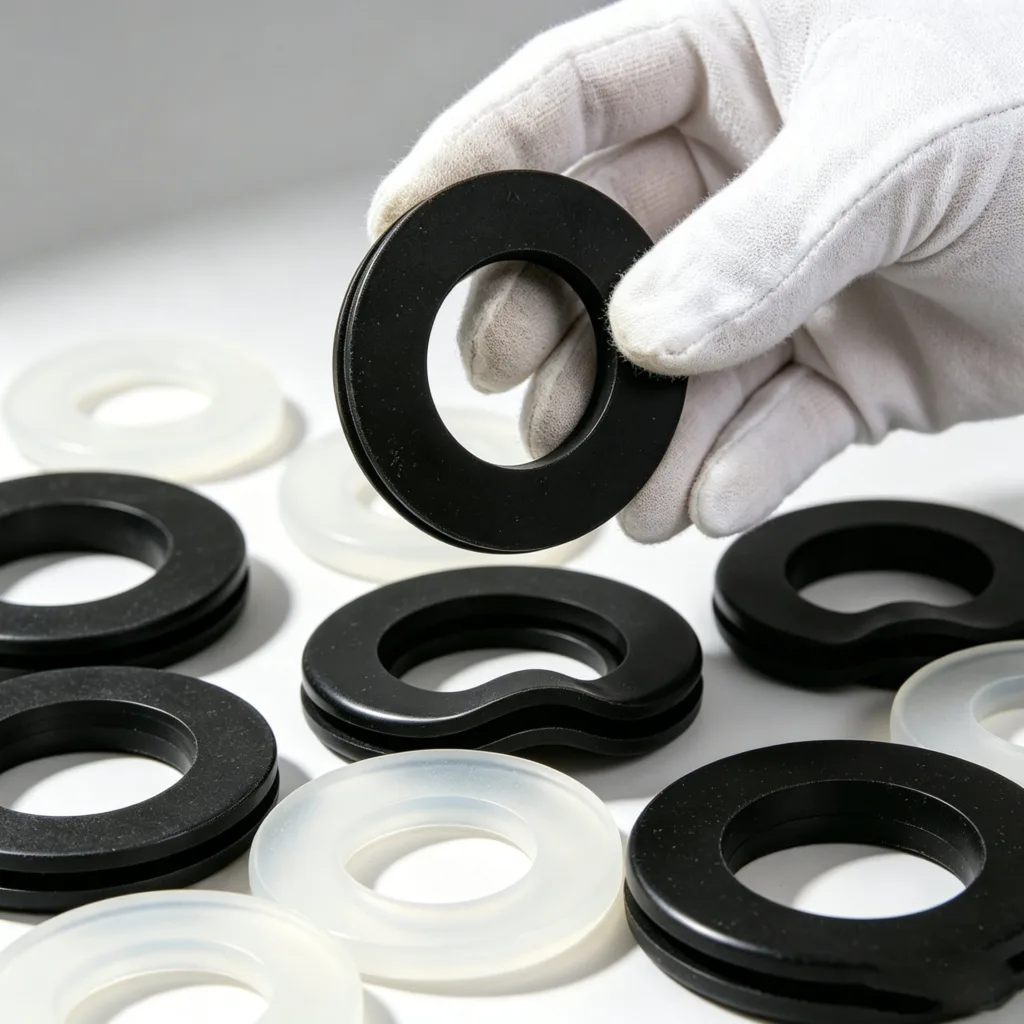
Do you know why many custom molded rubber projects pass sampling but fail in mass production? The answer lies in a fundamental misunderstanding of rubber behavior.
Custom molded rubber components are among the most underestimated risks in OEM projects. While prototypes may pass all tests, mass production often reveals dimensional drift, assembly failures, and supplier disputes that could have been prevented with proper functional state design.


Most engineering teams treat rubber parts like rigid components. This creates hidden risks that explode during production ramp-up. Let me share what I have learned from 27 years in rubber manufacturing.
Why Do Teams Misjudge Custom Molded Rubber Component Risks?
Teams consistently underestimate rubber component complexity. This happens because rubber parts appear simple on the surface.
Custom molded rubber components seem low-risk because of their low unit cost, modest tooling investment, and short development cycles. However, these parts behave fundamentally differently from rigid materials during production scaling.
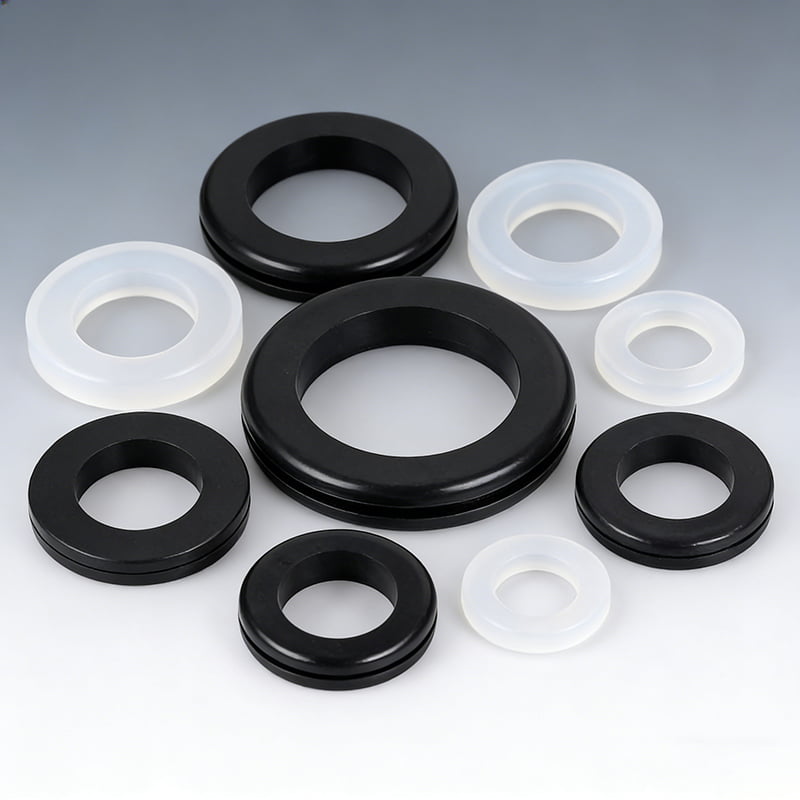
The core problem lies in treating rubber as a dimensional component rather than a deformable system. When I work with OEM clients, I see this mistake repeatedly. Teams focus on free-state dimensions while ignoring functional-state behavior.
Rubber dimensions change based on multiple factors. These include compound shrinkage rates, molding flow patterns, post-curing effects, ambient temperature, storage time, and measurement methods. The same part measured on production day may pass inspection. After 72 hours of storage, dimensions might shift. Under assembly stress, dimensions change again.
| Factor | Impact on Dimensions | Timeline |
|---|---|---|
| Compound shrinkage | 0.5-3% variation | During curing |
| Post-curing | Additional 0.2-1% | 24-72 hours |
| Temperature effects | 0.1-0.5% per 10°C | Immediate |
| Assembly stress | Variable deformation | During installation |
What customers actually purchase is not dimensional accuracy. They buy a rubber system that maintains functional requirements under working conditions. This distinction determines project success or failure.
The error amplifies through production phases. During sampling, suppliers hand-optimize tooling for perfect parts. In mass production, production rates increase and material batches vary. Dimensions gradually drift while assembly forces change. Eventually, tolerance stack-up combines with rubber deformation to create batch failures.
What Happens When Automotive Projects Ignore Functional State Design?
I witnessed a high-voltage connector project that perfectly illustrates this failure pattern. The project seemed straightforward initially but became a costly lesson.
A new energy vehicle connector project with 4.5 million annual parts failed despite passing all prototype tests. The root cause was defining acceptance criteria based on free-state dimensions instead of functional-state performance.
The project involved multiple stakeholders including the OEM manufacturer, connector supplier, rubber component supplier, and third-party laboratory. Customer requirements included IP67 rating, automatic assembly capability, and 10-year service life. The structural engineer made the critical decision to use free-state dimensions as acceptance standards.
This seemed reasonable at the time. Drawing dimensions met all requirements and sample assembly succeeded. No one questioned the approach because purchasing trusted supplier capabilities, quality confirmed dimensional compliance, and the project manager focused on schedule adherence. Nobody analyzed rubber deformation behavior under assembly conditions.
The risk explosion followed a predictable pattern. Sample validation passed and the project entered mass production. Automatic assembly lines began operation but some sleeves showed increased insertion force. Equipment alarms increased in frequency while sleeves developed local edge rolling. High-voltage connectors experienced sealing failures with abnormal sleeve compression deformation discovered in field inspections.
The consequences were severe. Project delays extended eight months while re-tooling costs exceeded $800,000. IP67 certification required complete revalidation. The new energy vehicle customer suspended purchasing. Responsibility disputes lasted over six months with the OEM claiming dimensional instability while suppliers argued incorrect drawing definitions.
Internal project conflicts emerged between departments. Structural teams blamed manufacturing capabilities while quality departments questioned acceptance standards. Final confirmation revealed project failure stemmed from missing functional dimension definitions.
This failure could have been prevented by recognizing that rubber components require functional-state validation rather than free-state measurement. The lesson applies to all custom molded rubber projects regardless of industry or application.
How Can Industrial Equipment Projects Avoid These Pitfalls?
Success requires shifting focus from free-state dimensions to functional-state validation. I experienced this approach on an industrial automation project that nearly repeated the same mistakes.
An industrial automation equipment rubber buffer development project initially followed free-state dimension design. Risk correction through functional-state validation prevented assembly failures and eliminated supplier disputes while saving seven months of development time.
The project targeted industrial automation equipment rubber buffer development. The original approach relied on free-state dimension design, creating unknown assembly compression and long-term loading behavior risks. Our application engineer discovered the risk through finite element analysis showing working-state strain exceeded design ranges.
Most team members missed this issue because everyone focused on drawing dimensions while ignoring working-state deformation. Risk correction required parameter modifications including compression control requirements and assembly force range specifications. We adjusted specifications by adding functional dimension definitions and post-compression critical dimension requirements.
Testing supplementation included compression testing, fatigue testing, and aging testing protocols. Verification flow additions covered DV-phase functional state validation and PV-phase mass production condition verification. We conducted comprehensive experiments including one million cycle compression tests, thermal cycling, and post-aging assembly testing.
The results justified the additional effort. We avoided automatic assembly failures, customer complaints, and re-tooling requirements while saving approximately seven months of development time and reducing supplier disputes. Success came from validating functional-state dimensions rather than free-state dimensions.
| Validation Type | Original Approach | Corrected Approach |
|---|---|---|
| Dimension Focus | Free-state only | Functional-state primary |
| Testing Scope | Basic dimensional | Compression + fatigue + aging |
| Validation Timeline | Sampling only | DV + PV + production |
| Risk Management | Reactive | Proactive |
Without these adjustments, the project would likely have experienced assembly difficulties, compression failures, and functional drift. The most valuable lesson learned was that custom molded rubber components must be developed around functional states rather than free dimensions.
This approach transforms project risk profiles from reactive problem-solving to proactive risk prevention. The investment in comprehensive functional validation pays dividends through avoided production disruptions and customer satisfaction maintenance.
What Specification Document Traps Destroy Custom Molded Rubber Projects?
Over 60% of custom molded rubber component disputes originate from specification document defects. These seemingly minor oversights create major production problems.
Specification documents for custom molded rubber components frequently contain critical gaps in material definition, tolerance specification, and functional requirements. These omissions lead to supplier disputes, performance failures, and costly project delays.
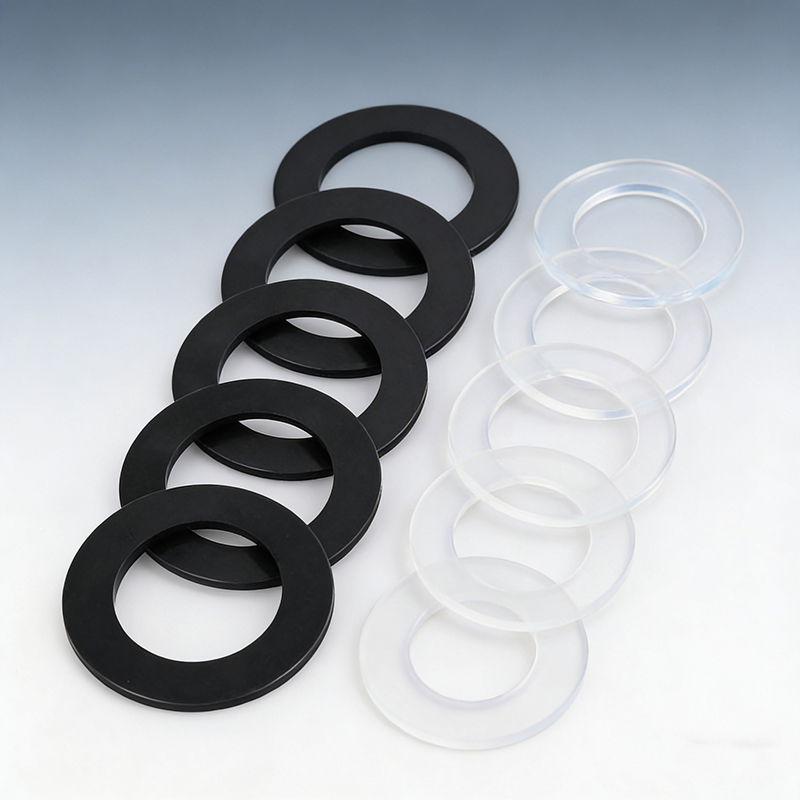
Material definition loopholes create the first category of problems. Specifications often simply state "rubber material" without clarification. This could reference natural rubber, EPDM, NBR, silicone, or HNBR with vastly different performance characteristics. Each material family has distinct properties affecting temperature resistance, chemical compatibility, and mechanical performance.
Hardness definition gaps compound material issues. Specifications might state "60 Shore A" without tolerance definition. Different suppliers interpret this differently, leading to significant actual hardness variations. Proper specifications require hardness ranges like "60 ± 3 Shore A" with measurement conditions clearly defined.
Tolerance definition errors commonly apply plastic component tolerances directly to rubber parts. This approach increases manufacturing costs while reducing production capability. Rubber materials require different tolerance approaches accounting for material behavior and processing characteristics.
Compression rate definition loopholes frequently omit working compression rates entirely. Many drawings never define functional compression requirements, leading to performance deviations during assembly and operation. Proper specifications must include both free-state and compressed-state dimensional requirements.
| Specification Gap | Impact | Correction Required |
|---|---|---|
| Material type | Performance variation | Specific material grade |
| Hardness tolerance | Quality inconsistency | ± range with test method |
| Compression rate | Functional failure | Working state definition |
| Environmental conditions | Material selection error | Complete operating envelope |
Working environment omissions create selection problems. Specifications often miss temperature ranges, chemical media exposure, UV environment conditions, and ozone exposure requirements. These omissions provide insufficient material selection basis, leading to premature failure or over-specification costs.
Certification requirement gaps include missing UL94, FDA, REACH, RoHS, and automotive regulation specifications. Post-project compliance additions create enormous rectification costs compared to initial specification inclusion.
Testing condition deficiencies typically state "functional test passed" without specifying temperature, duration, or strain state conditions. Results become incomparable between suppliers and testing phases without standardized conditions.
Life validation omissions frequently skip compression set, fatigue life, and aging performance requirements. These gaps create extremely high mass production risks since long-term performance remains unvalidated until field failures occur.
The most critical specification error involves defining only free dimensions without working dimensions. This fundamental oversight eliminates functional performance accountability, creating responsibility boundary disputes when problems emerge.
How Should Project Teams Implement Risk Control for Custom Molded Rubber Components?
Successful custom molded rubber projects require systematic risk control across all team functions. Each role must understand their specific responsibilities and implement appropriate safeguards.
Project-level risk control for custom molded rubber components demands coordinated efforts from technical, procurement, quality, and project management teams. Success requires establishing functional dimension standards, comprehensive validation protocols, and proactive change management systems.


Technical leadership must establish comprehensive design guidelines for custom molded rubber components. All projects should define three dimension standards: functional dimensions, assembly dimensions, and free dimensions. This three-tier approach ensures complete performance characterization across all operating conditions.
Procurement responsibility includes requiring material compound control plans, process capability data (CPK), and dimensional stability data in all RFQs. Price comparison alone cannot drive supplier selection for rubber components. Material consistency and process control capabilities determine long-term project success more than initial pricing.
Quality leadership requires establishing specialized validation protocols including compression set testing, fatigue testing, and aging testing. These tests must occur during development phases rather than post-production problem investigation. Proactive validation prevents field failures and customer complaints.
Project management must incorporate functional validation into critical project paths. Schedule pressure cannot justify releasing products based solely on dimensional reports without functional performance confirmation. This discipline prevents downstream problems that ultimately extend project timelines.
| Team Role | Key Responsibility | Critical Deliverable |
|---|---|---|
| Technical Lead | Design guidelines | Three-tier dimension standards |
| Procurement | Supplier capability | Material control verification |
| Quality | Validation protocols | Comprehensive test plans |
| Project Manager | Schedule integration | Functional milestone gates |
Supplier management requires establishing change control systems for all compound adjustments, raw material changes, mold modifications, and curing process adjustments. These changes must trigger revalidation requirements rather than simple documentation updates.
Drawing specifications must include functional dimensions, measurement conditions, measurement timing, and working compression state definitions. Sample validation must verify free-state, assembly-state, and aged-state conditions across three working environments.
DV testing additions should include cyclic fatigue, strain testing, and long-term compression testing protocols. PV testing must use production tooling, production compounds, and production processes for validation rather than prototype conditions.
Mass production validation requires establishing batch traceability, compound consistency control, and dimensional drift monitoring mechanisms. Acceptance standards must simultaneously satisfy material performance, functional dimensions, assembly performance, and life requirements across four indicator categories.
Risk warning systems should trigger immediate investigation when assembly forces change beyond 15%, dimensional drift increases, compression set shows abnormalities, or customer assembly defect rates rise. These indicators typically precede custom molded rubber component project failures and enable corrective action before major problems develop.
Conclusion
Custom molded rubber component project success depends on functional-state design rather than free-state dimension control, preventing the costly failures that plague most rubber development programs.