

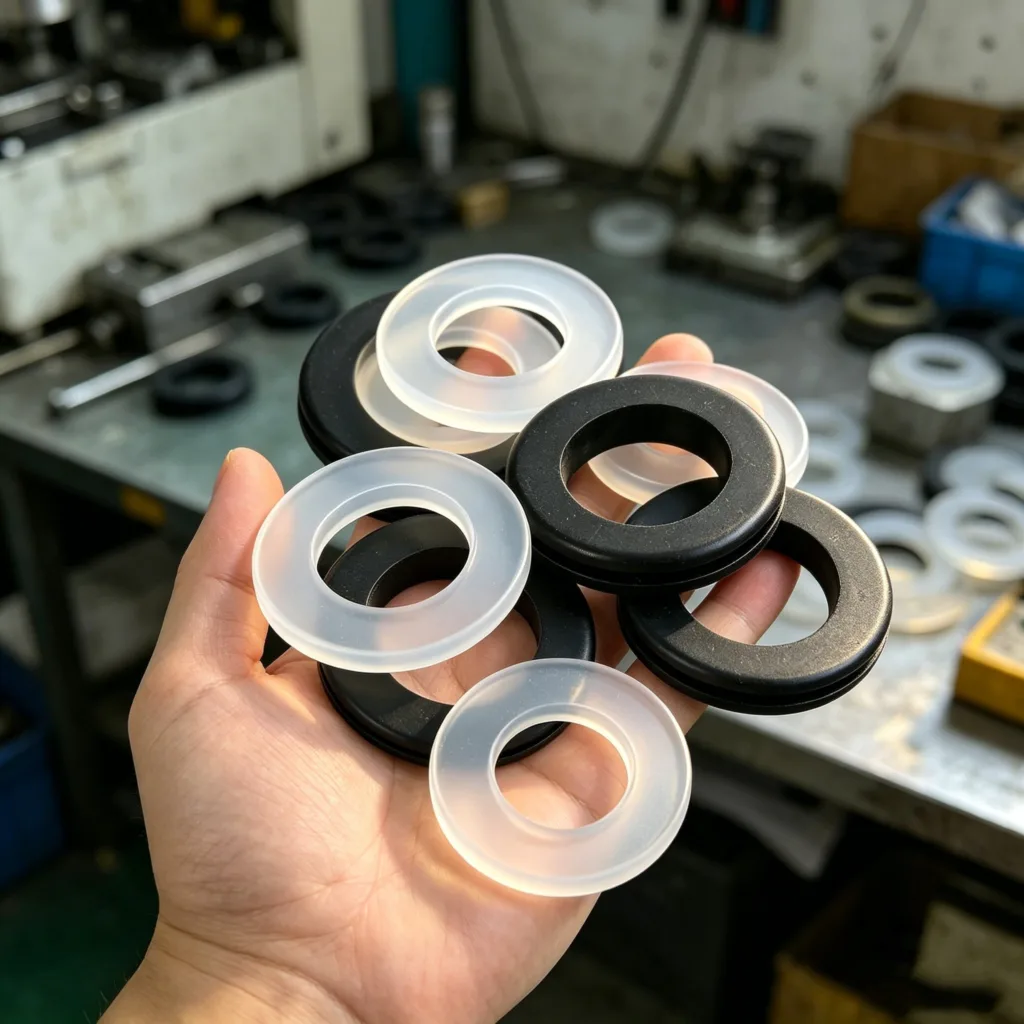
Every engineer knows the pain of leaky systems and failed seals. One wrong gasket choice can shut down an entire production line.
Custom rubber gaskets and seals provide precise fit and reliable performance for your specific application needs. They prevent leaks, reduce maintenance costs, and ensure long-term system reliability across industries from automotive to medical devices.
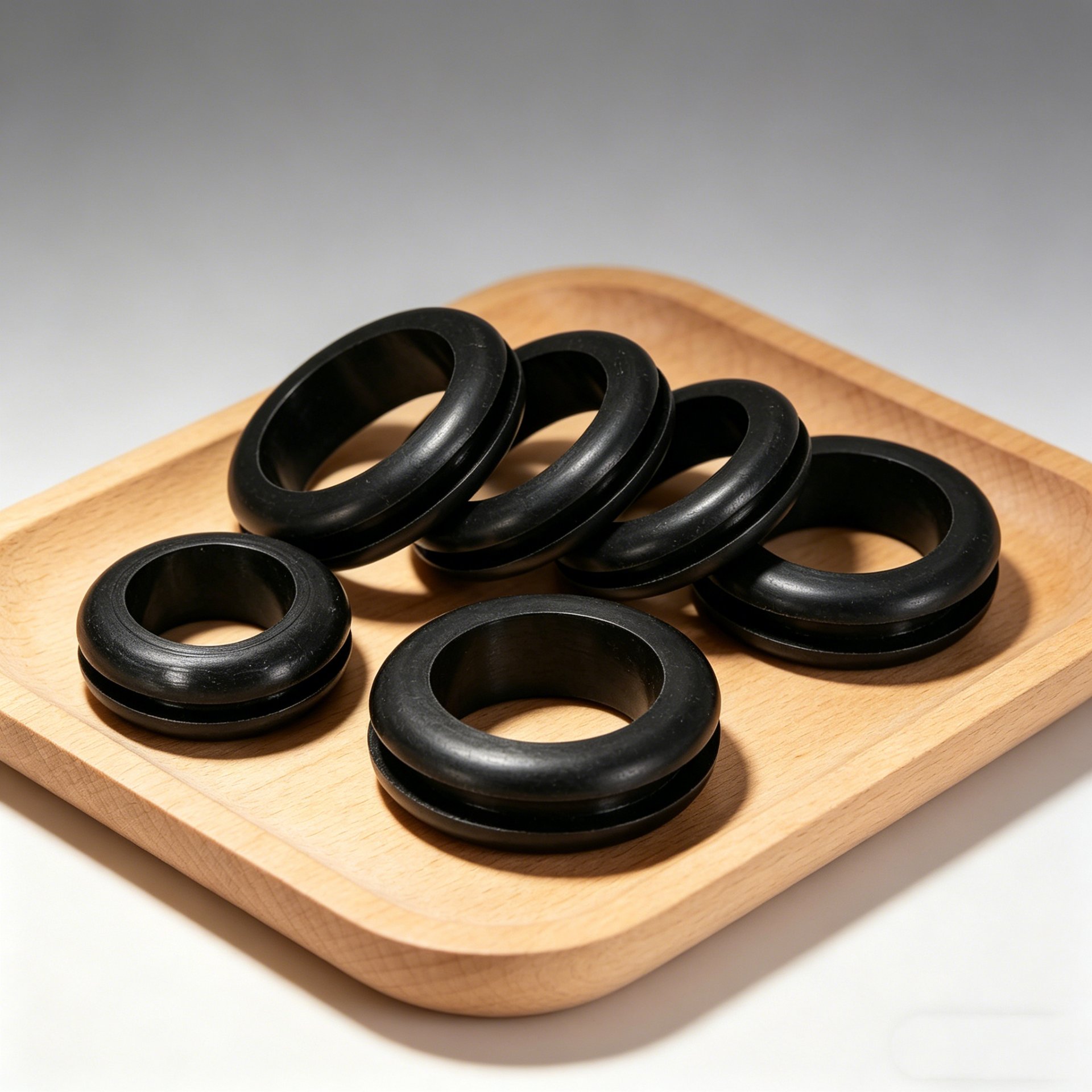
I've seen too many projects fail because someone picked a standard gasket for a custom application. The right seal makes all the difference between success and costly downtime.
What Makes Custom Rubber Gaskets Different from Standard Options?
Standard gaskets work for basic needs. But when your project has unique requirements, you need something better.
Custom rubber gaskets are engineered to match your exact specifications, including material properties, dimensions, and environmental resistance. This precision ensures optimal performance where standard gaskets would fail.


The difference starts with material selection. Standard gaskets use common rubber compounds that work okay in general conditions. Custom gaskets use specific materials chosen for your exact environment.
We select from silicone, EPDM, NBR, and other compounds based on your temperature range, chemical exposure, and pressure requirements. Each material has different properties. Silicone works great in extreme temperatures. EPDM resists weather and ozone. NBR handles oils and fuels well.
Dimension accuracy matters too. Standard gaskets come in fixed sizes with wide tolerances. Our custom gaskets maintain +/- 0.05 mm precision. This tight tolerance prevents leaks and ensures proper compression.
| Gasket Type | Tolerance | Material Options | Lead Time |
|---|---|---|---|
| Standard | +/- 0.5 mm | Limited selection | 1-2 weeks |
| Custom | +/- 0.05 mm | Full range available | 2-4 weeks |
The manufacturing process also differs. Standard gaskets use basic molding techniques. We use compression molding, extrusion, and over-molding based on your design needs. This flexibility lets us create complex shapes and multi-material seals.
How Do You Choose the Right Material for Your Application?
Material choice determines whether your gasket succeeds or fails. Each application has different demands that require specific properties.
The right gasket material depends on operating temperature, chemical compatibility, pressure requirements, and environmental conditions. Matching these factors ensures long-term performance and cost-effectiveness.
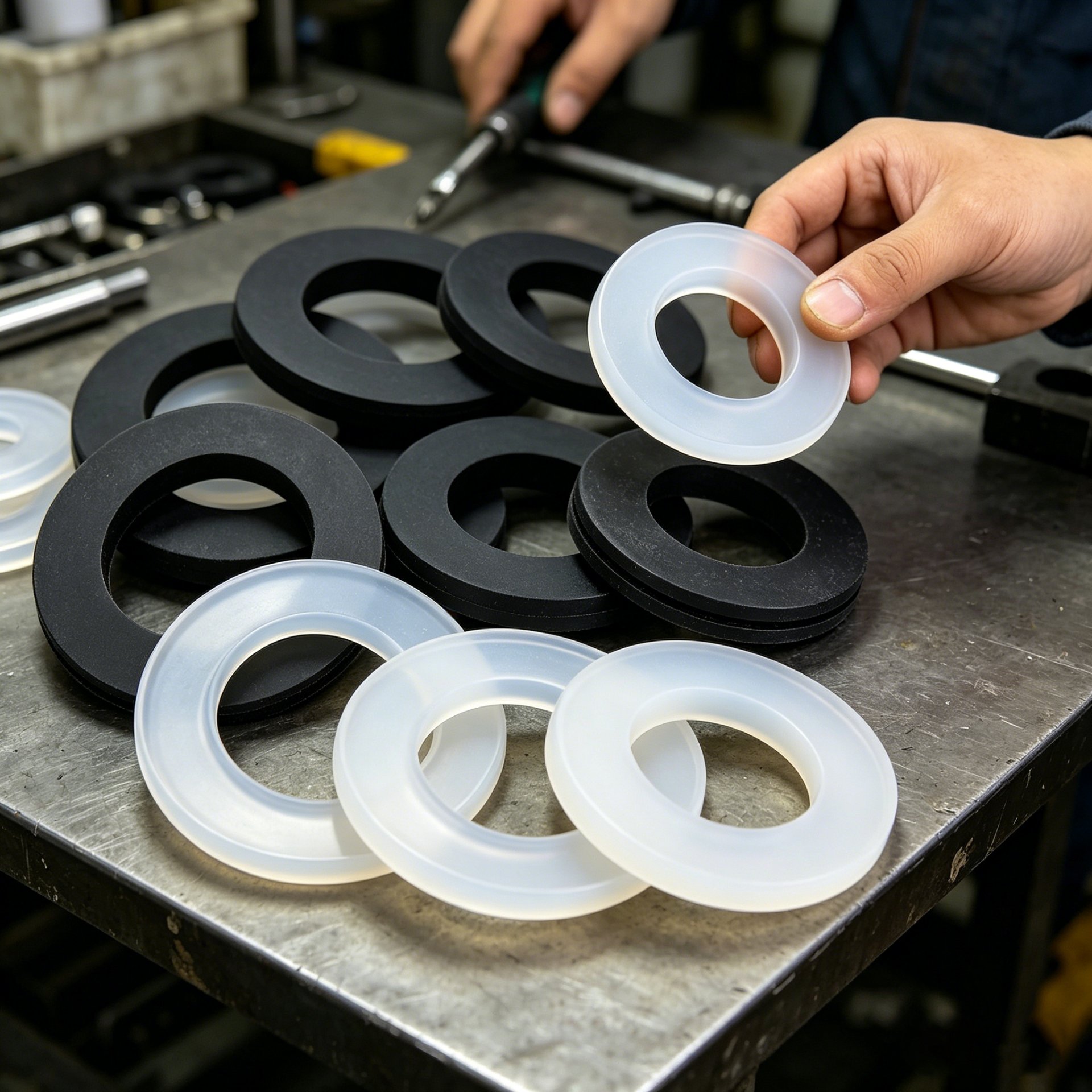
Temperature comes first in material selection. I always ask clients about their operating temperature range. Silicone handles -65°F to 400°F continuously. EPDM works well from -40°F to 300°F. NBR operates between -40°F to 250°F.
Chemical resistance matters just as much. Different rubbers react differently to oils, acids, bases, and solvents. NBR excels with petroleum products but swells in ketones. EPDM resists acids and bases but degrades in oils. Silicone offers broad chemical resistance but costs more.
Pressure requirements affect material hardness and design. Low-pressure applications use softer compounds that seal easily. High-pressure systems need harder materials that resist extrusion. We measure hardness in Shore A durometer. Soft gaskets range from 30-50 Shore A. Medium hardness spans 50-70 Shore A. Hard gaskets exceed 70 Shore A.
Environmental factors include UV exposure, ozone, and weathering. Outdoor applications need UV-stable materials like EPDM or silicone. Indoor applications can use NBR or natural rubber for cost savings.
Food and medical applications require special grades. FDA-approved silicone works for food contact. USP Class VI materials suit medical devices. These grades cost more but meet regulatory requirements.
What Quality Control Measures Ensure Reliable Performance?
Quality control separates good gaskets from great ones. Every step in production affects final performance.
Comprehensive quality control includes incoming material inspection, in-process monitoring, dimensional verification, and performance testing. This systematic approach ensures consistent quality and reduces field failures.
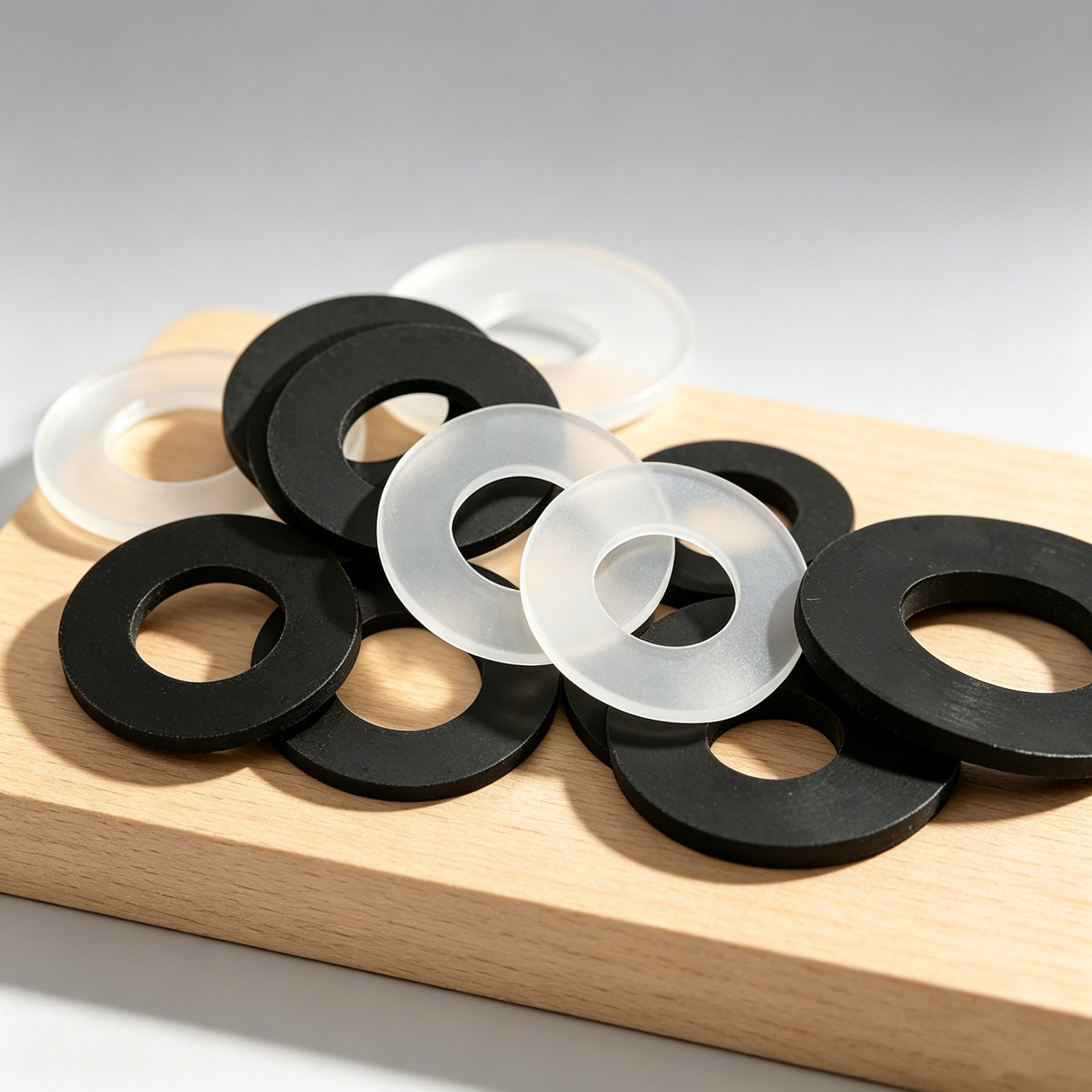
Material inspection starts the process. We test every batch of raw rubber for hardness, tensile strength, and elongation. These tests confirm the material meets specifications before production begins.
In-process monitoring tracks key parameters during molding. Temperature, pressure, and cure time affect final properties. We record these parameters for every batch. This data helps maintain consistency and provides traceability.
Dimensional inspection uses precision measuring tools. Calipers, micrometers, and optical comparators verify critical dimensions. We check thickness, diameter, and profile shape against drawings. Parts outside tolerance get rejected.
Performance testing validates gasket function. Compression set testing measures how well the gasket maintains sealing force over time. Leak testing confirms sealing ability under pressure. Accelerated aging simulates long-term performance.
| Test Type | Purpose | Standard |
|---|---|---|
| Hardness | Material consistency | ASTM D2240 |
| Tensile Strength | Material quality | ASTM D412 |
| Compression Set | Long-term sealing | ASTM D395 |
| Leak Testing | Sealing performance | Customer spec |
Documentation accompanies every shipment. Test certificates show actual test results. Material certifications confirm grade and properties. Dimensional reports verify critical measurements. This paperwork supports quality audits and regulatory compliance.
How Can Custom Seals Reduce Your Total Cost of Ownership?
Many buyers focus only on piece price. Smart buyers consider total cost over the gasket's lifetime.
Custom seals reduce total cost through longer service life, reduced maintenance, fewer failures, and optimized performance. The higher initial cost pays back through lower operational expenses.


Service life makes the biggest difference. Standard gaskets might last 6-12 months in demanding applications. Custom gaskets designed for your specific conditions can last 2-5 years or more. This extended life reduces replacement frequency and labor costs.
Maintenance costs drop with better gaskets. Leaky seals require frequent tightening and replacement. Reliable custom gaskets maintain their seal longer. This reduces maintenance schedules and unplanned downtime.
Failure costs hurt most. A failed gasket can shut down production for hours or days. Emergency repairs cost more than planned maintenance. System damage from leaks adds even more expense. Custom gaskets reduce these failure risks.
Performance optimization saves money too. The right gasket eliminates over-engineering in other components. You don't need massive clamp loads or complex housings when the gasket seals reliably. This simplifies design and reduces system cost.
Inventory costs matter for high-volume users. Custom gaskets designed for multiple applications reduce part number proliferation. One well-designed seal can replace several standard ones. This simplifies purchasing and reduces inventory carrying costs.
Quality documentation speeds approvals. Complete test data and certifications help pass quality audits faster. This reduces qualification time and gets products to market sooner.
Conclusion
Custom rubber gaskets and seals deliver superior performance and lower total costs when properly engineered for your specific application requirements.