

Choosing gaskets can feel overwhelming. You want reliability but face endless material options and conflicting advice.
The truth is simple: there is no "best" rubber gasket—only the right gasket for your specific application. The key is matching material properties to your exact operating conditions, temperature range, and chemical exposure.


After 27 years in rubber manufacturing, I have seen this question countless times. The answer always comes down to one thing: application match.
What Makes a Gasket Fail in Real Applications?
Wrong material choices cause most gasket failures. Even premium materials will fail if they do not match your conditions.
Common failure modes include cracking under UV exposure, swelling in chemical environments, and losing elasticity over time. These failures happen when gasket material does not match the specific operating conditions.
I remember a client who chose general-purpose rubber for outdoor lighting fixtures. Within six months, UV exposure caused the gaskets to harden and crack. Water infiltration damaged their electronics. The "cost-effective" choice became expensive repairs.
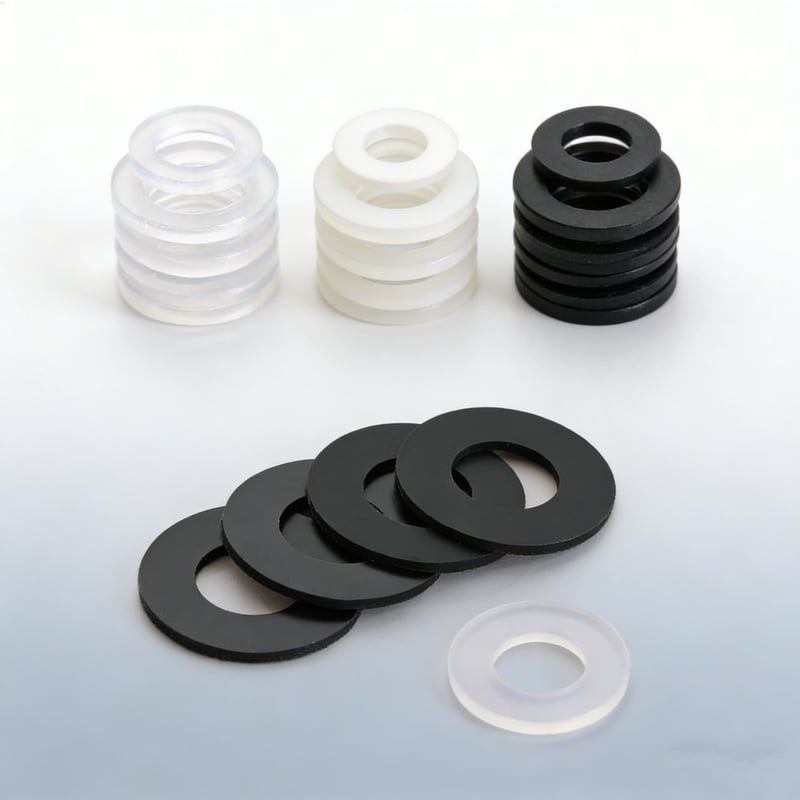
We replaced those failed gaskets with custom silicone ones designed for outdoor use. The result was stable waterproof performance and no more maintenance headaches. Their feedback said it all: "Now it just works—no more concerns."
This experience taught me something important. The best gasket is the one you never think about after installation. It performs quietly in the background while your product delivers value to customers.
How Do You Match Gasket Material to Your Application?
Material selection starts with understanding your operating environment. Each rubber type has specific strengths and limitations.
Silicone gaskets excel in extreme temperatures (-65°F to 400°F) and outdoor applications with UV exposure. EPDM performs well with water and weather resistance. NBR handles oil and fuel environments effectively.


Our technical team evaluates three critical factors for every project. First, we assess temperature range and environmental exposure including UV, water, and chemicals. Second, we analyze compression force and sealing structure requirements. Third, we consider expected lifespan and maintenance schedules.
For electronics enclosures, we often recommend silicone for its temperature stability and electrical insulation properties. Automotive applications typically need NBR for oil resistance or EPDM for coolant systems. Industrial equipment may require specialized compounds for chemical compatibility.
| Application | Recommended Material | Key Benefits | Temperature Range |
|---|---|---|---|
| Electronics | Silicone | UV stable, electrical insulation | -65°F to 400°F |
| Automotive fuel | NBR | Oil resistance, durability | -40°F to 250°F |
| Water systems | EPDM | Water resistance, longevity | -65°F to 300°F |
| Food equipment | FDA Silicone | Food safe, easy cleaning | -65°F to 400°F |
The selection process involves more than just picking a material. We consider gasket design, compression set requirements, and installation methods. A perfect material choice can still fail with poor design or incorrect installation.
Why Does Manufacturing Quality Matter More Than Material Type?
Premium materials mean nothing without consistent manufacturing. Quality control determines whether your gasket performs as designed.
Manufacturing consistency affects dimensional accuracy, compound uniformity, and long-term performance. Variations in mixing, curing, or molding can create weak points that lead to premature failure.
We control every step of production to ensure consistency. Raw materials undergo incoming inspection for purity and properties. Compound mixing follows precise formulations with documented batch records. Molding parameters are monitored continuously to maintain dimensional accuracy within ±0.05mm.
Our quality system includes functional testing before delivery. We verify compression set resistance, tensile strength, and chemical compatibility based on your application requirements. This testing ensures what you approve in samples matches what performs in production.
Batch traceability allows us to track materials and processes for every gasket we produce. If questions arise about performance, we can trace back to specific raw material lots and processing conditions. This level of control gives you confidence in long-term supply consistency.
The difference shows in field performance. Customers report fewer warranty claims and maintenance issues when using our gaskets compared to previous suppliers. Consistent quality translates directly to reduced total cost of ownership.
What Should You Look for in a Gasket Manufacturing Partner?
Partnership goes beyond supplying parts. The right manufacturer becomes an extension of your engineering team.
Look for manufacturers with in-house tooling capabilities, comprehensive material options, and technical support throughout the design process. They should provide CAD support, prototyping services, and detailed documentation.


Our approach starts with understanding your complete application, not just gasket dimensions. We review installation methods, service environments, and performance expectations. This information guides material selection and design optimization.
In-house tooling capabilities allow us to control lead times and design modifications. Our mold room handles everything from simple compression molds to complex multi-cavity tools. We can adjust designs quickly based on testing results or application changes.
Technical documentation includes material datasheets, CAD files, and test reports. This paperwork accelerates your procurement process and supports regulatory compliance. Complete documentation also helps your assembly teams understand proper installation procedures.
Global logistics support ensures reliable delivery regardless of your location. We coordinate shipping, packaging, and customs documentation for international shipments. Our Hong Kong presence and planned expansion provide regional support as your business grows.
Conclusion
The best rubber gasket is the one engineered specifically for your application and manufactured with consistent quality.