

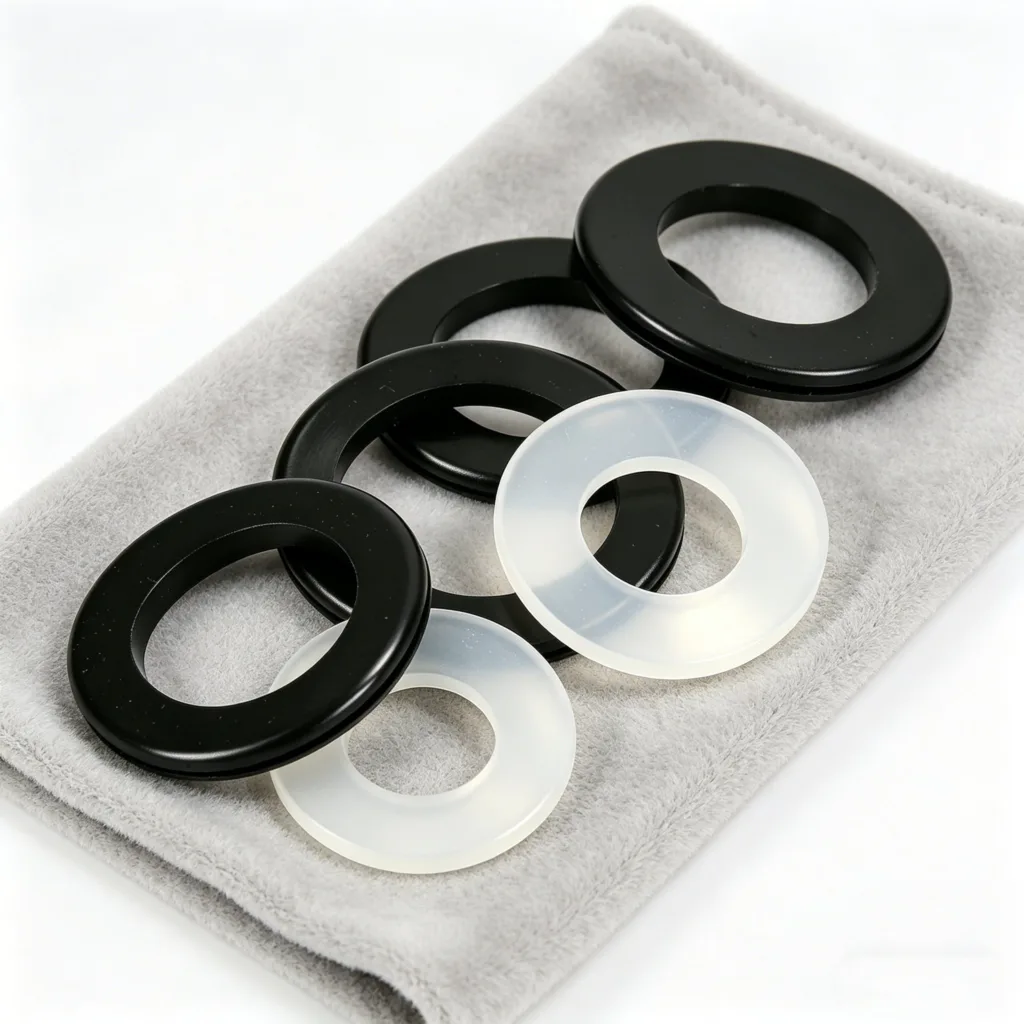
You need gaskets for food equipment, but standard materials might contaminate your products over time. This creates safety risks and compliance headaches that could shut down your operation.
Food grade gasket materials require FDA-approved compounds like silicone and EPDM that resist degradation, prevent extractables, and maintain sealing integrity under food processing conditions including high temperatures and cleaning chemicals.
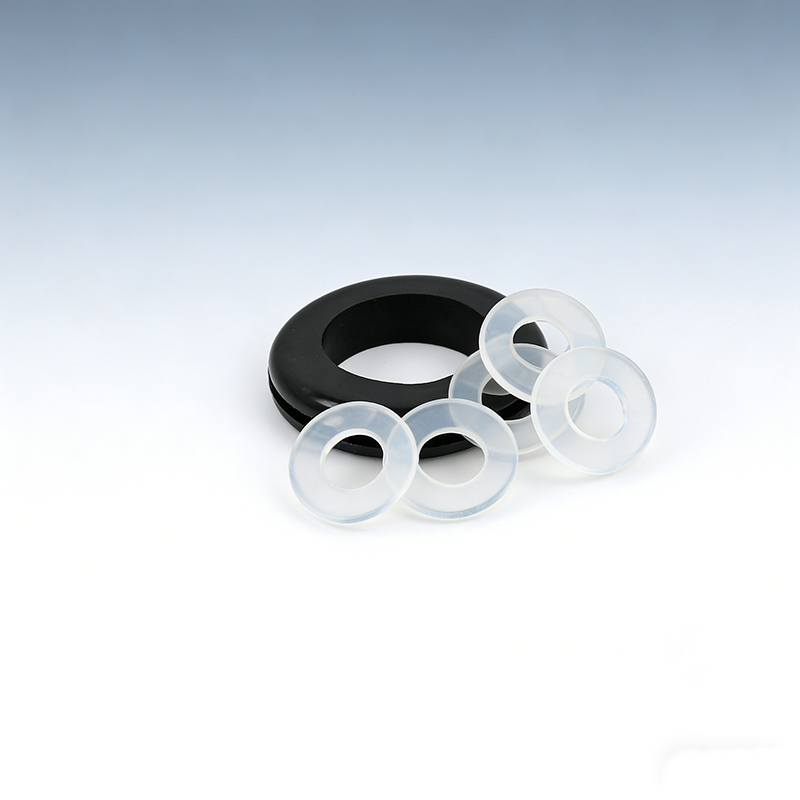
After working with food equipment manufacturers for over a decade, I've seen too many companies focus only on initial certifications. They miss the bigger picture. Real food safety happens when materials stay stable over months and years of actual use.
Why Do Most Food Grade Materials Fail Over Time?
Many buyers think any "food grade" label means safety. But I've watched equipment fail because companies chose materials based on price, not performance.
Food grade materials fail when they break down under real processing conditions, releasing particles or chemicals into food products, creating contamination risks that standard testing might not catch initially.
The problem starts with how most people evaluate materials. They look at certifications first. FDA approval, LFGB compliance, NSF ratings. These matter, but they don't tell the whole story.
Real failure happens slowly. I worked with a dairy processor who used "certified" gaskets in their pasteurization equipment. After six months, they noticed off-flavors in their milk. The gaskets looked fine, but chemical analysis showed extractables leaching into the product.
We replaced their standard NBR gaskets with our custom food-grade silicone compound. The difference was immediate. No more flavor issues. No more worried quality managers. The material stayed stable through thousands of heating and cooling cycles.
| Material Property | Standard Food Grade | Our Enhanced Solution | Impact on Safety |
|---|---|---|---|
| Extractables (ppm) | <10 | <2 | Reduced contamination risk |
| Temperature stability | 150°C | 200°C | Better performance in steam cleaning |
| Chemical resistance | Basic | Enhanced | Survives aggressive sanitizers |
| Compression set | 25% | 15% | Maintains seal integrity longer |
The key is understanding your actual process conditions. Steam sterilization cycles. Caustic cleaning chemicals. Temperature swings. Mechanical stress. Most standard materials can't handle this combination long-term.
What Should You Look for in Food Grade Silicone Gaskets?
Silicone works best for most food applications, but not all silicone is created equal. The wrong formulation will cause problems you won't see coming.
High-quality food grade silicone gaskets use platinum-cured compounds with low extractables, high purity levels, and thermal stability above 200°C to ensure safety during repeated sterilization and cleaning cycles.
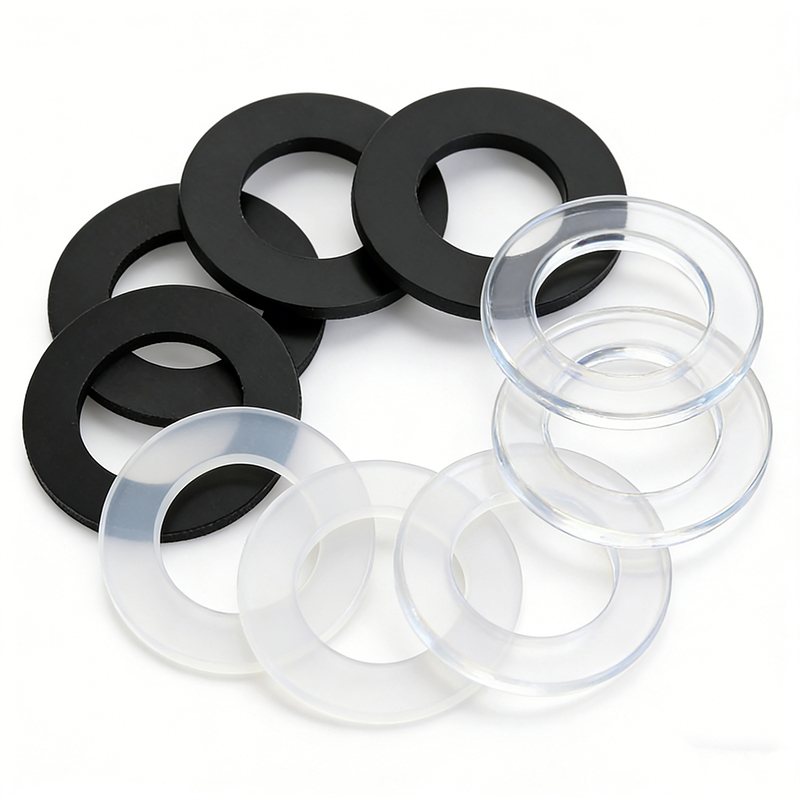
I remember working with a beverage company that needed gaskets for their hot-fill equipment. They were using standard food-grade silicone that met FDA requirements. But after a few months, the gaskets started hardening and losing their seal.
The problem was the curing system. Their supplier used peroxide-cured silicone, which breaks down under high temperatures. We switched them to platinum-cured silicone with enhanced thermal stability.
The results spoke for themselves. No more unplanned maintenance. No more seal failures during production runs. Their operations manager told me it was like switching from a bicycle to a race car.
Here's what makes the difference in silicone selection:
Curing System: Platinum-cured silicone offers better stability than peroxide-cured versions. The platinum catalyst creates stronger, more stable cross-links that resist breakdown under heat and chemicals.
Purity Level: Medical-grade silicone has fewer impurities than standard food-grade versions. This reduces the risk of extractables and ensures consistent performance batch after batch.
Hardness Optimization: Most people choose durometer based on what's available. We engineer hardness based on your sealing requirements and process conditions.
Color Stability: White or clear silicone shows contamination easily, helping with visual inspection during cleaning and maintenance.
| Silicone Type | Temperature Range | Extractables Level | Best Applications |
|---|---|---|---|
| Standard Food Grade | -40°C to 180°C | <10 ppm | Basic sealing applications |
| Medical Grade | -40°C to 200°C | <2 ppm | High-purity requirements |
| Enhanced Thermal | -40°C to 230°C | <1 ppm | Steam sterilization, hot processing |
| Ultra-Pure | -40°C to 200°C | <0.5 ppm | Pharmaceutical, sensitive products |
How Do Cleaning Chemicals Affect Gasket Performance?
Cleaning chemicals destroy more gaskets than temperature ever will. I've seen perfectly good seals turn into mush after a few CIP cycles with the wrong material choice.
Cleaning chemicals like sodium hydroxide, hydrogen peroxide, and quaternary ammonium compounds attack gasket materials through chemical degradation, swelling, and surface cracking, requiring specialized resistant formulations for long-term reliability.
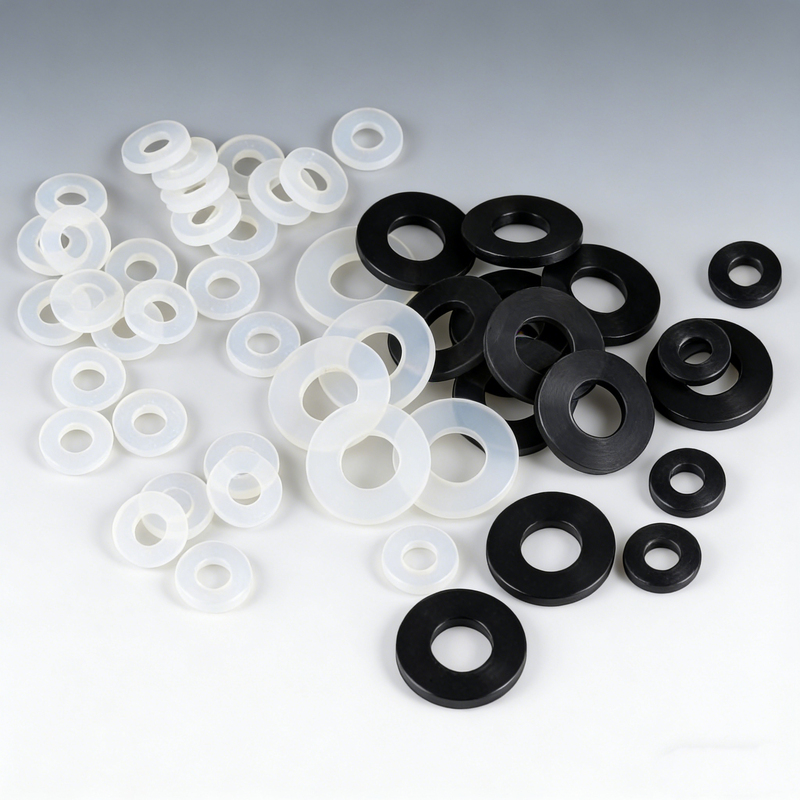
Most food processors use aggressive cleaning protocols. CIP (Clean-in-Place) systems pump hot caustic solutions through equipment at high pressure. SIP (Sterilize-in-Place) adds steam and sanitizers to the mix.
I worked with a meat processing plant that was replacing gaskets every two months. Their maintenance costs were through the roof. The problem wasn't the sealing design - it was chemical compatibility.
Their cleaning protocol used 2% sodium hydroxide at 80°C, followed by acid rinse and quaternary ammonium sanitizer. Standard EPDM gaskets couldn't handle this combination. The caustic attacked the polymer chains, causing swelling and surface degradation.
We developed a custom EPDM compound with enhanced chemical resistance. The new gaskets lasted over a year in the same application. Their maintenance manager said it cut their gasket costs by 75%.
Key Chemical Resistance Factors:
Alkaline Resistance: Sodium hydroxide and potassium hydroxide are standard in CIP systems. Materials need cross-link density high enough to resist chain scission.
Acid Compatibility: Phosphoric acid, nitric acid, and organic acids require different resistance mechanisms. Some materials swell, others crack.
Oxidizer Tolerance: Hydrogen peroxide, peracetic acid, and chlorine compounds create free radicals that attack polymer backbones.
Sanitizer Stability: Quaternary ammonium compounds, iodophors, and alcohol-based sanitizers each interact differently with gasket materials.
| Chemical Type | Concentration | Temperature | Compatible Materials | Resistance Rating |
|---|---|---|---|---|
| Sodium Hydroxide | 2-4% | 60-85°C | Enhanced EPDM, FKM | Excellent |
| Phosphoric Acid | 1-3% | 40-70°C | EPDM, Silicone | Good |
| Hydrogen Peroxide | 0.5-3% | 25-60°C | EPDM, Special Silicone | Fair to Good |
| Peracetic Acid | 0.1-0.5% | 25-50°C | FKM, Enhanced EPDM | Good |
What About FDA Compliance vs European Standards?
Different markets have different requirements. What passes in the US might fail in Europe, and vice versa. I've seen companies get stuck at borders because of compliance gaps.
FDA regulations focus on migration testing and approved substances lists, while European LFGB standards emphasize overall migration limits and specific substance restrictions, requiring materials that meet both sets of criteria for global markets.


A few years ago, I worked with a company exporting food equipment to both US and European markets. Their gaskets met FDA requirements but failed LFGB testing for specific migration limits.
The problem was zinc oxide in their EPDM compound. FDA allows it as a processing aid, but LFGB has strict limits on zinc migration. We reformulated their compound using alternative curing systems that met both standards.
FDA Requirements:
- CFR Title 21 compliance for food contact substances
- Migration testing under specific time and temperature conditions
- Approved additive lists for rubber compounds
- Good Manufacturing Practices (GMP) documentation
European LFGB Standards:
- Overall migration limits (10 mg/dm² or 60 mg/kg)
- Specific migration limits for individual substances
- Sensory evaluation requirements
- Heavy metals restrictions
Key Compliance Strategies:
Dual Certification: We formulate materials to meet both FDA and LFGB requirements from the start, avoiding costly reformulations later.
Documentation Package: Complete traceability from raw materials to finished products, including certificates of compliance and test reports.
Regular Testing: Batch testing ensures ongoing compliance as raw materials and processes change over time.
| Standard | Migration Limit | Test Conditions | Key Restrictions |
|---|---|---|---|
| FDA CFR 21 | Substance-specific | 121°C, 2 hours | Approved additive lists |
| EU LFGB | 10 mg/dm² overall | 70°C, 2 hours | Heavy metals, specific substances |
| NSF/ANSI 51 | Performance-based | Actual use conditions | Biofilm resistance, cleanability |
Conclusion
Food grade gasket materials need more than certifications - they need proven stability under your actual process conditions to protect product safety long-term.