

Most people start by comparing materials. In real projects, that's not where success comes from.
The right gasket material is simply the one that will not fail in your actual working conditions. Get this wrong, and even a high-quality gasket will crack under UV or heat, swell in oils or chemicals, or lose elasticity over time.
After working with thousands of gasket applications over the past 27 years, I've learned that material selection isn't about picking the "best" option. It's about finding the perfect match for your specific environment.
What's the One Thing That Matters Most in Material Selection?
Environment compatibility beats everything else. Every single time.
Environment compatibility is the single most critical factor in gasket material selection. A gasket that can't handle your actual working conditions will fail regardless of its quality or cost.


I remember a client who came to us after their "premium" gaskets failed within three months. They had chosen expensive materials based on general specifications. But they never considered their specific environment. Their outdoor LED fixtures faced constant UV exposure, temperature swings from -20°C to 60°C, and regular moisture contact.
The problem wasn't the gasket quality. The problem was material mismatch. We replaced their general-purpose rubber with UV-stabilized silicone designed for outdoor applications. Two years later, those gaskets are still performing perfectly.
Here's what happens when you get environment compatibility wrong:
| Problem | Cause | Result |
|---|---|---|
| Cracking | UV exposure on non-UV resistant materials | Water ingress, product failure |
| Swelling | Chemical contact with incompatible elastomers | Seal distortion, leakage |
| Hardening | Temperature extremes beyond material limits | Loss of compression, seal failure |
| Degradation | Ozone or oxidation attack | Brittle gaskets, complete seal loss |
Environment compatibility isn't just about avoiding failure. It's about ensuring consistent performance throughout your product's entire service life.
How Do We Determine Your Perfect Material Match?
We don't ask which material you want. We ask what your product faces every day.
Our engineering team evaluates four critical factors: temperature range, chemical exposure, compression requirements, and expected service life to recommend the optimal gasket material for your specific application.
Our material selection process starts with understanding your real-world conditions. I've seen too many projects fail because someone chose materials based on theoretical specifications instead of actual use conditions.
Here's our systematic approach:
Temperature Analysis We map your complete temperature profile. Not just operating temperature, but storage conditions, thermal cycling, and peak exposure events. Silicone handles -60°C to 200°C continuously. EPDM works well from -40°C to 150°C. NBR covers -30°C to 120°C effectively.
Chemical Compatibility Assessment We identify every substance your gasket will contact. Water, oils, fuels, cleaning agents, atmospheric pollutants. Each material has specific chemical resistance profiles. EPDM excels with water and polar substances. NBR resists petroleum products and oils. Silicone handles most chemicals except strong bases and certain solvents.
Mechanical Requirements Evaluation We calculate compression forces, sealing pressure, and deflection requirements. Different materials have different compression set resistance and recovery properties. This affects long-term sealing performance.
Service Life Expectations We factor in replacement schedules, maintenance windows, and failure consequences. Some applications need 20-year performance. Others can accept annual replacement. This dramatically impacts material choice and cost optimization.
Based on these four factors, we recommend the optimal solution with complete confidence in real-world performance.
Which Materials Work Best for Common Applications?
Different environments demand different material solutions. Here's what works in practice.
Silicone excels in extreme temperature and outdoor applications. EPDM dominates water and weather resistance. NBR handles oil and fuel environments. Each material has specific strengths that match particular use conditions.
After decades of application experience, clear patterns emerge. Certain materials consistently outperform in specific environments.
Silicone Applications Silicone works perfectly for outdoor electronics, automotive engine bay components, food processing equipment, and medical devices. It maintains flexibility at temperature extremes. UV resistance is excellent. Chemical inertness is superior. The downside is cost and limited fuel resistance.
EPDM Applications EPDM dominates HVAC systems, water treatment equipment, automotive weather seals, and building applications. Water resistance is outstanding. Ozone and weather resistance is exceptional. Cost effectiveness is high. It doesn't work with petroleum products.
NBR Applications NBR handles automotive fuel systems, hydraulic equipment, industrial machinery, and oil processing applications. Oil and fuel resistance is superior. Cost is reasonable. Temperature range is moderate. It struggles with ozone and weather exposure.
Material Selection Matrix
| Environment | Primary Choice | Secondary Option | Avoid |
|---|---|---|---|
| Outdoor/UV | Silicone | EPDM | NBR |
| Water/Steam | EPDM | Silicone | NBR |
| Oil/Fuel | NBR | FKM | EPDM |
| High Temperature | Silicone | FKM | EPDM |
| Food Contact | Silicone | EPDM (food grade) | NBR |
The key is matching material strengths to your specific environmental demands. Don't compromise on critical requirements to save cost. The failure cost always exceeds the material cost difference.
How Do We Ensure Your Material Choice Delivers Long-Term Performance?
Quality control starts with raw materials and continues through final testing. Every step matters.
We control every aspect of gasket production from raw material verification through functional testing under real conditions. This ensures your solution works consistently in mass production, not just in samples.
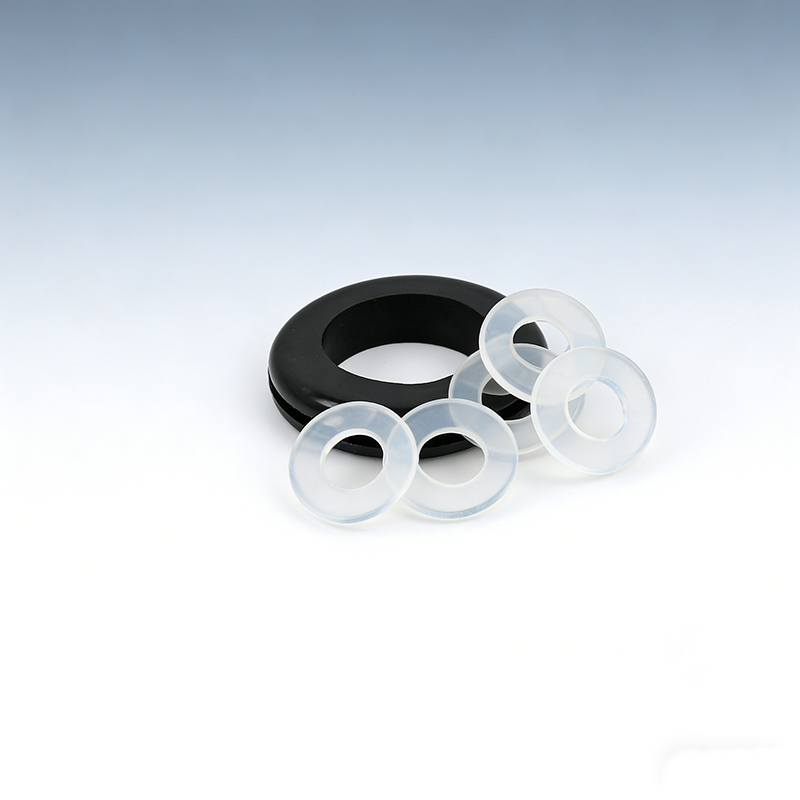
Material selection means nothing without proper execution. I've seen perfect material choices fail due to poor processing or inadequate quality control.
Raw Material Verification We test every batch of incoming materials. Shore hardness, tensile strength, elongation, and specific gravity must meet specifications. We maintain certificates for all raw materials. Traceability extends back to the polymer manufacturer.
Formulation Control Our mixing process follows strict protocols. Ingredient ratios are computer controlled. Mixing time and temperature are monitored continuously. Each batch gets a unique identification number for complete traceability.
Processing Validation Molding parameters are validated for each material and part geometry. Temperature profiles, cure times, and pressure settings are documented and controlled. Process capability studies ensure consistent part dimensions and properties.
Performance Testing We test gaskets under simulated service conditions. Compression set testing at elevated temperature. Chemical immersion tests with actual contact media. Accelerated aging tests for long-term property prediction.
Documentation Package Every production lot includes material certificates, dimensional reports, and property test data. This documentation supports your quality systems and regulatory requirements.
This comprehensive approach ensures that your carefully selected material delivers the expected performance throughout your product's service life.
Conclusion
Choosing gasket material isn't about picking from a list. It's about making the right decision for long-term reliability based on your specific environment and requirements.