

Engineers face a critical decision when specifying rubber handles. The wrong choice leads to production delays, assembly problems, and costly rework.
The answer depends on your application environment, not just material preferences. Silicone excels in temperature extremes, EPDM handles outdoor exposure, NBR resists oil, and Neoprene offers balanced performance. However, choosing rubber type without defining actual operating conditions creates the biggest project risk.
Most engineers start with a simple question about rubber types. But I have learned from 27 years in rubber manufacturing that this approach often leads projects into trouble. The real engineering challenge is not choosing between materials. It is defining what the handle must actually survive.
What Makes Handle Material Selection So Challenging?
Material selection feels straightforward until you see what happens in real applications. Engineers often specify "60 Shore A rubber" and assume the supplier will choose correctly.
Handle material selection fails when engineers specify hardness and color without defining operating environment, installation method, and dominant failure mechanisms. This incomplete specification forces suppliers to make assumptions that often prove wrong during mass production.


The challenge comes from treating handles like standard components. But handles are actually complex engineering systems that must provide grip, resist wear, survive installation stress, and maintain performance across temperature and chemical exposure ranges. I have seen projects where the "correct" material choice still failed because nobody evaluated the complete functional requirements.
Consider what happens during handle installation. The rubber must stretch over a metal shaft without tearing. It must provide consistent grip despite oil contamination. It must remain flexible despite temperature cycling. These requirements interact with each other in ways that cannot be predicted from material datasheets alone.
The most expensive mistakes happen when projects select materials based on general experience rather than specific application analysis. A handle that works perfectly in one application can fail completely when moved to different operating conditions, even when using identical rubber compounds.
Why Silicone Handles Excel in Temperature-Critical Applications?
Silicone handles dominate applications where temperature capability and tactile performance matter most. We manufacture silicone handles for appliance manufacturers who need consistent grip across cooking temperatures.
Silicone handles maintain flexibility from -65°F to 400°F while providing excellent tactile feel. However, silicone shows lower tear resistance than other elastomers, making installation method and geometry critical design factors that must be evaluated during material selection.
The temperature advantage of silicone goes beyond simple heat resistance. Silicone maintains consistent hardness across temperature ranges where other rubbers become brittle or excessively soft. This stability makes silicone handles predictable for operators working in varying thermal conditions.
But silicone has specific limitations that engineers must consider. Tear propagation can occur if the handle experiences sharp edges or excessive stretching during installation. Chemical compatibility varies significantly between silicone formulations, particularly with certain oils and solvents. Abrasion resistance is generally lower than NBR or EPDM alternatives.
| Property | Silicone Performance | Engineering Consideration |
|---|---|---|
| Temperature Range | -65°F to 400°F | Excellent stability |
| Tear Resistance | Moderate | Critical for stretch-on installation |
| Chemical Resistance | Variable by compound | Must specify actual chemicals |
| UV Resistance | Excellent | Ideal for outdoor applications |
| Abrasion Resistance | Lower than NBR/EPDM | Consider usage patterns |
The key insight is that silicone works best when temperature capability is the dominant requirement and mechanical stress is controlled through proper geometry and installation methods. Applications like medical equipment handles, appliance grips, and specialized tools often benefit from silicone's unique property combination.
When Does EPDM Become the Right Choice for Outdoor Handles?
EPDM handles solve the outdoor exposure challenge that destroys other rubber types. Our automotive customers rely on EPDM for equipment handles that face continuous weather exposure.
EPDM provides superior ozone resistance, UV stability, and water resistance, making it ideal for outdoor equipment handles. The limitation is oil compatibility - EPDM swells in petroleum-based fluids, requiring careful evaluation when handles contact oils or fuels.


The weathering resistance of EPDM comes from its saturated polymer backbone, which resists ozone attack and UV degradation. This makes EPDM handles maintain their properties through years of outdoor exposure where other materials would crack, harden, or lose elasticity.
Water resistance is another key EPDM advantage. The material does not absorb significant moisture, preventing dimensional changes and property degradation in wet environments. This stability makes EPDM suitable for marine applications, construction equipment, and agricultural machinery handles.
However, EPDM's weakness with oils creates application limitations. Petroleum-based lubricants, hydraulic fluids, and fuels cause EPDM to swell and lose mechanical properties. This means equipment that operates outdoors but also contacts oils may require different material solutions or protective measures.
Temperature capability of EPDM spans from -40°F to 250°F in most compounds, covering typical outdoor temperature ranges. The material maintains flexibility at low temperatures while resisting hardening at moderate heat levels. Color stability is excellent, with black EPDM handles maintaining appearance through extended UV exposure.
The engineering decision for EPDM should consider the complete exposure environment. Pure outdoor weathering favors EPDM. Combined outdoor and oil exposure may require NBR or specialized compounds. Mixed indoor-outdoor use might allow silicone alternatives depending on temperature requirements.
How NBR Handles Solve Oil Resistance Challenges?
NBR handles dominate industrial applications where oil exposure is unavoidable. Our machinery customers specify NBR when handles contact hydraulic fluids, cutting oils, or petroleum-based lubricants.
NBR provides excellent oil resistance and mechanical strength, maintaining grip and dimensional stability in petroleum environments. The trade-off is limited ozone resistance, making NBR unsuitable for outdoor applications without protective measures or specialized compounds.
The oil resistance of NBR comes from its nitrile content, which provides chemical compatibility with petroleum-based fluids. Higher nitrile content increases oil resistance but reduces low-temperature flexibility. This creates a compound selection decision based on operating temperature range and oil exposure severity.
Mechanical properties of NBR excel in industrial applications. Tensile strength, tear resistance, and abrasion resistance typically exceed silicone and often surpass EPDM. This makes NBR handles suitable for high-stress applications where mechanical durability is critical.
The limitation of standard NBR compounds is ozone sensitivity. Outdoor exposure causes surface cracking and property degradation. This restricts NBR to indoor applications or requires protective measures like antiozonant additives or surface treatments.
| NBR Property | Performance Level | Application Impact |
|---|---|---|
| Oil Resistance | Excellent | Primary advantage |
| Mechanical Strength | High | Suitable for high-stress use |
| Ozone Resistance | Poor (standard compounds) | Limits outdoor applications |
| Temperature Range | -20°F to 200°F | Moderate capability |
| Cost | Moderate | Economical for oil applications |
Temperature capability of NBR varies with compound formulation but typically ranges from -20°F to 200°F. This covers most industrial machinery operating conditions but may limit applications requiring extreme temperature performance.
The engineering choice for NBR should prioritize oil exposure over other factors. Applications with significant petroleum contact benefit from NBR's chemical resistance. Equipment operating indoors with oil exposure represents the ideal NBR application profile.
Why Neoprene Offers Balanced Performance for General Industrial Use?
Neoprene handles provide balanced performance when applications require moderate capability across multiple properties rather than excellence in one area. We recommend Neoprene for general industrial equipment where environmental conditions vary.
Neoprene combines moderate oil resistance, weathering capability, and mechanical strength, making it suitable for applications where no single environmental factor dominates. This versatility comes with the trade-off of not excelling in any specific property compared to specialized materials.
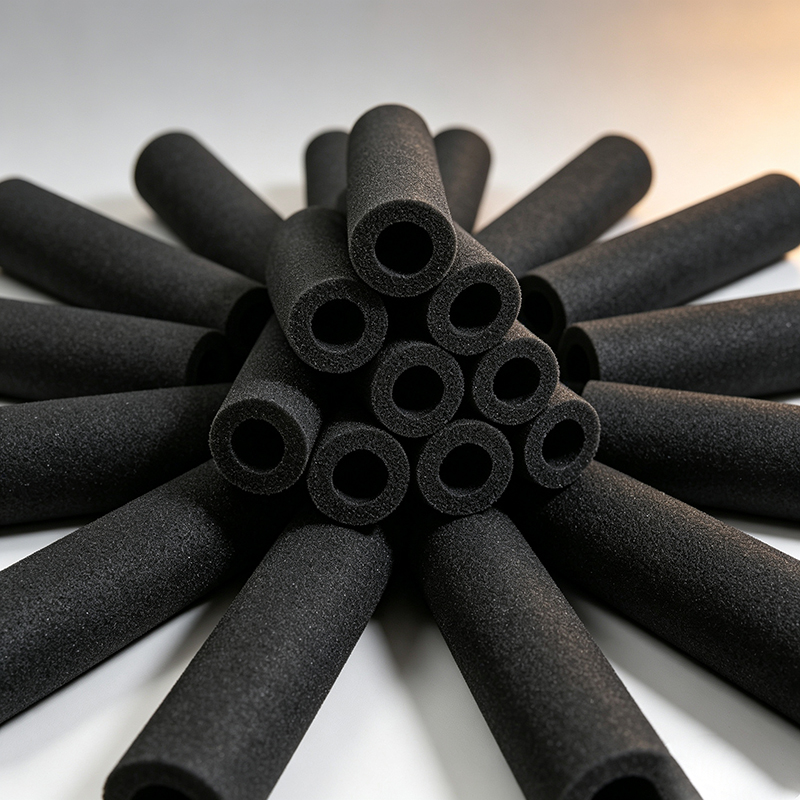
The balanced nature of Neoprene comes from its chloroprene polymer structure, which provides moderate resistance to oils, ozone, and temperature while maintaining reasonable mechanical properties. This makes Neoprene a compromise solution when application requirements span multiple performance areas.
Weathering resistance of Neoprene exceeds NBR but falls short of EPDM. Oil resistance surpasses EPDM but does not match NBR performance. Temperature capability covers a moderate range without the extremes available from silicone. This positioning makes Neoprene suitable for applications with mixed environmental exposure.
Manufacturing considerations favor Neoprene for certain handle designs. Processing characteristics allow complex geometries and consistent molding. Adhesion to metal substrates is generally good, supporting overmolded handle designs. Color options are broader than some specialty elastomers.
The economic factor often influences Neoprene selection. Cost typically falls between premium silicone and economical NBR, providing moderate performance at moderate price points. This positioning suits applications where budget constraints limit material options but performance requirements exceed basic rubber capabilities.
Application examples include general industrial equipment, maintenance tools, and commercial appliances where handles experience varied environmental conditions but no extreme exposures. The key insight is that Neoprene works best when versatility is more important than peak performance in any single property.
What Installation Method Determines Material Success?
Installation method creates the highest stress that most handles experience during their service life. Engineers often overlook installation forces when selecting materials, leading to field failures that appear mysterious.
Handle installation method determines maximum allowable material strain and influences tear resistance requirements. Stretch-on installation over metal shafts creates the highest material stress, requiring careful evaluation of elongation limits and tear propagation resistance regardless of elastomer type.
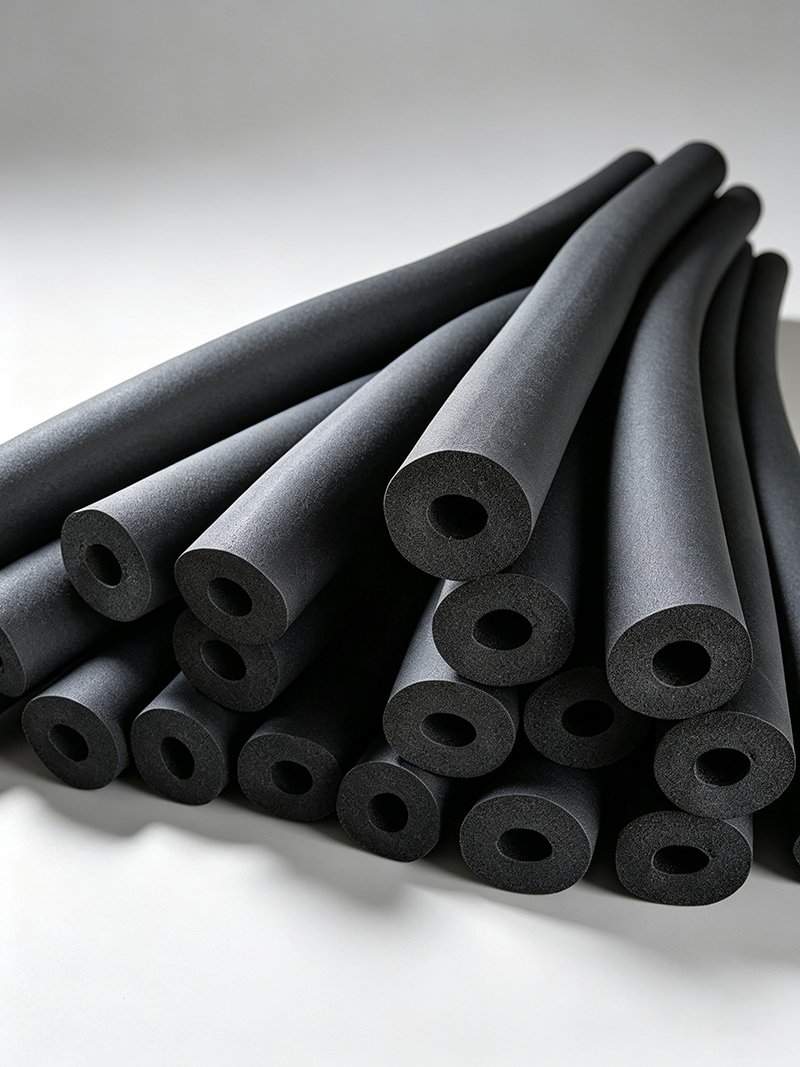
The physics of handle installation creates localized stress concentrations that can exceed material limits even when overall design appears conservative. A handle that survives operating loads may fail during installation if material selection does not account for assembly forces.
Stretch-on installation represents the most demanding installation method. The handle must expand beyond its natural diameter while maintaining structural integrity. This requires materials with high elongation capability and resistance to tear propagation from stress concentration points.
Push-on installation reduces material stress but creates different challenges. Dimensional accuracy becomes critical to ensure proper fit without excessive force. Surface friction affects assembly effort and may require material surface treatments or lubrication protocols.
Overmolded handles eliminate installation stress by forming the rubber directly onto the substrate. This method allows softer materials and more complex geometries but requires different tooling approaches and may limit field serviceability.
| Installation Method | Material Stress Level | Key Requirements |
|---|---|---|
| Stretch-on | Very High | Elongation, tear resistance |
| Push-on | Moderate | Dimensional accuracy, friction |
| Overmolded | Low | Adhesion, process compatibility |
| Bonded | Low | Surface preparation, adhesive compatibility |
| Clamped | Variable | Compression resistance, creep |
The critical insight is that installation method must be defined before material selection, not after. A material that works perfectly in one installation method may be completely unsuitable for another, even in identical operating environments.
Field installation adds variability that laboratory testing may not capture. Different operators, varying ambient temperatures, and production line speed changes all affect installation forces and success rates. Material selection must account for this real-world variation.
Conclusion
The right rubber for handles depends on your specific application requirements, not general material preferences. Silicone excels in temperature extremes, EPDM handles outdoor exposure, NBR resists oil, and Neoprene provides balanced performance across multiple properties.