

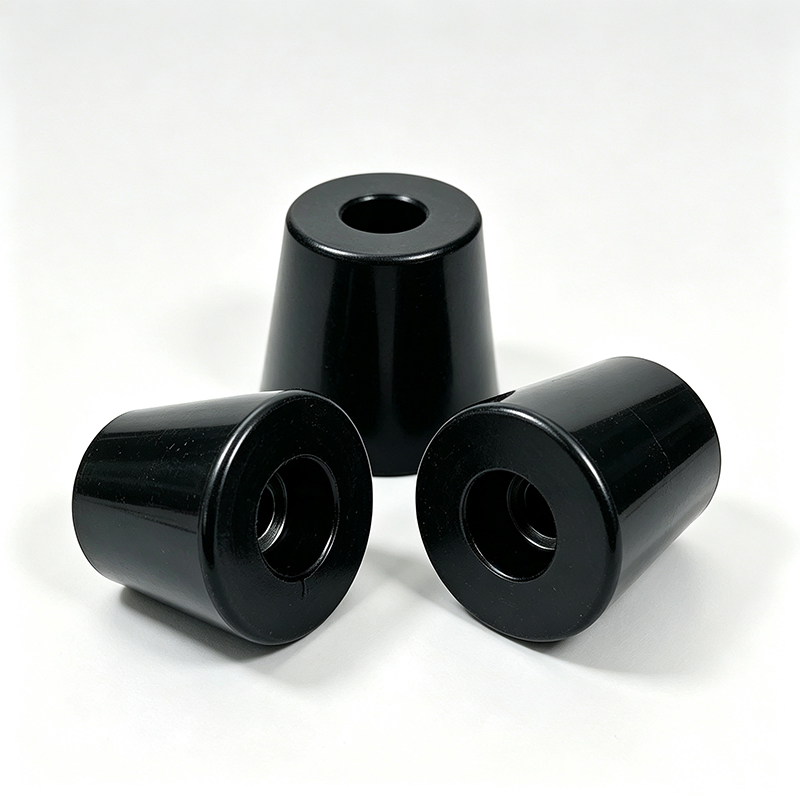
When machinery vibrates too much, engineers often ask which rubber can solve the problem. The answer seems simple - pick a soft rubber material.
The truth is more complex. Natural rubber, neoprene, NBR, EPDM, and silicone can all control vibration. But selecting the right material requires understanding your specific frequency, load, and environmental conditions - not just choosing "soft rubber."
This mistake costs projects time and money. I have seen teams select rubber based on material name alone, pass sample tests, then fail when the complete machine runs. The problem is not the rubber quality - it is the incomplete specification.
Does Material Type Actually Matter for Vibration Control?
Most engineers start with the same question: which rubber family absorbs vibration best? This creates the first decision trap.
Material type matters, but it is only one variable in vibration control. The same rubber compound can perform differently based on hardness, geometry, load, frequency, and mounting method.


Different elastomers serve different conditions. Natural rubber provides excellent vibration isolation with high strength and fatigue resistance. It works well for indoor applications with moderate temperatures. Neoprene adds environmental resistance when weather exposure matters. NBR becomes critical when oil contact occurs. EPDM handles outdoor conditions and ozone exposure. Silicone covers wide temperature ranges.
But here is what surprises many projects: the material family does not determine success alone. I worked on a project where two identical natural rubber compounds performed completely differently. The difference was geometry - one was a thin pad, the other a thick cylindrical mount. The thin pad transmitted more vibration because it had different stiffness characteristics.
The key insight is this: rubber materials provide the foundation, but the complete system determines performance. You need to match material properties with your specific operating conditions. Temperature, chemical exposure, load direction, and frequency all influence which material works best.
Can You Really Absorb Vibration or Just Isolate It?
Engineers often use "absorb vibration" when they mean different things. This creates specification problems that appear later in production.
Vibration absorption and vibration isolation are different objectives. Absorption converts kinetic energy into heat. Isolation prevents energy transmission from one component to another.


Consider a motor mount application. The motor generates vibration at a specific frequency. You want to prevent this vibration from reaching the machine frame. This is isolation - you are blocking transmission, not necessarily converting energy to heat.
Compare this with a shock buffer application. A moving component hits the rubber buffer during operation. Here you want energy absorption - converting the impact energy into heat to limit rebound and protect components.
These applications can require different rubber characteristics. High-damping compounds work well for energy absorption because they convert mechanical energy to heat efficiently. But high damping can actually reduce isolation performance at certain frequencies, according to Parker's vibration engineering guides.
I encountered this distinction on an industrial pump project. The customer initially requested "high damping rubber to absorb pump vibration." But the real requirement was isolating continuous rotational vibration from the pump to the floor. We used lower-damping natural rubber with specific geometry to achieve better isolation performance. The customer was surprised that "less damping" provided better results, but isolation theory explains why this works.
The practical implication is clear: define your actual objective before selecting material properties. Are you preventing transmission, converting energy, controlling resonance, or managing impact? Each objective can point toward different material and design choices.
What Makes Natural Rubber Special for Vibration Applications?
Natural rubber appears in most vibration isolation discussions. There are engineering reasons why this material gets recommended frequently.
Natural rubber combines high elasticity, excellent fatigue resistance, and effective vibration isolation characteristics. It provides good strength-to-weight ratio and can handle repeated dynamic loading without degrading quickly.
The molecular structure of natural rubber creates its unique properties. Long polymer chains can stretch significantly and return to original shape. This elasticity allows natural rubber to deform under dynamic loads while maintaining structural integrity. The material also has relatively low internal damping, which can be advantageous for vibration isolation.
Trelleborg uses natural rubber in vibration isolators for generators, pumps, engines, and compressors. The material handles continuous dynamic loading while providing consistent stiffness characteristics. Natural rubber also offers good fatigue performance, which matters for applications with millions of load cycles.
However, natural rubber has clear limitations. Temperature range is more restricted compared to synthetic elastomers. Chemical resistance is limited, especially with oils and solvents. Ozone and UV exposure can cause degradation. Weather resistance is poor for outdoor applications.
I worked with a customer who insisted on natural rubber for an outdoor generator application. The material provided excellent vibration isolation initially, but cracking appeared after six months of weather exposure. We switched to EPDM with modified geometry to maintain similar dynamic performance while adding weather resistance.
The lesson is that natural rubber excels at vibration isolation under suitable conditions. But "suitable conditions" must be defined based on your actual environment, not just the vibration requirement. Material selection cannot ignore temperature, chemical exposure, or environmental factors.
When Do Synthetic Rubbers Become Necessary?
Synthetic elastomers become important when natural rubber cannot handle the operating environment. Each synthetic family addresses specific limitations.
Synthetic rubbers like neoprene, NBR, EPDM, and silicone extend vibration control into applications with temperature extremes, chemical exposure, weather conditions, or special performance requirements that natural rubber cannot handle.


Neoprene (chloroprene rubber) provides moderate oil resistance and better weather resistance than natural rubber. It maintains reasonable vibration-damping characteristics while handling temperature variations better. Neoprene works well for applications with occasional oil contact or outdoor exposure where EPDM might be too expensive.
NBR (nitrile rubber) becomes critical when oil and fuel contact occurs. Engine mounts, hydraulic system isolators, and pump mounts often require NBR to survive hydrocarbon exposure. The material provides adequate vibration control while maintaining integrity in oil environments.
EPDM handles weather, ozone, and water exposure effectively. Outdoor equipment, automotive applications, and HVAC systems often use EPDM vibration isolators. The material maintains elasticity through temperature cycles and resists degradation from UV exposure.
Silicone covers the widest temperature range and provides unique damping characteristics. High-temperature applications, food processing equipment, and precision instruments may require silicone compounds. Some formulations offer enhanced damping for specific frequency ranges.
I worked on a hydraulic pump project where the customer initially specified natural rubber mounts. The pumps operated in an industrial environment with hydraulic fluid exposure. Natural rubber mounts failed within weeks due to oil swelling. We switched to NBR compounds with similar hardness and geometry. The vibration performance remained acceptable while chemical resistance improved dramatically.
The key point is matching material capabilities with actual operating conditions. Do not select synthetic rubber simply because it is "more advanced" than natural rubber. But do not avoid synthetic materials when environmental conditions require their specific properties.
How Does Hardness Actually Affect Vibration Performance?
Shore hardness gets specified frequently, but many engineers do not understand how hardness connects to vibration behavior. This creates specification problems.
Hardness influences stiffness, which determines natural frequency and load-carrying capacity. But the relationship between hardness and vibration performance depends on geometry, loading direction, and frequency range.


Softer rubber (lower Shore A values) generally provides lower stiffness and lower natural frequency. This can improve isolation at higher frequencies but may create stability problems under load. The rubber may also bottom out under maximum loading, which eliminates isolation effectiveness.
Harder rubber (higher Shore A values) provides higher stiffness and load capacity but may not isolate effectively at lower frequencies. The system natural frequency increases, which can move resonance into the operating frequency range.
The geometry factor is critical here. A thin rubber pad behaves differently than a thick cylindrical mount, even with identical hardness. Shape factor (loaded area divided by bulge area) influences effective stiffness significantly. Compression loading produces different stiffness than shear loading.
I encountered this on a motor mount project where the customer specified 60 Shore A natural rubber. The initial design used thin pads in compression. Vibration transmission was higher than expected because the effective stiffness was too high due to geometry constraints. We changed to cylindrical mounts in combined compression-shear loading. The same 60 Shore A material provided much better isolation with different geometry.
Temperature also affects hardness and stiffness. Most elastomers become stiffer at low temperatures and softer at high temperatures. If your application sees temperature variation, the hardness specification should account for this change.
The practical approach is to specify hardness ranges that work with your geometry and loading conditions. Do not select hardness based solely on "softer is better" assumptions. Consider the complete system behavior under actual operating conditions.
Why Do Sample Tests Pass but Production Units Fail?
This scenario frustrates many engineering teams. The prototype rubber component passes all inspections, but the complete machine fails vibration requirements during production testing.
Sample testing often validates material properties and dimensions but misses system-level dynamic behavior. The rubber component meets specifications while the complete assembly does not meet vibration performance targets.


Typical sample tests check hardness, dimensions, appearance, and basic compression properties. These tests confirm that the rubber component matches the drawing specifications. But they do not validate how the component performs in the actual vibration isolation system.
The problem occurs because vibration performance depends on the interaction between excitation frequency, system natural frequency, damping, and loading conditions. A component test cannot simulate these system-level interactions accurately.
Consider a motor mount application. The sample test might compress the rubber mount and measure load-deflection characteristics. This confirms basic stiffness properties. But it does not test how the mount performs when installed between a vibrating motor and machine frame at actual operating frequency.
I worked on a compressor project where this exact problem occurred. The rubber isolators passed all incoming inspections. Hardness, dimensions, and compression tests were within specification. But when installed in the complete compressor, vibration transmission exceeded customer requirements.
Investigation revealed that the actual excitation frequency was close to the system natural frequency, creating resonance amplification. The component properties were correct, but the system response was not acceptable. We had to modify the mount geometry to shift the natural frequency away from the excitation frequency.
The solution is system-level validation during prototyping. Test the rubber component in representative assembly conditions, not just as an isolated component. Measure actual vibration transmission under operating conditions before approving mass production.
What Questions Should You Ask Before Selecting Material?
Most vibration control projects start with insufficient information. Engineers assume they can select rubber based on application type alone. This creates specification gaps that appear during production.
Before selecting rubber material, define the actual vibration source, frequency range, load conditions, environmental requirements, and performance targets. Generic applications require specific engineering parameters.
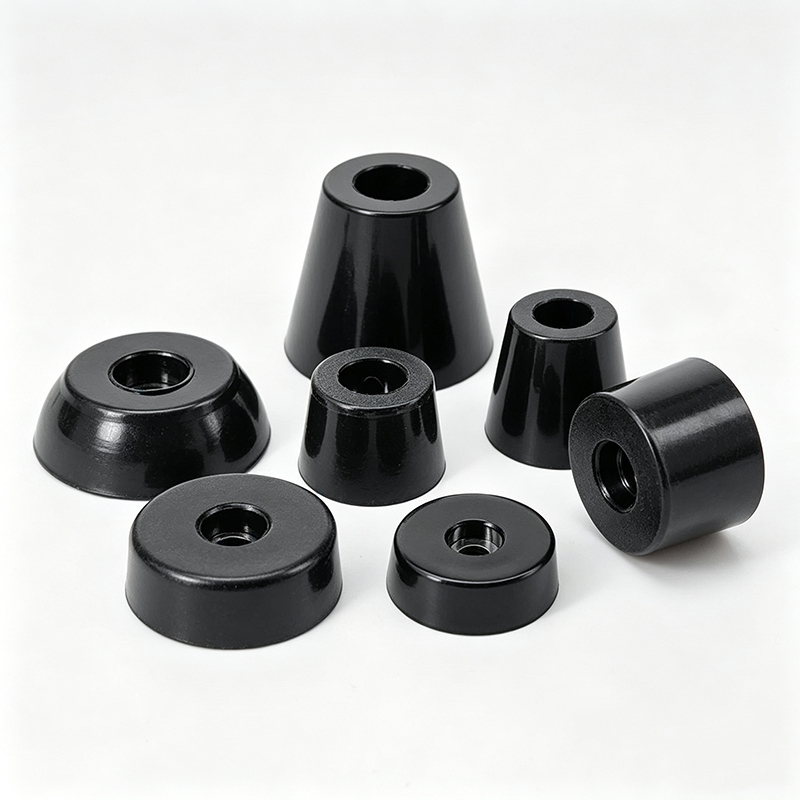
Start with the vibration source. What equipment generates the vibration? What is the operating speed and dominant frequency? Is the vibration continuous, intermittent, or impact-based? Different sources require different isolation strategies.
Define the load conditions. What is the static load on each mount? What dynamic loads occur during operation? How many mounts share the total load? What deflection is acceptable under maximum loading? Load distribution affects mount sizing and material selection.
Specify environmental conditions. What temperature range occurs during operation? Is there oil, chemical, or weather exposure? Does the application occur indoors or outdoors? Environmental requirements often determine which rubber families are suitable.
Establish performance targets. What vibration level is acceptable at the isolated component? What frequency range requires isolation? Are there resonance concerns? Performance targets help evaluate whether proposed solutions will work.
Consider installation constraints. How much space is available for the mounts? What mounting directions are possible? Are there alignment requirements? Installation limitations affect geometry options and material selection.
I worked with a customer who requested "rubber mounts for a pump application." This seemed straightforward initially. But when we asked specific questions, the requirements became more complex. The pump operated at variable speed (changing frequency), experienced temperature cycling (affecting material properties), and had limited mounting space (constraining geometry). Natural rubber with modified geometry provided the best solution, but only after understanding the complete requirements.
The key lesson is to gather complete information before proposing solutions. Do not assume that similar applications have identical requirements. Each project has unique conditions that influence material and design decisions.