

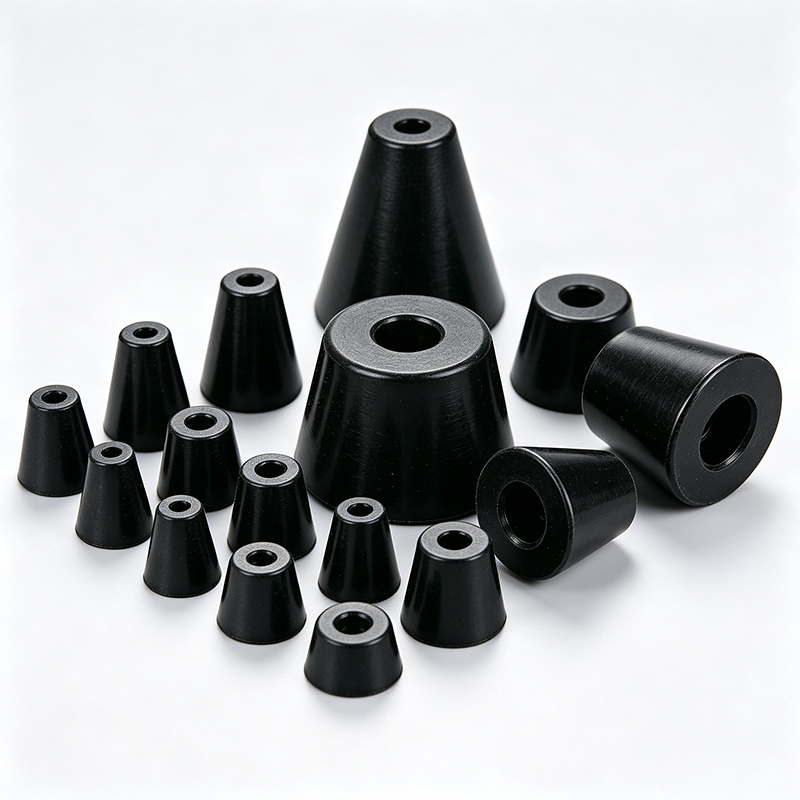
You need vibration control for your equipment, and someone suggests using rubber components. But will rubber actually solve your vibration problem?
Yes, rubber can reduce vibration effectively when properly engineered for your specific application. However, simply choosing "rubber" without considering compound, hardness, geometry, load conditions, and operating frequency often leads to inadequate vibration isolation and costly project delays.


I have seen too many projects where engineers assume rubber automatically means vibration reduction. This assumption creates expensive problems during production when the "rubber solution" fails to isolate vibration as expected.
What Makes Rubber Effective for Vibration Isolation?
Are you wondering why rubber works for vibration control while other materials do not? The answer lies in rubber's unique mechanical properties.
Rubber reduces vibration through controlled deformation and energy dissipation. The material's viscoelastic properties allow it to absorb vibrational energy while providing mechanical support, but effectiveness depends entirely on proper material selection and design.


Rubber works because it combines elasticity with damping. When vibration occurs, the rubber deforms to accommodate the movement while converting some vibrational energy into heat. This dual action reduces the transmission of vibration from the source to surrounding structures.
The key factors that determine rubber's vibration performance include the polymer type, compound formulation, hardness level, and cross-linking density. Natural rubber provides excellent vibration isolation at room temperature but degrades under heat and ozone. EPDM offers superior weather resistance while maintaining good vibration properties. Silicone maintains consistent performance across wide temperature ranges.
| Rubber Type | Temperature Range | Vibration Properties | Best Applications |
|---|---|---|---|
| Natural Rubber | -40°C to 80°C | Excellent isolation | General industrial |
| EPDM | -45°C to 120°C | Good isolation + weather resistance | Automotive, outdoor |
| Silicone | -65°C to 200°C | Consistent performance | High-temperature equipment |
| NBR | -30°C to 120°C | Good + oil resistance | Machinery, hydraulics |
However, I must emphasize that material selection alone does not guarantee success. The rubber must be engineered as a complete vibration isolation system, considering geometry, preload, compression ratio, and mounting configuration. A high-quality rubber compound in the wrong geometry will still fail to provide adequate vibration control.
How Does Rubber Component Design Affect Vibration Performance?
Does the shape and size of your rubber component matter as much as the material? The geometry directly controls how effectively the rubber isolates vibration.
Rubber component geometry determines stiffness, load distribution, and deformation characteristics that directly impact vibration isolation effectiveness. Poor geometry design can negate the benefits of even the best rubber compounds.
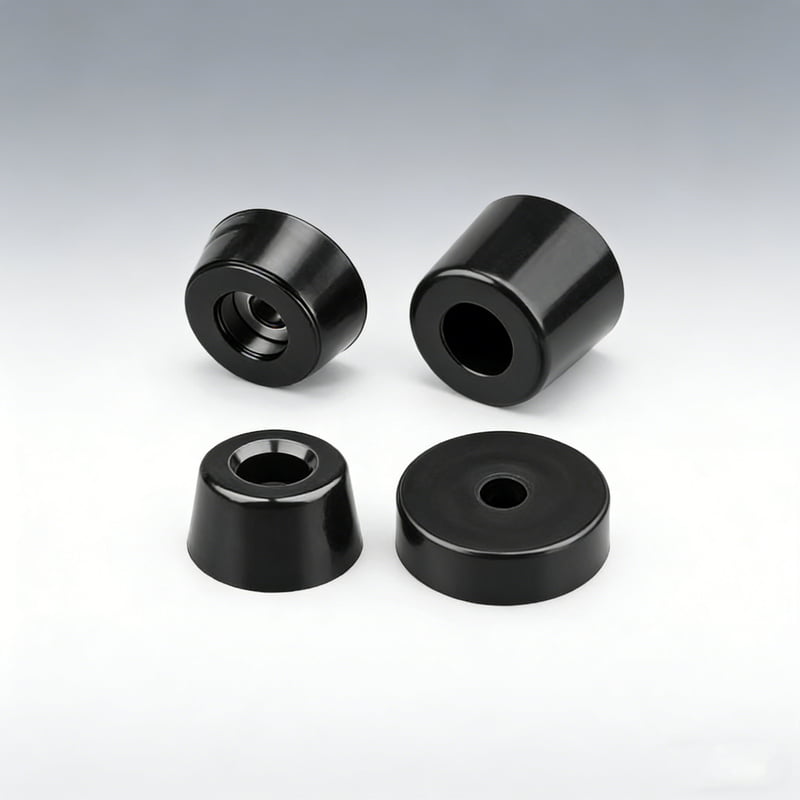
The relationship between geometry and performance is complex but predictable. Thicker rubber sections provide lower stiffness and better isolation at low frequencies, but may become unstable under high loads. Thinner sections offer better load support but reduced isolation effectiveness.
Shape factor plays a crucial role in determining rubber behavior. This ratio of loaded area to free bulge area affects both stiffness and compression characteristics. A high shape factor creates a stiffer component that supports higher loads but provides less vibration isolation. Low shape factors offer better isolation but may lack adequate load capacity.
I have worked with customers who experienced vibration problems because their rubber mounts had the wrong shape factor for their application. One automotive project used rubber engine mounts with excessive shape factor, resulting in harsh vibration transmission despite using a soft rubber compound. We redesigned the geometry to reduce the shape factor while maintaining load capacity, which solved the vibration issue.
Mounting configuration also affects performance significantly. Rubber components work best when loaded in compression rather than tension or shear. The preload condition determines the operating point on the rubber's force-deflection curve, which influences both static support and dynamic isolation characteristics.
Installation compression must be carefully controlled. Insufficient compression reduces contact area and creates inconsistent stiffness. Excessive compression can bottom out the rubber, eliminating isolation effectiveness and potentially causing premature failure. We typically recommend 10-25% compression for optimal vibration isolation performance.
What Operating Conditions Impact Rubber Vibration Control?
Are you considering how temperature, load, and frequency will affect your rubber's performance? These operating conditions can dramatically change vibration isolation effectiveness.
Operating temperature, dynamic loads, vibration frequency, and environmental conditions significantly alter rubber's mechanical properties and vibration isolation performance. Components must be designed for actual operating conditions, not just room temperature laboratory conditions.
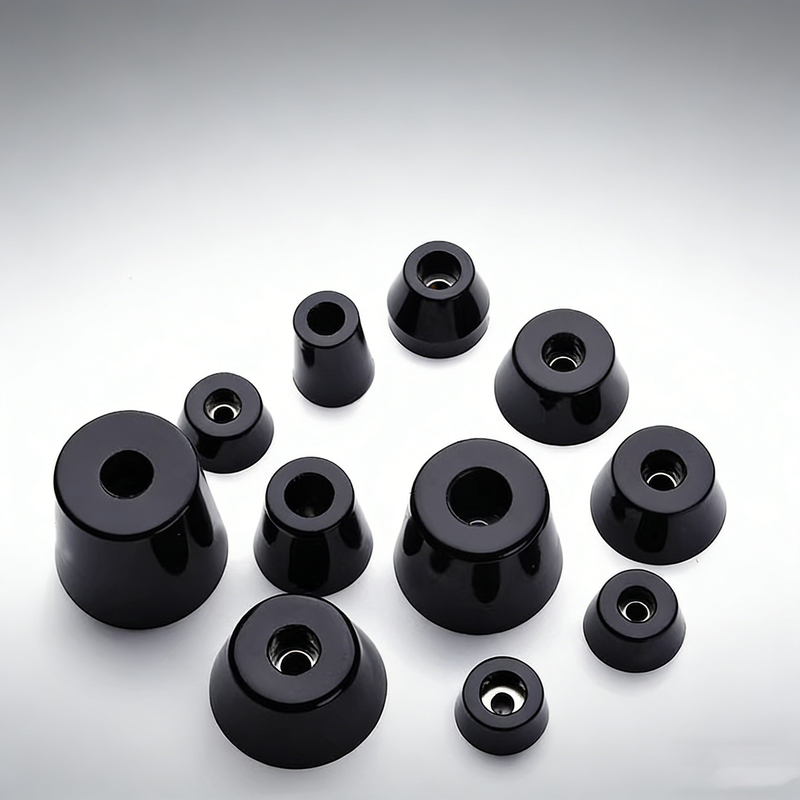
Temperature has the most dramatic effect on rubber properties. As temperature increases, most rubber compounds become softer and provide better vibration isolation but reduced load capacity. At low temperatures, rubber becomes stiffer and may lose isolation effectiveness while gaining load support capability.
I recall a project where rubber mounts worked perfectly during room temperature testing but failed completely when the equipment operated at 80°C. The rubber became too soft to support the dynamic loads, causing excessive deflection and metal-to-metal contact. We solved this by switching to a higher durometer compound specifically formulated for high-temperature performance.
Frequency response determines which vibrations the rubber will isolate effectively. Rubber isolation systems have a natural frequency determined by the mass and stiffness of the system. Below this frequency, the rubber acts like a spring and may amplify vibration. Above this frequency, isolation improves with increasing frequency.
Dynamic loads create different behavior than static loads. Under dynamic conditions, rubber exhibits frequency-dependent stiffness and damping. The same rubber mount may provide excellent isolation for high-frequency motor vibration while poorly controlling low-frequency structural resonances.
| Frequency Range | Rubber Behavior | Design Considerations |
|---|---|---|
| 0-20 Hz | Spring-like, potential amplification | Avoid system resonance |
| 20-100 Hz | Transition zone | Critical design range |
| 100+ Hz | Good isolation | Most effective range |
Environmental factors such as ozone, UV exposure, oil contact, and chemical exposure can degrade rubber properties over time. This degradation affects both mechanical support and vibration isolation characteristics. Material selection must account for the complete operating environment, not just mechanical requirements.
Why Do Many Rubber Vibration Solutions Fail in Production?
Have you experienced rubber components that worked in prototypes but failed during mass production? This common problem stems from inadequate validation of actual operating conditions.
Most rubber vibration failures occur because validation focuses on dimensional compliance rather than functional vibration performance under actual operating loads, frequencies, and environmental conditions. Production variations in material properties compound these issues.
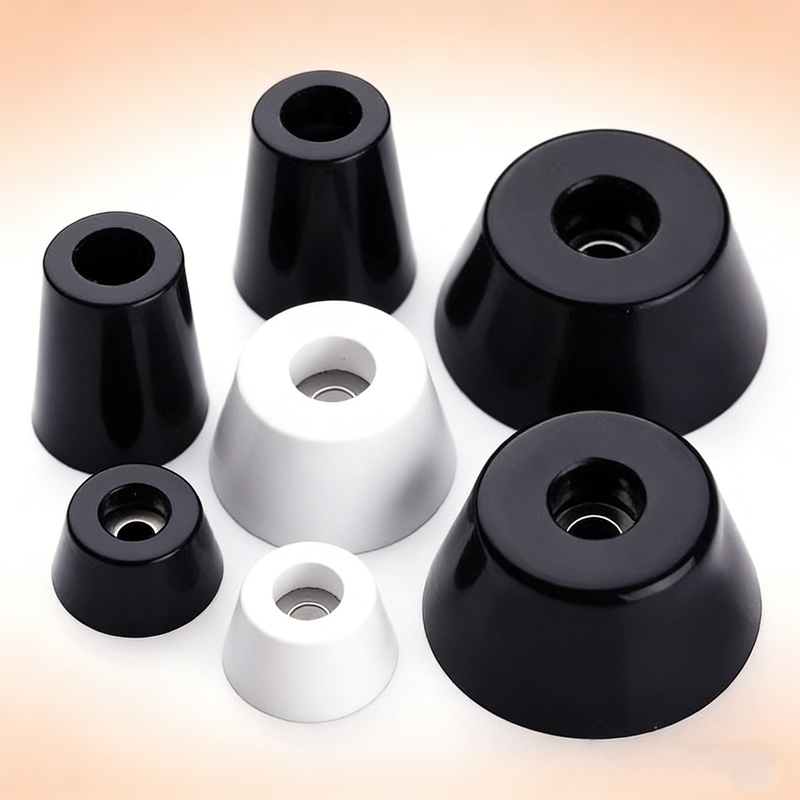
The fundamental problem is treating rubber components as simple mechanical parts rather than engineered vibration isolation systems. Many projects approve rubber samples based on hardness measurements and dimensional checks without validating actual vibration isolation performance.
I have seen projects where the "approved" rubber compound varied significantly between prototype and production batches. Even with identical nominal hardness, different polymer lots, cure conditions, or mixing parameters can create substantial differences in dynamic properties. These variations directly impact vibration isolation effectiveness.
Production tooling introduces additional variables. Compression molding conditions affect cross-link density and material properties. Mold temperature, cure time, and pressure variations can create parts that meet dimensional specifications but exhibit different vibration characteristics than the original samples.
Installation variations also contribute to failures. Rubber components are sensitive to mounting conditions, preload, and assembly torque. Production assembly may differ from prototype conditions, changing the effective stiffness and isolation performance. We recommend specifying installation procedures and torque requirements as part of the component specification.
Quality control systems often miss vibration-related defects because they focus on visual and dimensional inspection. A rubber mount may pass all standard inspections while providing inadequate vibration isolation due to material property variations or improper cure conditions.
The solution requires validating functional vibration performance using production-intent materials under actual operating conditions. This validation should occur before tooling commitment, not after mass production begins. We work with customers to establish vibration performance criteria and test methods that ensure production components meet functional requirements.
Conclusion
Rubber reduces vibration effectively when properly engineered for specific applications, but material selection alone does not guarantee success in demanding industrial environments.