

Are you getting consistent quality or just lucky samples? Many companies discover too late that their "manufacturing partner" can make great prototypes but struggles with batch consistency1.
Professional molded rubber parts manufacturing2 isn't about making one perfect part - it's about making thousands of identical parts with predictable quality. The difference lies in process control capability3, not just production ability.
After 27 years in this industry, I've seen too many projects fail not because the supplier couldn't make the part, but because they couldn't make it the same way twice. Let me share what separates real manufacturing services from simple production.
Are You Buying Manufacturing Services or Just Getting Lucky Samples?
Most buyers focus on the wrong question. They ask "Can you make this part?" instead of "Can you make this part consistently?"
The core issue with molded rubber parts isn't whether they can be produced - it's whether each batch will be identical. Without proven process capability, your project starts unstable from day one.
This distinction matters more than most people realize. I've watched companies approve beautiful samples, place large orders, and receive parts that look similar but perform differently. The problem isn't dishonesty - it's the gap between prototype conditions and production reality.
In our facility, we learned early that sample approval4 means nothing without process validation5. A sample made under controlled conditions with manual adjustments won't match parts made on automated production lines. The rubber compounds, cure cycles, and mold conditions that create your perfect sample must be exactly replicated in mass production.
We now require process window validation before any production commitment6. This means proving that we can hit the same specifications across different machines, operators, and time periods. It's not enough to make one good part - we must demonstrate that our process can make hundreds of identical parts.
Why Do Perfect Samples Lead to Inconsistent Production Batches?
The most dangerous supplier pattern is "expert sampling7, outsourced production." You'll recognize this scenario immediately.
During development, everything works perfectly - engineering support is excellent, samples arrive quickly and meet all specifications. But once production starts, dimensions drift, appearance varies, and performance fluctuates unpredictably.
Here's what really happens behind the scenes. Samples get made in controlled environments with experienced technicians making real-time adjustments. Production runs on standardized processes with multiple machines, shifts, and operators. The critical difference is that rubber processing doesn't follow simple parameter copying.
When we make samples, our senior technician might adjust cure time based on ambient temperature, modify pressure based on material batch, or fine-tune demolding timing based on part complexity. These micro-adjustments become invisible knowledge that never transfers to production documentation.
Production teams receive parameter sheets that look complete but miss the nuanced adjustments that made samples perfect. They follow the numbers exactly but get different results because rubber behavior depends on dozens of variables that interact unpredictably.
The solution requires documenting not just parameters, but parameter relationships8 and adjustment logic. We now create process maps9 that show how changes in one variable should trigger adjustments in others. This transforms tribal knowledge into reproducible procedures.
Most importantly, we validate production processes using the same quality criteria as samples. If sample hardness measured 65 Shore A ±2, production must hit the same target with the same tolerance. No exceptions, no "close enough" compromises.
What Does Real Process Control Look Like in Rubber Manufacturing?
Professional manufacturing services prove capability through process windows, not just successful samples. Let me explain what this actually means.
Instead of confirming single-point parameters, we define operating ranges that maintain quality. This includes cure temperature windows10, time tolerance zones, pressure ranges, and their combined effects on critical dimensions and properties.
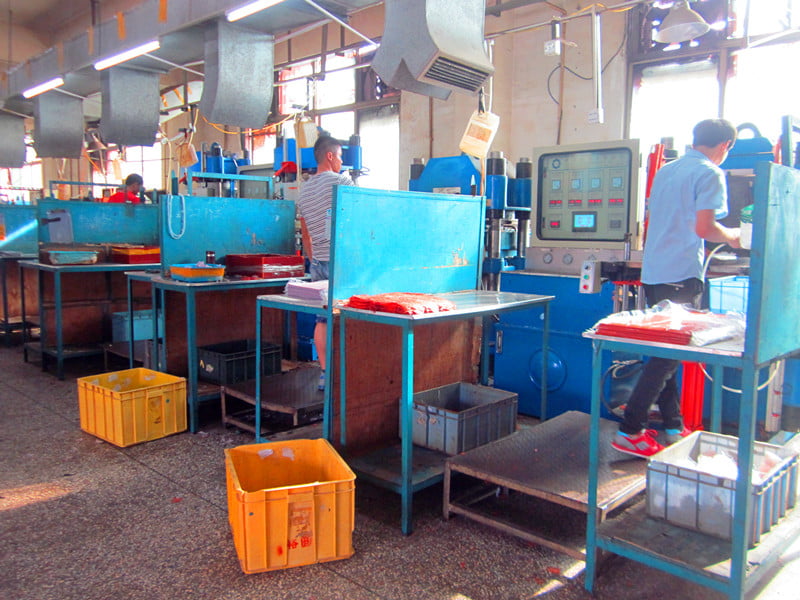
Process window development starts with understanding which variables matter most for your specific part. For sealing gaskets, cure degree directly affects compression set resistance. For vibration mounts, crosslink density controls dynamic properties. For keypads, surface cure affects tactile feel.
We map these relationships systematically. Take a typical seal design - we'll test cure temperatures from 160°C to 180°C in 5°C increments, cure times from 8 to 15 minutes, and document how each combination affects final dimensions, hardness, and sealing force. This creates a process map showing safe operating zones.
The critical insight is that rubber processing has natural variation, but this variation must stay within acceptable limits. We define these limits based on your application requirements, not our convenience. If your assembly requires ±0.1mm dimensional tolerance11, we prove our process can deliver it consistently.
Documentation includes statistical process control12 data showing capability indices (Cpk values) for critical parameters. This proves that our normal process variation stays well within specification limits. Without this data, you're gambling on luck rather than relying on proven capability.
We also establish reaction protocols for when processes drift toward specification limits. This includes specific corrective actions13, responsible personnel, and escalation procedures. The goal is preventing defects, not just catching them after they occur.
How Do You Ensure Every Critical Dimension Links to Controllable Process Parameters?
Amateur suppliers treat dimensions and processes as separate issues. Professional manufacturers understand that every critical dimension results from specific process conditions.
Each key quality characteristic must connect directly to measurable, controllable process variables. Without these connections, troubleshooting becomes guesswork and improvement becomes impossible.
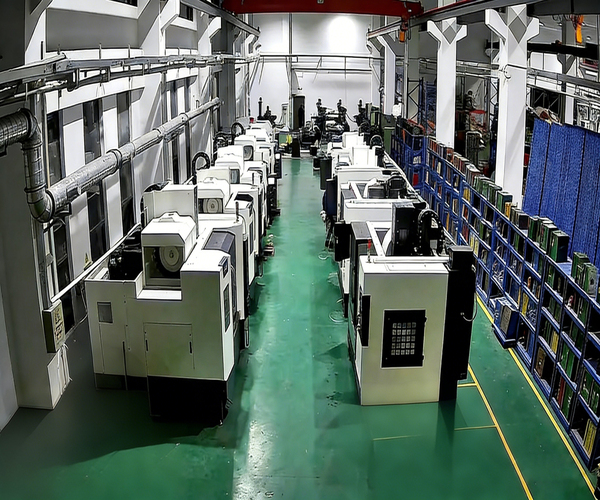
This mapping process requires deep understanding of rubber behavior. Seal lip thickness depends on mold temperature uniformity and material flow characteristics. Insert retention force relates to cure degree and material shrinkage patterns. Surface finish connects to mold maintenance14 and demolding procedures.
We create detailed CTQ (Critical to Quality) matrices linking each specification to its controlling parameters. For example, if your gasket requires 15±2N insertion force, our matrix shows exactly which cure conditions, material properties, and mold features affect this measurement.
This approach transforms quality control from reactive inspection to proactive process management. Instead of measuring finished parts and hoping they're correct, we monitor the process conditions that create correct parts. This catches problems before they become defects.
The practical benefit shows up when issues arise. If insertion force measures high, we know immediately to check cure temperature and time rather than guessing at random adjustments. If dimensions drift, we examine material batch properties and mold thermal conditions systematically.
We also use this mapping to optimize processes continuously. By understanding which parameters have the strongest effects on quality, we can tighten control on critical variables while relaxing control on less important ones. This improves consistency while reducing costs.
Why Must Material Preparation and Molding Stay Within One Integrated System?
Many manufacturing services outsource compound mixing while handling molding internally. This creates an invisible quality risk that often destroys project consistency.
When mixing and molding operate as separate systems, material variation becomes uncontrollable noise that overwhelms process control efforts. Every batch becomes a new experiment rather than a predictable process.


The fundamental problem is that rubber compounds have complex behavior that changes with mixing conditions, storage time, and environmental factors. Even identical formulations mixed by different suppliers will process differently in your molds.
We learned this lesson expensively during our early years. We would receive compounds that met all specifications on paper but required different cure times, pressures, or temperatures to achieve the same part quality. These adjustments weren't predictable - they required trial and error for each new batch.
The solution required bringing mixing in-house and establishing strict batch control procedures. We now maintain detailed mixing records including temperature profiles, mixing energy, and atmospheric conditions. Each batch gets tested for processing characteristics, not just final properties.
More importantly, we validate compatibility between compound batches and our molding processes before production begins. This includes test molding with process window verification to ensure that normal mixing variation stays within our proven process capabilities.
We also maintain strategic raw material inventories15 to avoid forced supplier changes mid-project. Switching rubber suppliers often requires complete process revalidation because different suppliers' materials behave differently even when meeting identical specifications.
The result is true process control where material properties stay within narrow, predictable ranges that our molding processes can handle consistently. This eliminates the biggest source of production variation16 in rubber manufacturing.
Conclusion
Professional molded rubber parts manufacturing2 transforms occasional success into predictable results through proven process control, integrated material systems, and documented capability rather than just production ability.
Discover the importance of batch consistency in manufacturing and how it impacts product quality. ↩
Explore this link to understand the essential practices that ensure quality and consistency in molded rubber parts. ↩
Learn how effective process control can significantly enhance the quality of manufactured products. ↩
Find out why sample approval is crucial for ensuring consistent production quality. ↩
Understand the role of process validation in achieving reliable manufacturing outcomes. ↩
Explore the concept of production commitment and its implications for manufacturing quality. ↩
Learn about expert sampling and how it can lead to inconsistencies in production. ↩
Discover how understanding parameter relationships can improve manufacturing consistency. ↩
Explore how process maps can help document and improve manufacturing processes. ↩
Explore the significance of cure temperature windows in ensuring product quality. ↩
Understand the concept of dimensional tolerance and its importance in manufacturing quality. ↩
Explore the benefits of statistical process control in maintaining quality in manufacturing. ↩
Discover the importance of corrective actions in maintaining quality during production. ↩
Learn about the importance of mold maintenance in achieving consistent manufacturing results. ↩
Discover how maintaining raw material inventories can prevent production inconsistencies. ↩
Learn about the factors that contribute to production variation and how to control them. ↩