

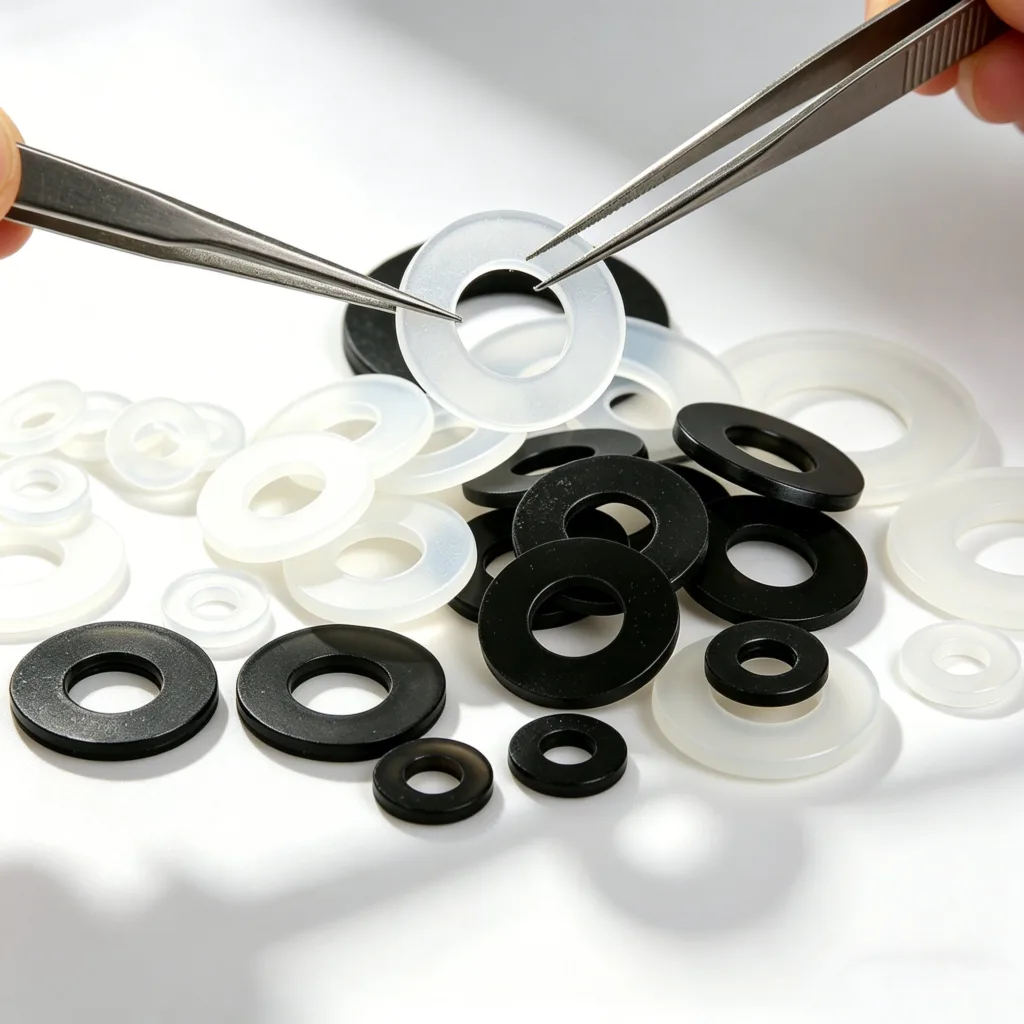
When clients ask me this question, they usually expect a simple list. But in real projects, what matters most is not the categories themselves—it's choosing the right one for your sealing conditions.
The three main gasket categories are non-metallic (rubber, silicone, PTFE), semi-metallic (metal combined with soft materials), and metallic (full metal construction). Each serves different pressure, temperature, and environmental requirements for optimal sealing performance.
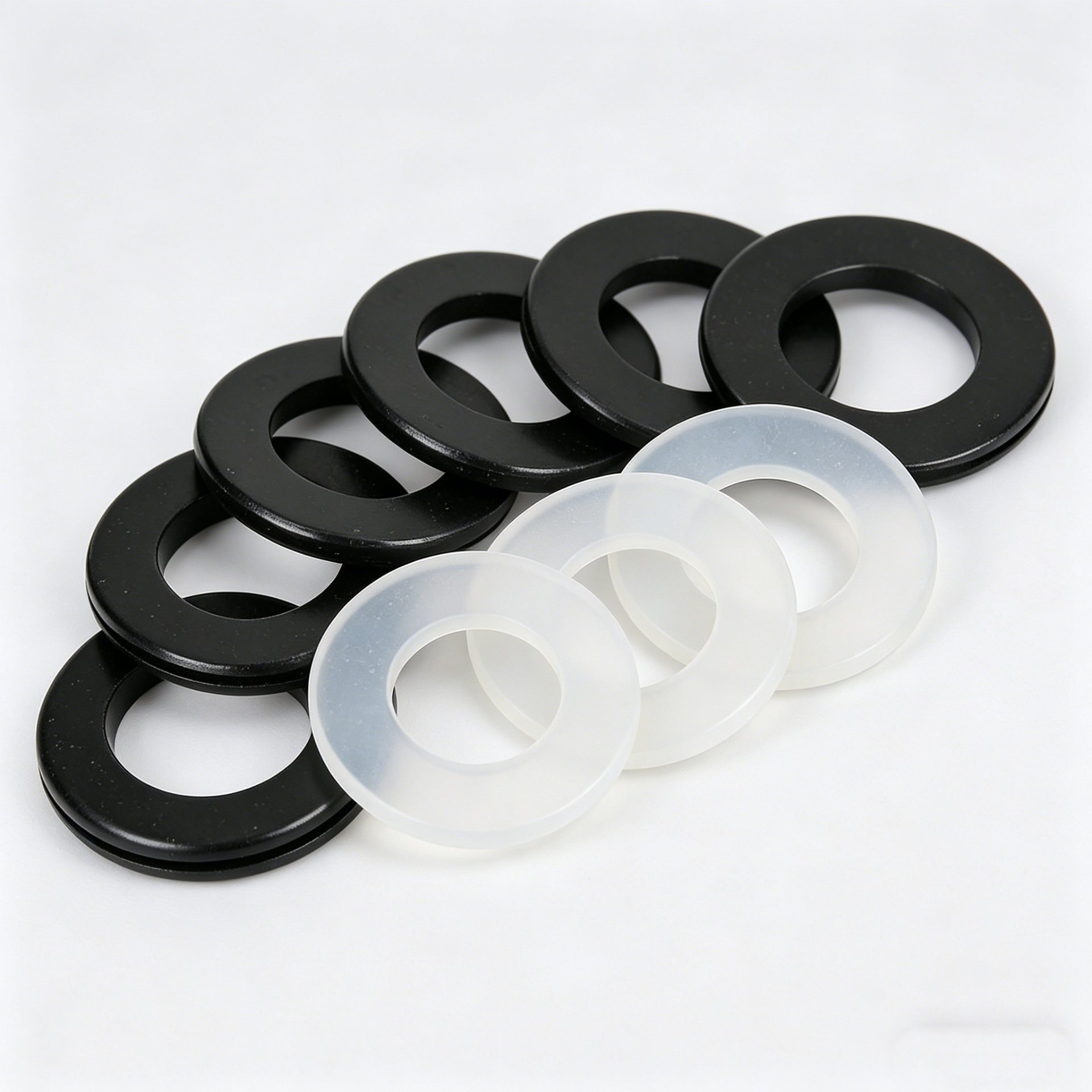
Most sealing failures don't happen because the category is "wrong." They happen because the gasket doesn't match the real working conditions. Let me walk you through each category and help you understand which one fits your project.
What Makes Non-Metallic Gaskets Your Go-To Choice?
Non-metallic gaskets are the workhorses of sealing solutions. I see them in most of our client projects because they solve real problems without overcomplicating things.
Non-metallic gaskets use materials like silicone, rubber, or PTFE. They excel in low to medium pressure applications where flexibility and consistent sealing performance are critical for long-term reliability.
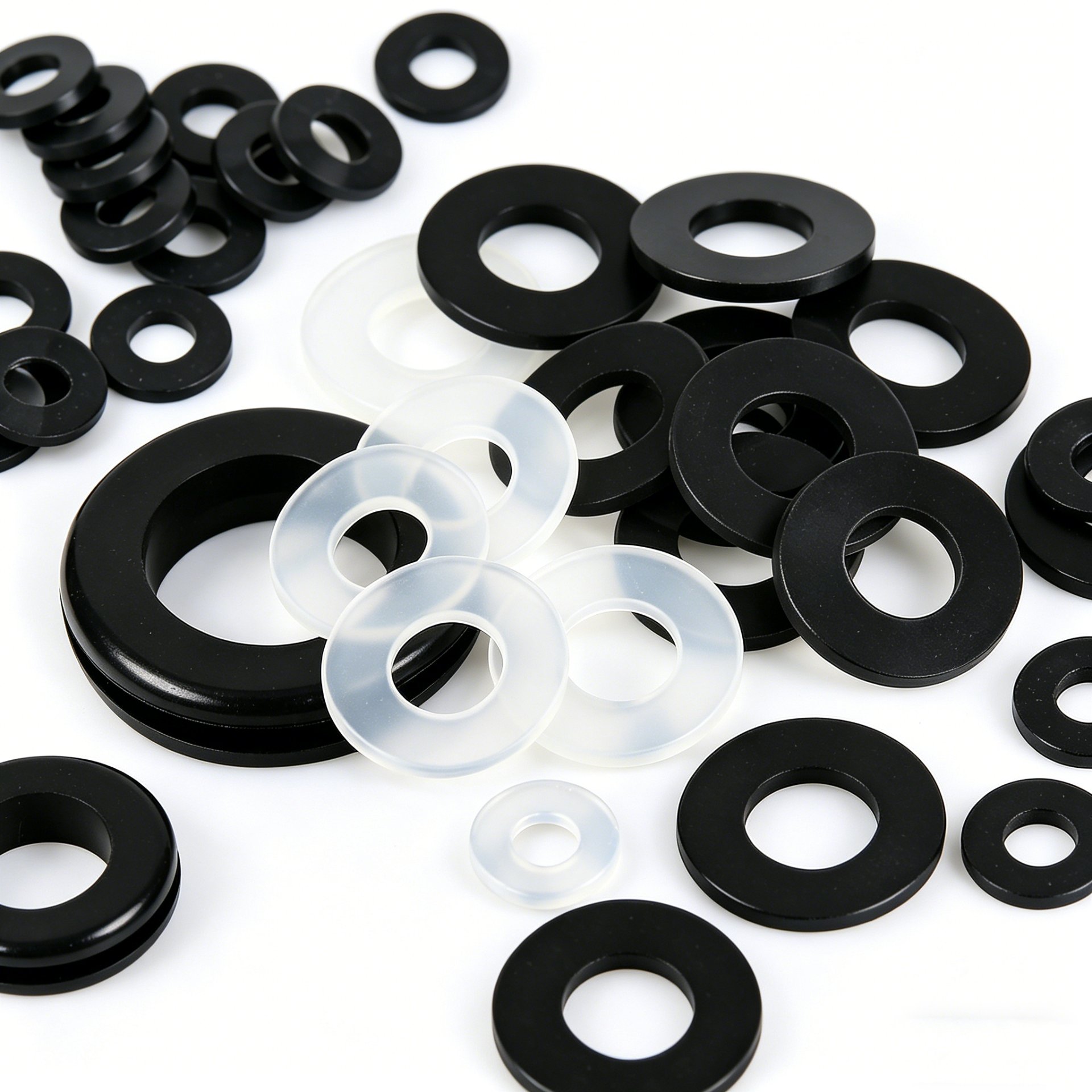
These gaskets work because they adapt. When you compress them against uneven surfaces, they conform and create a reliable seal. We manufacture thousands of silicone gaskets for lighting, electronics, and outdoor equipment clients. The reason is simple: they perform consistently.
| Material Type | Temperature Range | Key Benefits | Common Applications |
|---|---|---|---|
| Silicone | -60°C to 200°C | UV resistance, flexibility | Outdoor enclosures, LED lighting |
| EPDM Rubber | -40°C to 150°C | Weather resistance, durability | Automotive, HVAC systems |
| NBR Rubber | -30°C to 120°C | Oil resistance, cost-effective | Industrial machinery, pumps |
| PTFE | -200°C to 260°C | Chemical resistance, low friction | Chemical processing, food equipment |
The flexibility advantage is huge. When your housing has slight warping or surface irregularities, a non-metallic gasket compensates. Metal gaskets can't do this. I've seen projects where switching from metal to silicone solved sealing problems immediately. The gasket material flows into micro-gaps and maintains contact pressure across the entire sealing surface.
When Do Semi-Metallic Gaskets Bridge the Performance Gap?
Semi-metallic gaskets combine the best of both worlds. They give you metal strength with soft material sealing capability. But they're not always the right answer.
Semi-metallic gaskets combine metal cores with soft facing materials. They handle higher pressure and temperature conditions while maintaining sealing flexibility, making them ideal for moderate-stress industrial applications.
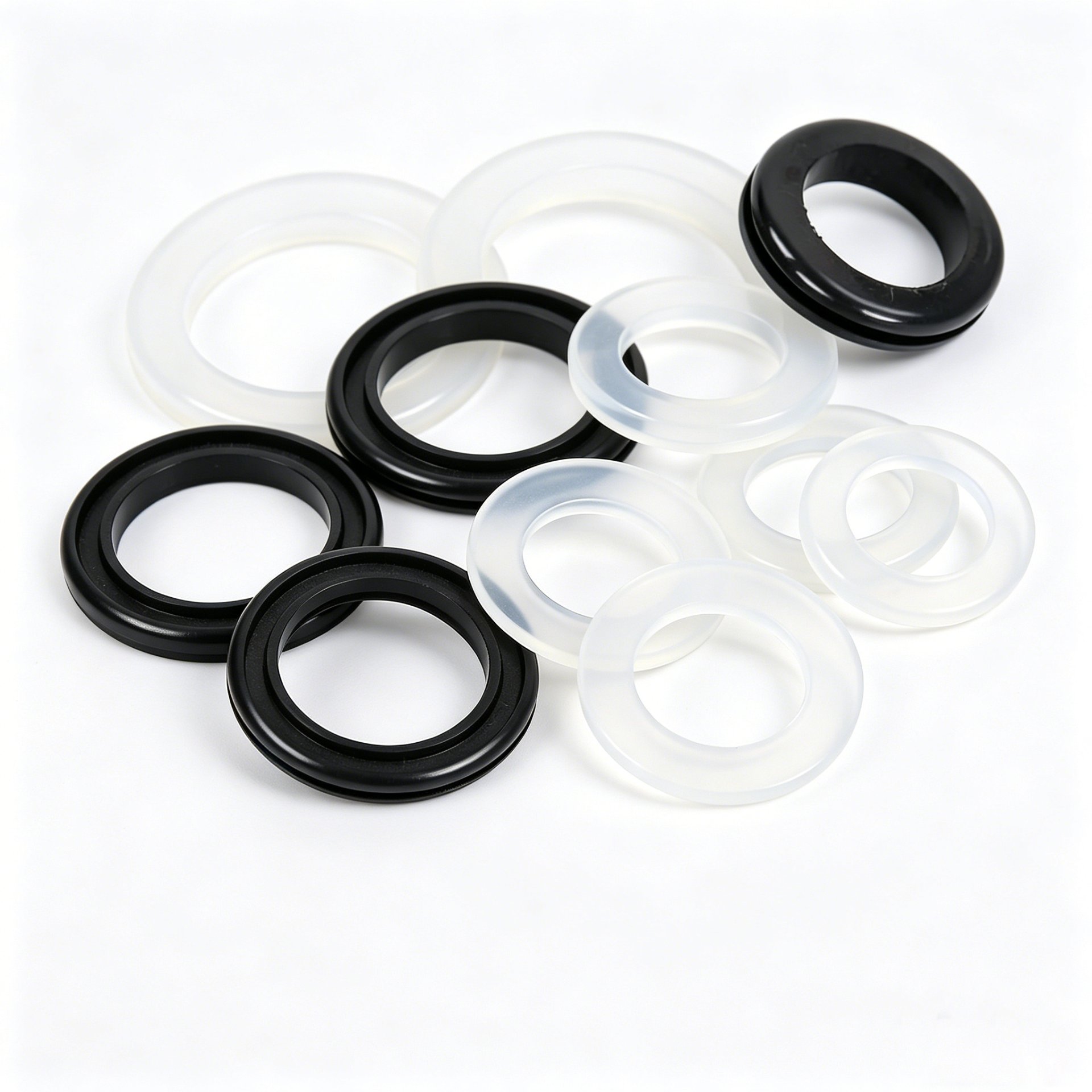
The most common design uses a metal core with rubber or graphite facing. The metal provides structural strength to resist blowout under pressure. The soft facing creates the actual seal against the flange surfaces. This combination works well when you need more strength than pure rubber can provide, but full metal would be overkill.
| Gasket Type | Pressure Rating | Temperature Range | Construction | Best Use Cases |
|---|---|---|---|---|
| Spiral Wound | Up to 250 bar | -200°C to 900°C | Metal strip + soft filler | High-pressure piping |
| Metal Clad | Up to 100 bar | -100°C to 400°C | Metal shell + soft core | Flanged connections |
| Corrugated Metal | Up to 60 bar | -50°C to 300°C | Metal with soft coating | Heat exchangers |
However, semi-metallic gaskets have limitations. They need precise flange preparation and higher bolt loads. The metal component doesn't forgive surface imperfections like pure rubber does. Installation becomes more critical. If your application doesn't truly need the extra strength, you're adding complexity without benefit.
I remember a client who insisted on semi-metallic gaskets for their electrical enclosure project. They thought "stronger is better." But the result was poor sealing because the housing couldn't provide enough compression force. We switched to custom silicone gaskets and solved the problem immediately. Sometimes simpler is better.
Why Are Metallic Gaskets Reserved for Extreme Conditions?
Metallic gaskets are specialists. They handle conditions that would destroy other gasket types. But they come with strict requirements and higher costs.
Metallic gaskets use solid metal construction to withstand extreme pressure, temperature, and chemical exposure. They're essential for high-stress applications but require precise machining and high bolt loads for proper sealing.
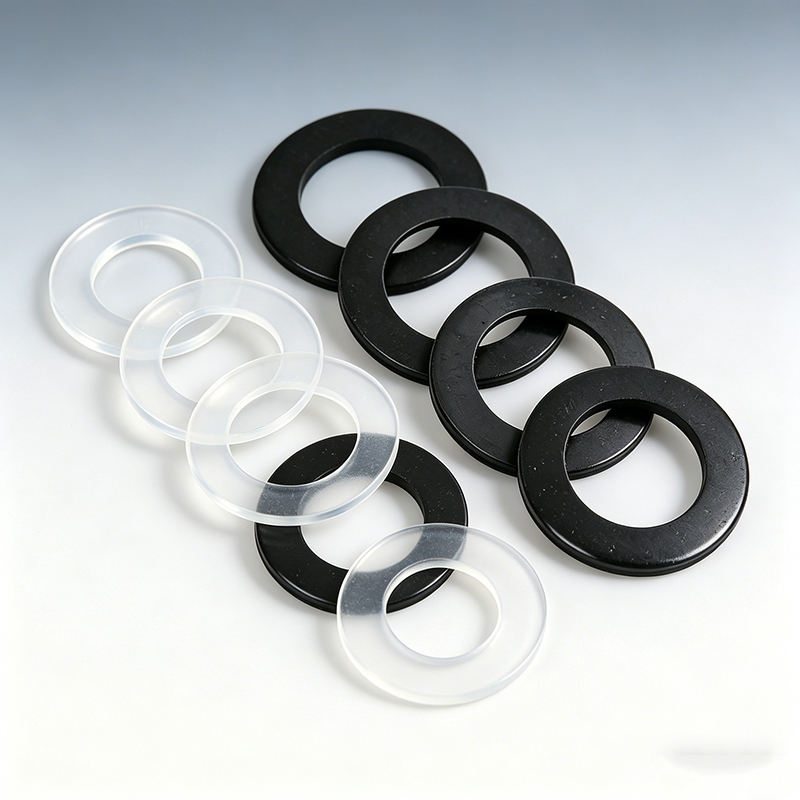
These gaskets rely on plastic deformation to create seals. When you compress them, the metal flows slightly to conform to the flange surfaces. This requires significant force and very smooth, precisely machined surfaces. Any scratches or imperfections can cause leakage.
| Metal Type | Max Temperature | Pressure Rating | Key Properties | Typical Applications |
|---|---|---|---|---|
| Stainless Steel | 800°C | 400+ bar | Corrosion resistance | Chemical processing |
| Inconel | 1000°C | 500+ bar | High-temp strength | Aerospace, power generation |
| Copper | 300°C | 200 bar | Thermal conductivity | Heat exchangers |
| Aluminum | 200°C | 100 bar | Lightweight, conductive | Electronics, automotive |
The installation requirements are strict. Flange surfaces must be machined to specific roughness standards. Bolt torque must be precisely controlled. Any deviation can cause failure. This makes metallic gaskets expensive not just to buy, but to install and maintain.
Most of our clients don't need metallic gaskets. Their applications work better with engineered rubber or silicone solutions that cost less, install easier, and perform more reliably in real-world conditions. We only recommend metallic gaskets when the application truly demands their unique capabilities.
How Do You Choose the Right Category for Your Project?
The category selection process is straightforward when you focus on actual requirements instead of assumptions. I've helped hundreds of clients make this decision correctly.
Choose gasket categories based on actual operating conditions: pressure levels, temperature range, chemical exposure, and installation constraints. Match the gasket's capabilities to your real requirements, not theoretical worst-case scenarios.


Start with your operating conditions. What's the actual pressure? Not the system's maximum rating, but the normal working pressure. What temperature range will the gasket see? What chemicals or environmental factors will it encounter? How often will you need to service the connection?
| Selection Factor | Non-Metallic | Semi-Metallic | Metallic |
|---|---|---|---|
| Pressure Range | 0-50 bar | 20-250 bar | 100+ bar |
| Temperature | -60°C to 300°C | -100°C to 900°C | -200°C to 1000°C |
| Surface Tolerance | Forgiving | Moderate | Strict |
| Installation Force | Low | Medium | High |
| Cost | Low | Medium | High |
| Maintenance | Easy | Moderate | Complex |
Consider your installation capabilities too. Can you achieve the bolt loads needed for metallic gaskets? Do you have the surface finish requirements? Can your maintenance team handle the complexity? Often, a well-designed non-metallic gasket outperforms a poorly installed semi-metallic or metallic option.
We work with clients to evaluate these factors systematically. Our engineering team reviews the application requirements and recommends the simplest solution that meets all performance needs. This approach reduces costs, simplifies installation, and improves long-term reliability. The goal is optimal performance, not maximum strength.
Conclusion
Understanding gasket categories helps you make better sealing decisions, but matching the right category to your specific application conditions determines actual project success.