

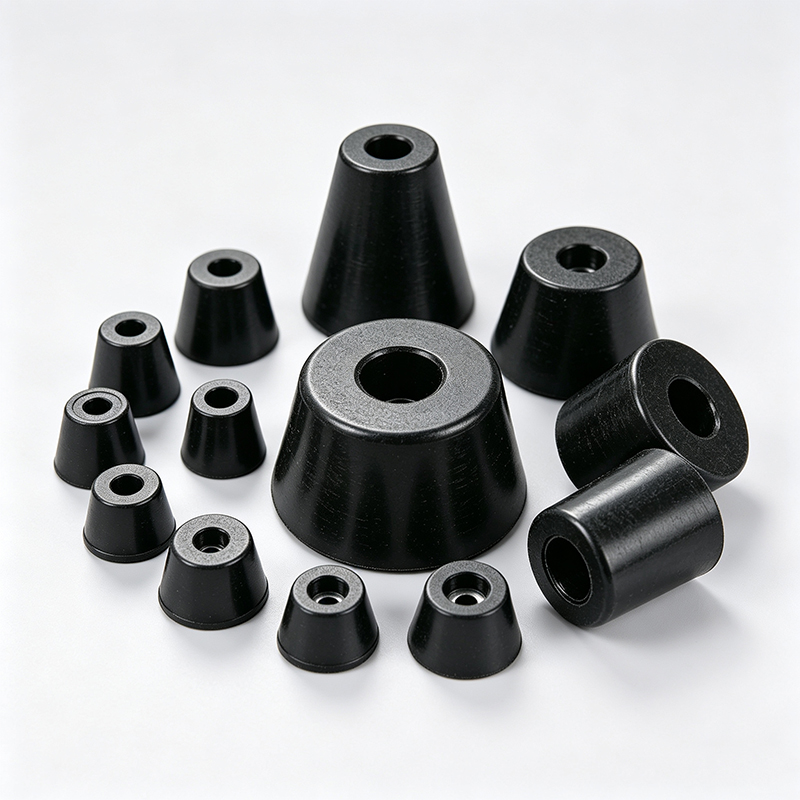
Choosing rubber feet for your equipment project can feel straightforward. You look at dimensions, check mounting holes, and pick something that fits. But I've seen too many projects fail because teams treated all rubber feet as interchangeable parts.
Different rubber foot types serve completely different functions. A cylindrical foot designed for static support can fail miserably under vibration. A threaded foot that works for height adjustment might create stability problems. The key is matching the foot type to your actual application requirements.
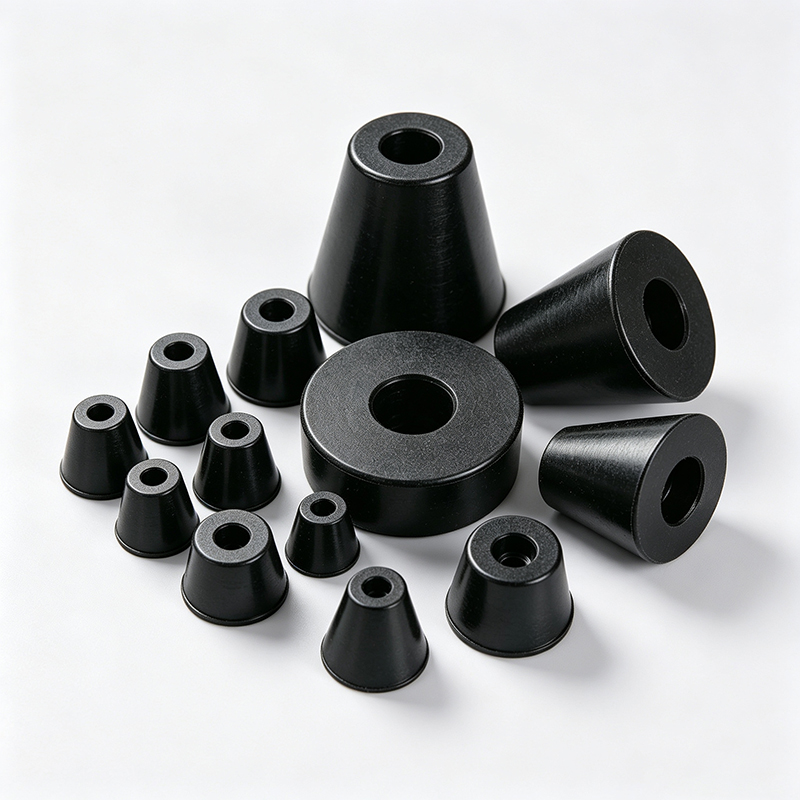
After 27 years in rubber manufacturing, I can tell you that the most expensive mistakes happen when teams focus only on dimensions and ignore function. Let me walk you through the main types and help you avoid these costly errors.
Why Do Rubber Foot Types Matter More Than You Think?
Many engineers treat rubber feet selection like choosing screws. If it fits the hole and looks right, it should work. This thinking causes problems because rubber feet are structural components that affect your entire equipment's behavior.
Each rubber foot type creates different load paths, compression patterns, and stability characteristics. Swapping a conical foot for a cylindrical one with "similar dimensions" can change how your equipment handles vibration, maintains height, and responds to lateral forces.
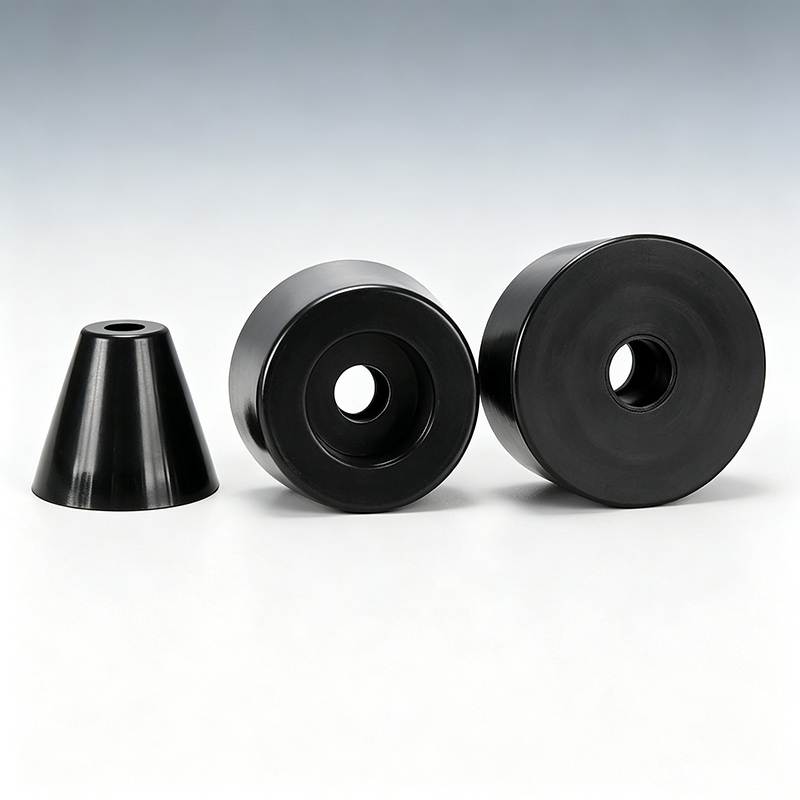
The real issue is that problems often don't show up during prototyping. I've worked with OEMs who approved samples that looked perfect, only to discover movement, height changes, or stability issues after full assembly with production loads. The sample worked because it was tested under ideal conditions with careful handling.
Consider what actually happens in production and field installation. Your equipment gets loaded with all components, shipped with vibration and impacts, installed by technicians with varying skill levels, and operated under conditions you didn't test. That's when the wrong foot type reveals itself.
Here's a breakdown of the critical differences:
| Foot Type | Primary Function | Load Distribution | Stability | Best Applications |
|---|---|---|---|---|
| Cylindrical | General support | Even compression | Moderate | Electronics, light equipment |
| Conical | Variable contact | Progressive loading | High | Machinery, vibration control |
| Rectangular | Large contact area | Distributed load | Very high | Heavy equipment, cabinets |
| Threaded | Adjustable support | Point loading | Variable | Uneven surfaces, leveling |
| Anti-vibration | Isolation | Controlled deformation | Moderate | Motors, pumps, sensitive equipment |
The key insight is that your equipment doesn't just need "something to stand on." It needs a foot that maintains proper function under your specific load, environment, and operating conditions.
What Are the Main Categories of Rubber Feet?
Understanding rubber foot types requires looking beyond shape to consider mounting method, load characteristics, and intended function. Let me break down the major categories we manufacture and when each works best.
The most common classification covers mounting style, geometry, and functional purpose. But the real selection criteria should always start with what you need the foot to accomplish in your specific application.
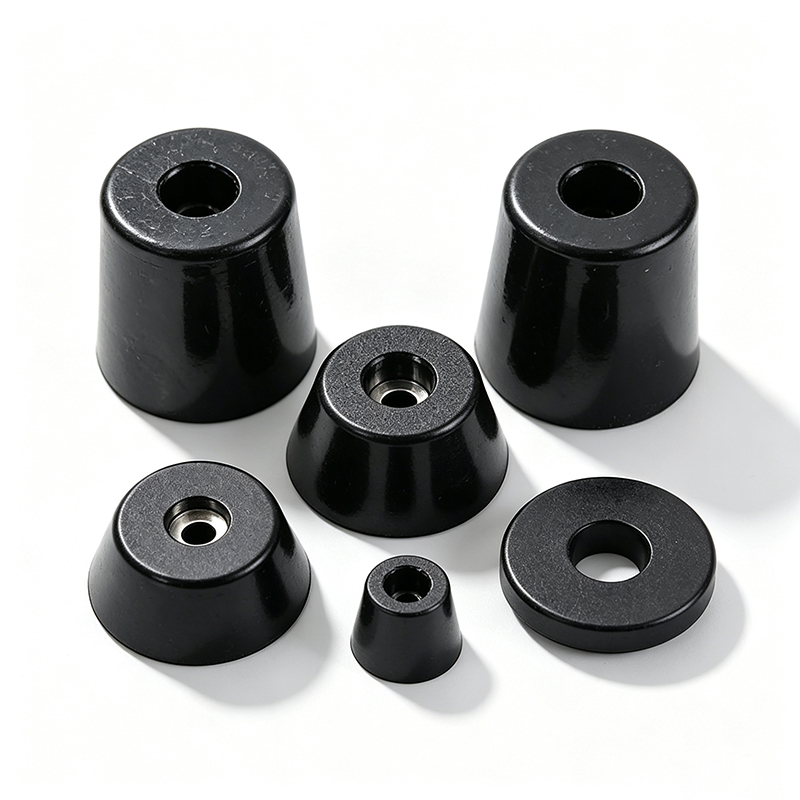
Cylindrical Rubber Feet
Cylindrical feet are the most common type we produce. They offer simple geometry with predictable compression behavior. The circular design provides even load distribution and works well for general-purpose applications.
These feet typically mount with adhesive backing, screw attachment, or press-fit installation. The uniform shape makes them easy to manufacture consistently and integrate into most equipment designs. They're cost-effective and reliable for basic support functions.
However, cylindrical feet have limitations. Their height-to-diameter ratio affects stability. Tall, narrow cylinders can allow lateral movement under load. Short, wide cylinders may not provide enough compression travel for vibration isolation. The key is matching the proportions to your load and stability requirements.
I often see teams choose cylindrical feet simply because they're common, without considering whether the geometry suits their application. For static electronics equipment, they work well. For equipment with vibration or movement, other geometries might be better choices.
Conical and Tapered Rubber Feet
Conical feet change their contact characteristics as they compress. The tapered shape means the effective contact area and stiffness vary with load. This can be advantageous for applications requiring progressive loading response.
The cone angle affects performance significantly. A steep taper concentrates load on a smaller contact area initially, then spreads it as compression increases. A gradual taper provides more consistent contact area but less progressive response. These subtle differences matter for vibration control and load distribution.
Manufacturing conical feet requires more precise tooling than cylindrical designs. The taper must be consistent to ensure predictable performance. We often see requests to "make it look conical" without specifying the angle or function, which leads to inconsistent results.
When properly designed, conical feet can provide excellent stability and controlled compression response. They're particularly useful for machinery applications where load varies or where progressive stiffness helps with vibration control.
Rectangular and Square Rubber Feet
Rectangular feet provide larger contact areas and directional stability. They're ideal when your equipment base has flat surfaces and you need to prevent rotation or sliding. The increased footprint distributes loads more evenly.
These designs work well for heavy equipment, electrical cabinets, and applications where appearance matters. They can be designed with clean lines that complement rectangular housings. The larger surface area also provides more adhesive contact for bonded applications.
The main consideration is ensuring even compression across the entire contact area. If your equipment frame isn't perfectly flat or if the mounting surface is uneven, rectangular feet may rock or create pressure points. This is less of an issue with smaller circular feet that can conform more easily.
Manufacturing rectangular feet requires attention to corner radius, edge finish, and dimensional consistency. Sharp corners can create stress concentrations in the rubber. Proper design includes appropriate radii and consistent wall thickness.
Threaded Rubber Feet
Threaded feet incorporate metal studs or inserts that allow height adjustment and secure mechanical attachment. They're essential when you need to level equipment on uneven surfaces or maintain specific installation heights.
The threaded design creates a different load path compared to other foot types. The load transfers through the thread engagement rather than direct compression. This affects the foot's response to vibration and lateral forces. The adjustment range also changes the foot's effective height and stability.
Quality threaded feet require proper insert retention and thread specification. The rubber must bond securely to the metal insert under load cycling. Thread pitch, engagement length, and stud material all affect performance and durability.
I've seen projects specify threaded feet for height adjustment, then discover that the adjustment range compromises stability or creates assembly difficulties. The key is balancing adjustability with structural requirements and ensuring the adjustment mechanism works reliably in your application.
Anti-Vibration Mounts and Isolation Feet
Anti-vibration feet are specifically designed to control dynamic response and isolate vibration transmission. They use carefully selected materials, geometry, and sometimes internal construction to achieve specific dynamic characteristics.
These feet require engineering analysis beyond basic load capacity. The rubber compound, shore hardness, shape, and internal construction all affect the vibration isolation frequency range and damping characteristics. Simply using "soft rubber" doesn't guarantee good vibration control.
Proper anti-vibration foot selection involves understanding your equipment's vibration frequencies, acceptable transmission levels, and static deflection limits. The foot must provide adequate isolation without allowing excessive movement or height change under load.
We often work with OEMs to test vibration performance under actual operating conditions. Laboratory tests with sine wave inputs don't always predict real-world performance with complex vibration patterns and varying loads.
How Do You Choose the Right Rubber Foot Type?
The selection process should start with defining what the foot must accomplish, not what it looks like. I recommend a systematic approach that considers all functional requirements before evaluating specific designs.
Start by documenting your equipment's weight, load distribution, center of gravity, mounting constraints, environmental conditions, and performance requirements. Then evaluate which foot type can meet all these requirements consistently in production.


Load Analysis and Distribution
Calculate the actual load per foot, considering worst-case scenarios. Equipment weight isn't always evenly distributed across all feet. Center of gravity location, internal component placement, and structural stiffness affect load distribution significantly.
Don't forget dynamic loads from handling, transportation, and operation. A foot that works under static laboratory conditions might fail when subjected to real-world loading patterns. Consider impact loads, vibration, and any operational forces that could affect the feet.
Load analysis should also account for manufacturing tolerances. If your equipment frame isn't perfectly flat or if floor surfaces vary, some feet may carry more load than others. Design margin should account for this variation.
Environmental and Operating Conditions
Temperature, chemicals, UV exposure, and other environmental factors affect rubber performance over time. Different rubber compounds provide different resistance to environmental degradation. The foot type may also affect environmental exposure patterns.
Operating conditions include vibration, movement, cleaning requirements, and maintenance access. Some foot types handle these conditions better than others. Consider the complete operating environment, not just the immediate installation conditions.
Installation and Assembly Requirements
How will the feet be installed during production? Can technicians access all mounting points easily? Are there torque requirements or adhesive curing processes that affect assembly time and quality?
Consider what happens if a foot needs replacement in the field. Some mounting methods allow easy replacement, while others require equipment disassembly. This affects long-term service and customer satisfaction.
Validation and Testing Strategy
Plan validation testing that represents actual use conditions. Static load testing alone isn't sufficient for most applications. Include vibration, lateral loading, temperature cycling, and long-term compression set testing as appropriate.
Test with production-intent samples using actual assembly processes. Hand-built prototypes may not represent production quality or consistency. Validation should confirm that the selected foot type performs correctly across the full production tolerance range.
Conclusion
Choosing the right rubber foot type requires understanding function, not just dimensions. Match the foot's capabilities to your actual application requirements, validate performance under real conditions, and ensure consistent production quality.