

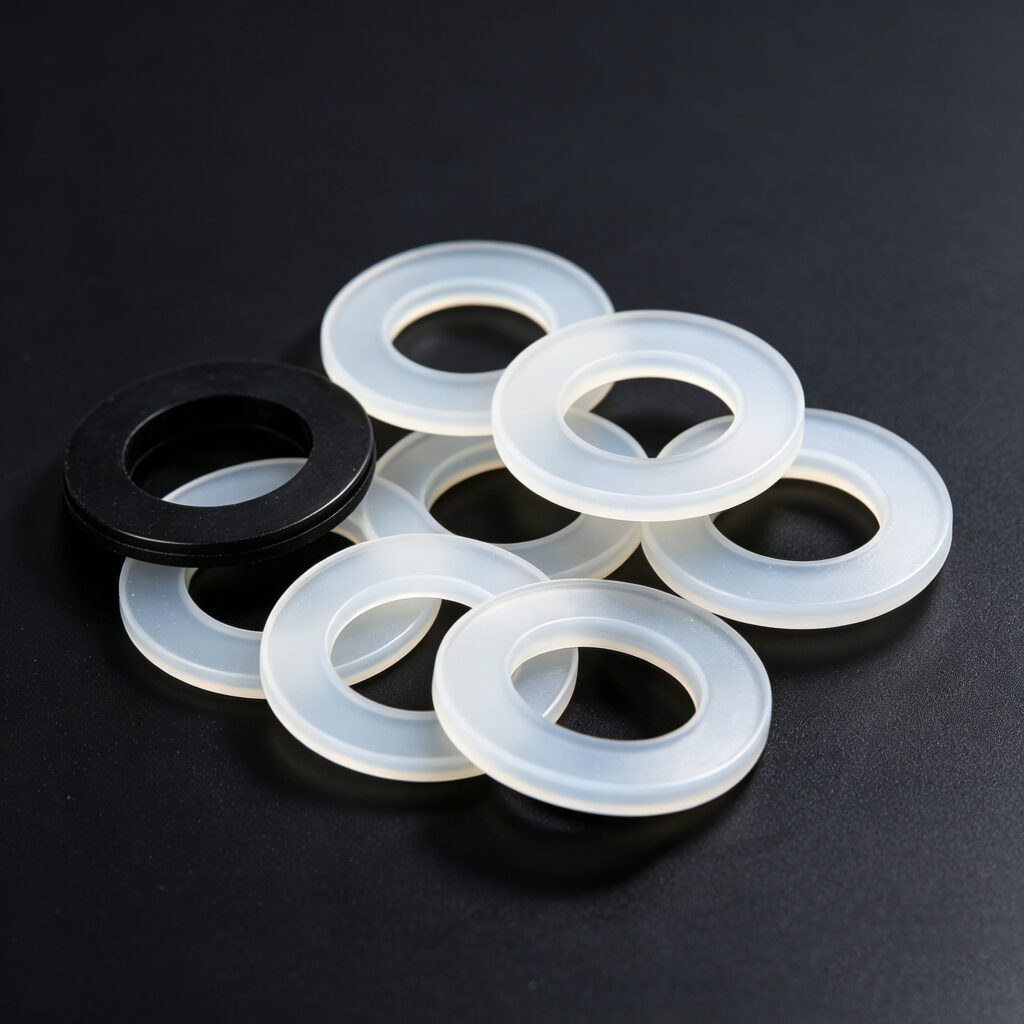
Choosing the wrong gasket material can destroy your entire project timeline and budget. Most teams think they're making smart choices, but they're actually setting themselves up for failure.
The biggest mistake in gasket material selection isn't picking a bad material - it's using the wrong selection criteria entirely. Instead of choosing materials based on failure conditions, teams choose based on material names, leading to products that pass initial testing but fail in production.


This article breaks down why "good materials" still cause project failures and how to build a bulletproof selection process that works in the real world.
Why Do Teams Keep Making the Same Material Selection Errors?
Most engineers approach gasket material selection like shopping from a menu. They see high temperature requirements and pick "high-temperature materials." They see oil contact and choose "oil-resistant materials."
This approach feels logical but ignores a critical reality: gaskets don't work in single-condition environments. Real applications combine temperature, pressure, media, compression, time, thermal cycling, and assembly variations simultaneously.
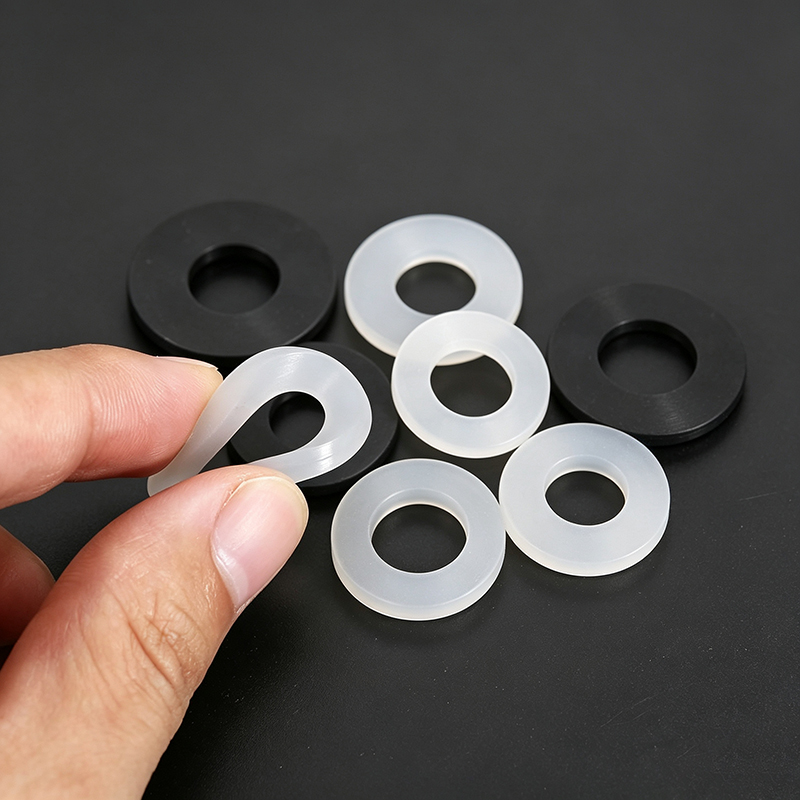
The problem starts small but grows dangerous over time. Here's how it typically unfolds:
Your team defines material requirements during RFQ phase. The supplier provides samples that match your specified material name and hardness. Initial testing passes. Design validation completes successfully. Production begins.
Then reality hits. Long-term operation reveals that your "correct" material choice was actually wrong for your specific combination of conditions. The gasket loses compression force. Leakage begins. Your project timeline explodes.
I've seen this pattern destroy projects worth millions of dollars. The most frustrating part? Everyone followed the specifications perfectly. The material matched the datasheet. The dimensions were correct. But the fundamental selection logic was flawed from day one.
The real question isn't "Does this material resist oil?" The question should be "Can this specific material grade maintain effective sealing under our actual temperature, actual media, actual compression state, and actual service life requirements?"
Here's what proper material selection should evaluate simultaneously:
| Selection Factor | Why It Matters |
|---|---|
| Temperature Range | Both minimum and maximum limits affect material behavior |
| Media Compatibility | Swelling, hardening, or softening can destroy sealing |
| Pressure Requirements | Extrusion or insufficient contact pressure kills seals |
| Compression Set | Long-term compression recovery determines seal life |
| Hardness Match | Must work with actual sealing structure |
| Tensile/Tear Strength | Assembly and operation stresses matter |
| Thermal Cycling | Expansion/contraction cycles stress the seal |
| Aging Resistance | Long-term environment changes material properties |
| Tolerance Impact | Dimension changes affect actual compression |
| Certification Needs | Regulatory requirements can't be added later |
This isn't about finding perfect materials. It's about identifying which materials won't fail under your specific combination of stresses.
What Happens When "Correct" Materials Still Cause Production Failures?
Let me share a real project that shows how good intentions and proper procedures can still lead to disaster. We were working on an industrial heat exchanger OEM project requiring custom rubber gaskets for flange sealing.
The customer specified black rubber gaskets at 70 Shore A hardness for 150°C operation with industrial fluid contact. The specifications looked complete, samples tested perfectly, but production units started leaking after thermal cycling.
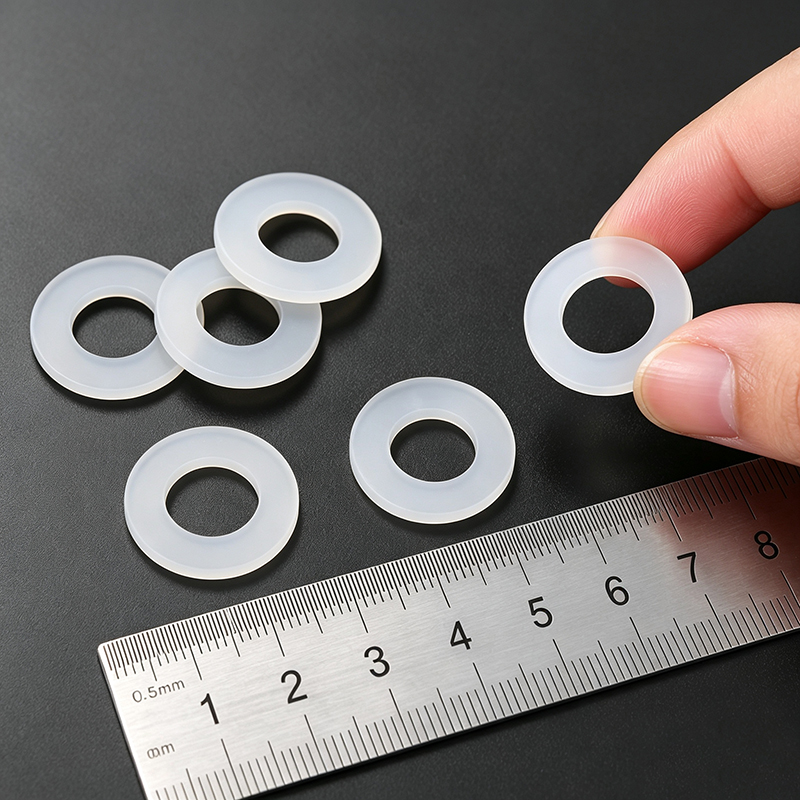
The initial requirements seemed clear enough. Black rubber gasket. 70 Shore A hardness. 150°C working temperature. Industrial liquid contact. Long-term use. No leakage allowed. The purchasing team requested suppliers provide the closest equivalent to 70 Shore A rubber.
Our supplier provided a standard rubber compound that matched the hardness specification. Sample dimensions were correct. Hardness matched. Appearance looked good. Room temperature sealing tests passed. The material was approved and frozen.
But here's what nobody questioned: 70 Shore A is just hardness. It doesn't tell you anything about high-temperature stability, media compatibility, compression set resistance, long-term stress retention, or thermal cycling performance.
The problems emerged gradually. Laboratory samples worked fine with careful assembly and controlled conditions. But production units showed assembly variations. Some gaskets experienced higher compression, others lower compression, and flange loading was uneven across the sealing surface.
Since the material's compression behavior wasn't properly defined, inconsistencies started appearing. When equipment reached operating temperature, the sealing material began changing properties. Long-term compression caused compression set to increase. The gaskets lost recovery capability.
Thermal cycling made everything worse. Equipment repeatedly went through startup, heating, shutdown, and cooling cycles. The sealing elements couldn't maintain sufficient contact pressure. We started seeing seepage, localized leakage, and batch-to-batch variations.
The project timeline stretched by 7-9 weeks. Costs exploded due to inventory isolation, re-sampling, material validation, mold adjustments, and field repairs. The customer initially blamed "inconsistent material batches" while the supplier insisted "all products met drawing specifications for dimensions and hardness."
The real root cause had multiple layers. Surface level: material selection criteria were too simple. Deeper level: specifications defined hardness but not material performance windows. Deeper still: actual operating conditions weren't properly input to material selection. Deepest level: design validation testing didn't cover real operating environments.
The result? Correct specifications ≠ correct material ≠ reliable sealing.
How Do You Build a Bulletproof Material Selection Process?
Learning from failures, I developed a systematic approach that prevents material selection disasters before they start. Let me walk you through a successful automotive thermal management project that shows how proper selection logic works.
The key breakthrough was shifting from "material names" to "failure mode analysis." Instead of asking "what material should we use," we asked "what could cause this seal to fail, and how do we prevent each failure mode?"
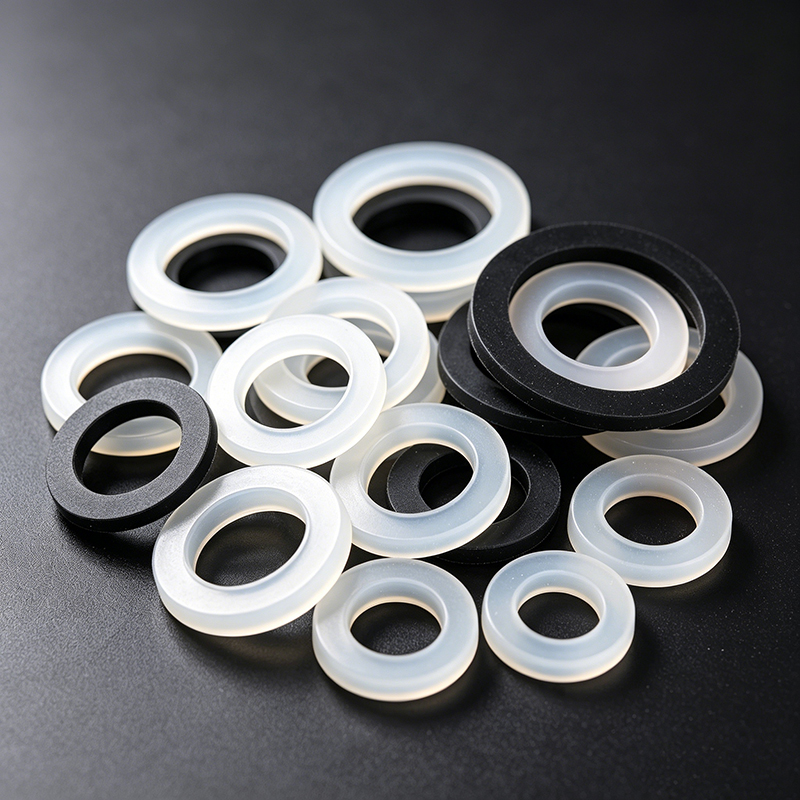
The customer initially requested a black rubber gasket at 70 Shore A for high-temperature application. Instead of immediately recommending a material, our application engineer asked critical questions that most suppliers skip.
What's the normal operating temperature versus peak temperature? How long is exposure time at maximum temperature? What specific fluid will contact the gasket? What's the actual pressure range? What compression percentage will the gasket experience? How many thermal cycles are expected? What's the target service life?
This questioning revealed a dangerous combination: high temperature plus coolant fluid plus long-term compression plus thermal cycling. Any single parameter looked manageable, but the combination created significant risk.
We rebuilt the selection criteria from "70 Shore A Rubber" to "Specific Polymer Family + Grade + Hardness + Required Physical Properties + Media Compatibility + Temperature Range."
Then we created a candidate material matrix:
| Material System | High Temp | Water-Based Media | Oil Resistance | Compression Set | Main Risk |
|---|---|---|---|---|---|
| EPDM | Good | Good | Limited | Needs validation | Oil compatibility |
| Silicone | Excellent | Depends on media | Usually not preferred | Needs validation | Dynamic/tear issues |
| FKM | Excellent | Needs verification | Good | Good | Low temp and cost |
| AEM | Good | Depends on media | Good | Needs validation | Specific applications |
| ACM | Good | Depends on media | Good | Needs validation | Low temp performance |
This matrix helped with initial screening, but we couldn't stop there. Final selection required specific grade testing under actual operating conditions with real sealing structures.
We expanded testing beyond standard material properties to include media immersion tests using actual working fluids. We monitored mass changes, volume changes, hardness shifts, appearance changes, cracking, and softening or hardening effects.
Most importantly, we tested actual gaskets with actual flanges at actual compression rates with actual media. Material property compliance doesn't guarantee sealing system compliance.
The comprehensive approach worked. Material selection was locked in with confidence. Specifications were rewritten to define critical parameters properly. Design validation completed successfully. Production validation passed. Volume production remained stable. Customer acceptance was achieved without issues.
If we hadn't caught the selection logic problem early, the project would likely have followed the typical failure pattern: material name confirmation, successful samples, production launch, long-term operation, material property changes, compression stress loss, sealing failure, customer complaints, material reselection, revalidation, and project delays.
What Are the Hidden Traps in Gasket Specifications and Purchase Documents?
Even when teams understand proper material selection principles, specification documents often contain traps that undermine the entire process. These aren't obvious mistakes - they're subtle gaps that seem reasonable but create project risks.
The most dangerous specification trap is defining materials by name only. Writing "EPDM Rubber" in your specification doesn't actually define the material - it just defines the polymer family, leaving critical properties undefined.


Here's how specification problems typically appear:
Material definition errors start with oversimplified descriptions. Instead of just "Rubber" or "EPDM Rubber," specifications need "Polymer Family + Grade + Hardness + Critical Properties + Application Conditions." The same polymer family can include dramatically different grades and compounds.
Hardness definition problems are equally common. Writing "70 Shore A" without tolerances, test standards, test locations, test conditions, and batch requirements leaves too much room for interpretation. More importantly, hardness shouldn't be the core material selection criterion anyway.
Tolerance definition gaps directly impact sealing performance. Gasket thickness, width, and critical cross-section dimensions determine actual compression rates. You can't just specify "±0.5 mm" - tolerances must be based on sealing structure and compression windows.
Compression rate definition is often missing entirely. Specifications might say "Compression = 20%" but fail to define initial thickness, installation thickness, allowable compression range, maximum compression, minimum compression, and corresponding sealing performance requirements.
Working environment details get overlooked regularly. Material selection should answer specific questions about temperature minimums, normals, maximums, and duration. Media specifications need exact liquid, gas, or chemical identification. Pressure requirements must include operating pressure, peak pressure, and pressure cycling information.
Certification requirements cause late-stage project disasters when missed. Material selection must confirm automotive industry requirements, food contact standards, medical requirements, flame retardancy needs, electrical specifications, and environmental compliance early in the process. Otherwise you get materials that perform correctly but can't be certified for use.
Test condition definitions are frequently vague. Specifications can't just state "Chemical Resistance: Pass" - they must define specific media, temperature, time, before/after property changes, and acceptance criteria.
Service life validation gets skipped entirely. Sealing materials aren't just about new material performance. Long-term performance after aging matters more. Compression set and compression stress relaxation are critical for long-term sealing capability.
Dimensional definition errors create assembly problems. Specifications must clearly distinguish between free state dimensions and installed dimensions. Suppliers might produce to exact free state dimensions while customers expect specific compression amounts after installation.
Responsibility boundary confusion creates disputes. Customers blame materials for being unsuitable while suppliers claim they met all specified requirements. RFQ documents must define who's responsible for defining operating conditions, material recommendations, final material approval, and actual sealing validation.
These specification gaps aren't academic problems. They create real project risks that emerge during production when fixes are most expensive and time-consuming.
How Do You Implement Project-Level Risk Control for Material Selection?
Successful gasket material selection requires systematic risk management across all project phases. Individual good decisions aren't enough - you need integrated processes that prevent problems from developing.
The most effective approach treats material selection as a system-level design decision, not a purchasing decision. Technical, procurement, and validation teams must work together with clear responsibilities and decision gates.
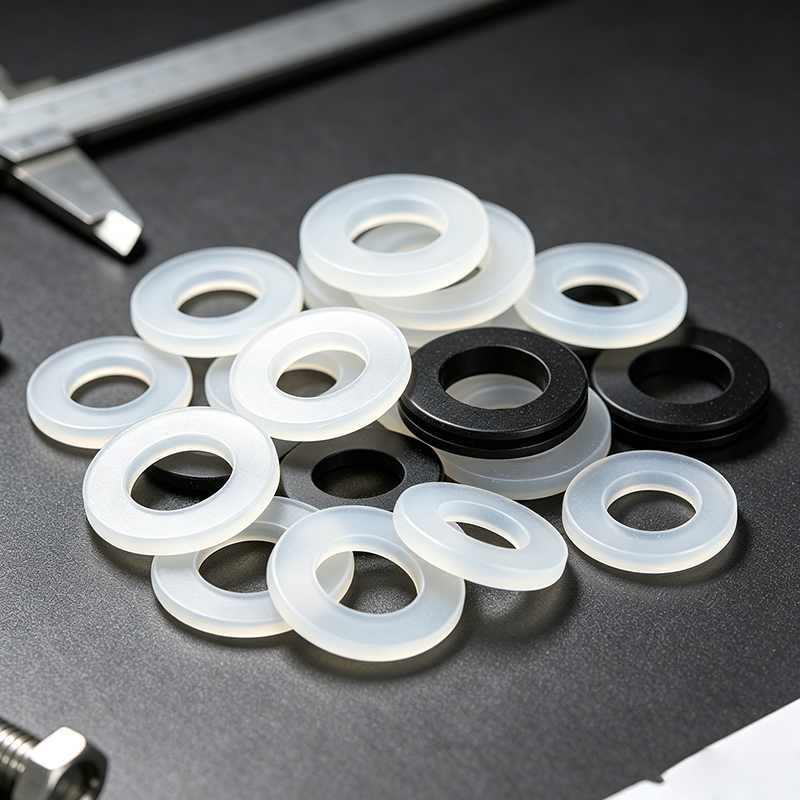
Technical leadership starts by building material selection matrices instead of relying on engineering experience. The systematic approach follows: Application Condition → Failure Mode → Material Requirement → Candidate Grade → Validation. This five-level relationship prevents oversimplified material choices.
Procurement responsibility focuses on locking down material definitions during RFQ. Purchase documents must require suppliers to provide polymer identification, specific grade information, hardness specifications, compound details, material data sheets, compliance documents, and actual test data. Never accept vague terms like "equivalent rubber material."
Structural engineering must integrate material selection with compression design. After material selection, teams must reconfirm gasket thickness, compression percentages, groove design, flange specifications, surface requirements, tolerance impacts, and installation loading. Materials and structures can't be selected independently.
Sample validation goes beyond dimensional checks. Sample testing must cover dimensions, hardness, material confirmation, compression behavior, and actual sealing tests under realistic conditions.
Design validation builds test programs based on actual operating conditions. Typical DV testing includes high/low temperature testing, actual media immersion, combined high temperature and media exposure, compression set measurement, thermal cycling, and actual pressure sealing validation.
Production validation focuses on batch consistency rather than theoretical capability. PV uses multiple production batches and, when necessary, multiple raw material batches to confirm that volume production maintains design sealing performance.
Volume production control monitors material lots, compound lots, hardness consistency, critical dimensions, compression-related dimensions, visual inspection results, and key physical properties throughout production.
Supply chain control prevents unauthorized substitutions. When suppliers propose alternative sources with "the same EPDM," approval requires confirmation of grade, compound, filler systems, cure systems, physical properties, certifications, and manufacturing site capabilities.
Change management treats specific changes as engineering modifications requiring review. Polymer changes, grade modifications, compound alterations, hardness shifts, supplier changes, manufacturing site changes, raw material source changes, cure system modifications, filler changes, and geometry modifications all trigger engineering change evaluation and potential DV retesting.
Acceptance standards create four verification levels. Level 1 confirms material system and grade compliance. Level 2 verifies critical dimensions match drawings. Level 3 validates material properties meet requirements. Level 4 proves actual sealing test performance meets specifications. Only Level 4 determines real project success.
Risk warning systems use color-coded alerts. Red risks include actual media changes, working temperature exceeding original definitions, material grade changes, sealing test leakage, and compression set exceeding limits - these trigger immediate project freezes. Yellow risks include hardness trend changes, critical dimension drift, supplier substitution proposals, raw material source changes, and significant PV versus DV result differences - these require engineering review. Green risks involve non-critical deviations that don't affect material, dimensions, or sealing function - these follow normal quality processes.
This systematic approach prevents the most common project failure: good individual decisions that don't work together as a system.
Conclusion
Successful gasket material selection isn't about finding the "best" rubber - it's about identifying which specific material grade won't fail under your actual operating conditions and validation requirements.