

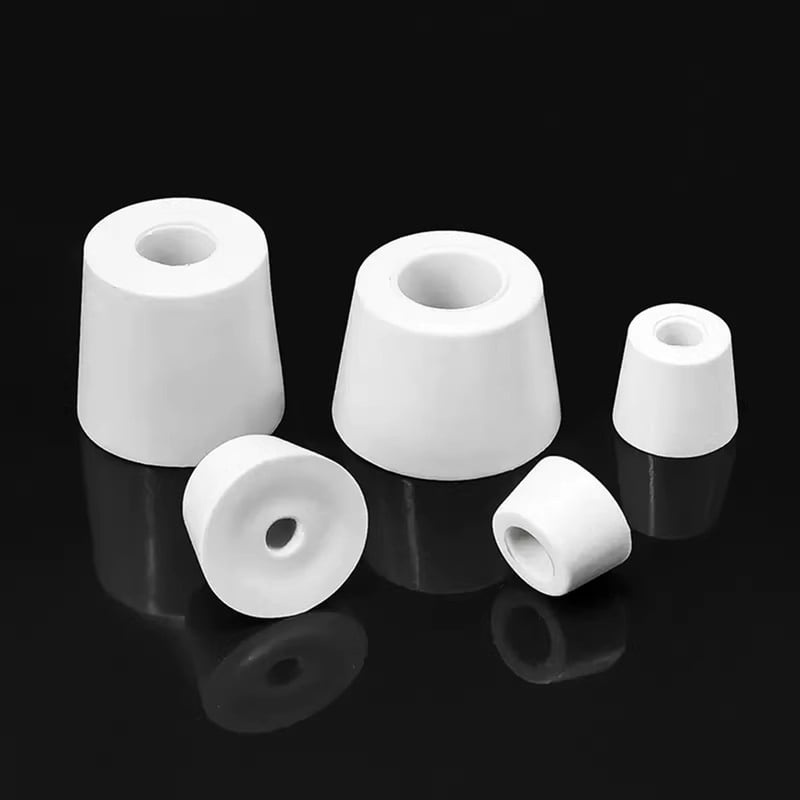
Ever wondered why your expensive fiber-reinforced vibration mounts1 performed great in testing but caused more problems after installation? You're not alone in this frustrating experience.
Fiber reinforcement can actually make vibration worse by increasing stiffness2 instead of damping. The key is understanding when fibers help isolation versus when they create resonance3 problems that amplify vibrations over time.
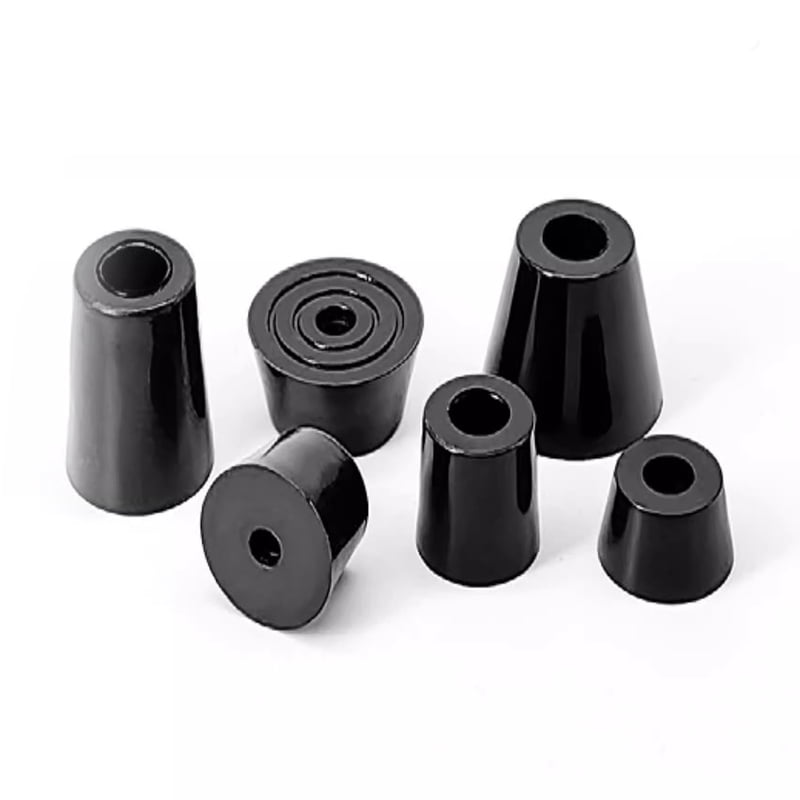
This isn't just about product quality. It's about understanding what you're really buying when someone promises "high-quality" fiber-reinforced mounts.
What's the Real Problem with Fiber-Reinforced Mounts?
Are you buying actual vibration isolation4 or just a harder piece of composite material? This question matters more than you might think.
The core issue is whether fiber addition increases damping or raises stiffness2. When stiffness2 increases, natural frequency5 rises, the isolation zone disappears, and the system falls directly into resonance3 territory.


I've seen this mistake cost companies thousands in equipment damage and downtime. Here's what really happens when fiber is used incorrectly.
Fiber reinforcement fundamentally changes how rubber behaves under dynamic loading6. Pure rubber acts like a shock absorber - it stores energy temporarily then dissipates it as heat. When you add fibers, you're essentially adding tiny rigid rods throughout the material.
These fibers excel at preventing deformation, which sounds good for durability. But vibration isolation4 requires controlled deformation to absorb energy. The fibers create a skeleton that makes the rubber behave more like a spring than a damper.
The math is straightforward. Natural frequency equals the square root of stiffness2 divided by mass. Increase stiffness2 through fiber reinforcement, and you push the natural frequency5 higher. This shrinks or eliminates the isolation frequency range where your mount actually reduces vibration transmission.
What's worse, the fibers don't contribute to energy dissipation7 the way rubber does. They store elastic energy and release it back into the system. Over time, this creates a feedback loop where vibrations actually get amplified instead of dampened.
| Property | Pure Rubber | Fiber-Reinforced |
|---|---|---|
| Energy Storage | Low | High |
| Energy Dissipation | High | Reduced |
| Stiffness | Controlled | Increased |
| Natural Frequency | Optimized | Shifted Higher |
Why Do These Mounts Pass Testing But Fail in Real Applications?
Have you experienced the frustration of mounts that tested perfectly but created more vibration problems after three months of use? This scenario reveals the hidden trap in fiber-reinforced designs.
Laboratory testing often focuses on static properties and short-term performance, missing the long-term dynamic behavior changes that occur when fiber reinforcement alters the rubber's fundamental damping characteristics.


I've witnessed this exact scenario multiple times in my 27 years in the industry. The pattern is always the same and always predictable.
Initial testing shows impressive results. The fiber-reinforced mounts demonstrate better dimensional stability, higher load capacity, and reduced static deflection. Everything looks superior on paper. Quality control checks pass. Engineers approve the design.
Then real-world operation begins. The first few weeks seem fine because the rubber matrix still dominates the material behavior. The fibers provide structure without completely overwhelming the damping properties.
But cyclic loading8 gradually changes the material characteristics. The rubber matrix experiences fatigue from repeated stress cycles. As the rubber degrades, the fibers begin carrying a larger portion of the load. This shifts the material behavior from damping-dominant to stiffness2-dominant.
The transition happens gradually, making it difficult to identify the root cause. Equipment operators notice increased vibration levels. Maintenance teams discover new resonance3 frequencies that weren't present during commissioning. Installation points show signs of stress concentration and potential failure.
Most troubleshooting focuses on external factors - loose bolts, misalignment, equipment wear. The vibration mounts themselves appear intact and functional. This leads to expensive investigations that miss the fundamental material behavior change.
The fiber reinforcement that initially provided stability becomes the primary load path. Instead of energy dissipation7 through rubber deformation, the system stores and releases energy through elastic fiber deflection. The mount transforms from a damper into a spring.
Testing protocols rarely capture this transition because they don't simulate the extended cyclic loading8 that triggers the behavioral shift. Standard vibration testing might run for hours or days, not the months required to observe fiber-dominated behavior.
How Should Fiber Reinforcement Be Used Correctly?
Can fiber reinforcement work for vibration isolation4, or should it be avoided completely? The answer depends on understanding directional application versus bulk reinforcement.
Fiber reinforcement works when applied selectively in load-bearing directions while maintaining pure rubber or minimal reinforcement in vibration isolation4 directions. The key is strategic placement, not maximum strength.
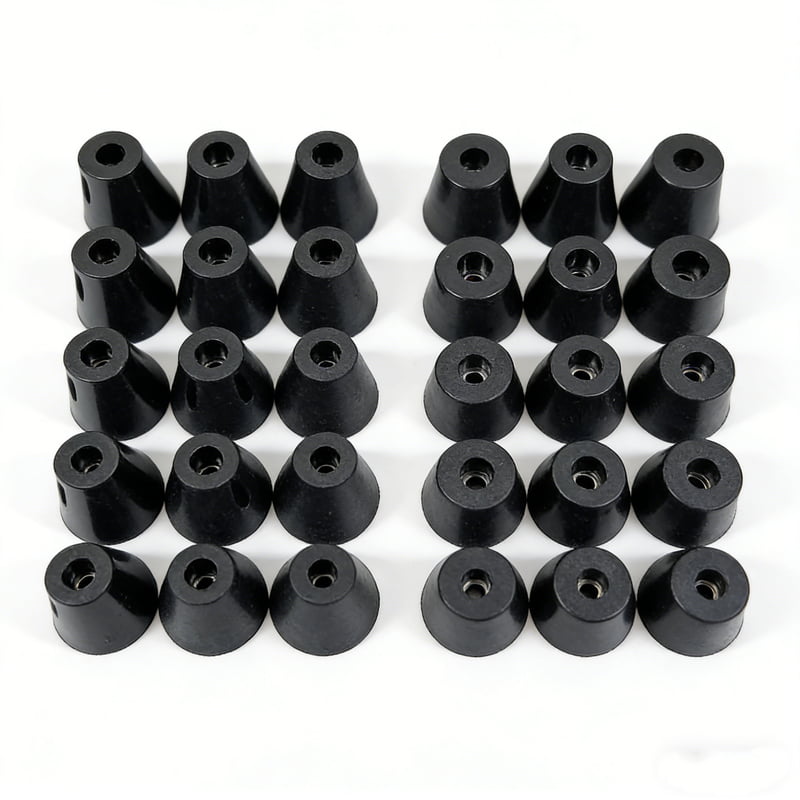
This approach requires understanding the difference between structural support and vibration isolation4 within the same component.
The fundamental principle is directional optimization. Every vibration mount has primary load directions and primary isolation directions. These are rarely the same directions. Effective design reinforces only the load-bearing axes while preserving damping capability in isolation axes.
In practice, this means using short, discontinuous fibers oriented perpendicular to the main vibration transmission path. The fibers provide compressive strength to handle static loads without creating continuous stiffness2 paths that transmit dynamic forces.
Fiber length becomes critical. Long continuous fibers create direct transmission paths for vibration. Short chopped fibers provide local reinforcement without compromising global damping behavior. The optimal length depends on the mount geometry and loading conditions.
Volume fraction requires careful control. Industry experience suggests keeping fiber content below 15% by volume to avoid the non-linear stiffness2 increases that destroy isolation performance. Above this threshold, the material behavior shifts dramatically toward spring-like characteristics.
Interface bonding between fibers and rubber matrix affects both durability and dynamic properties. Poor bonding creates stress concentrations that accelerate fatigue. Excessive bonding creates rigid composite behavior that eliminates damping. The optimal interface provides load transfer without complete stiffness2 coupling.
Processing conditions during manufacturing significantly impact fiber orientation9 and distribution. Uncontrolled mixing creates random fiber alignment that can establish vibration transmission paths in unintended directions. Proper mixing protocols ensure fibers enhance strength without compromising isolation.
| Design Parameter | Optimal Approach | Common Mistake |
|---|---|---|
| Fiber Orientation | Perpendicular to Vibration | Random Distribution |
| Fiber Length | Short Chopped | Long Continuous |
| Volume Fraction | <15% | Maximum Possible |
| Interface Bonding | Controlled Coupling | Maximum Adhesion |
What Testing Methods Reveal True Vibration Performance?
Are standard strength tests adequate for evaluating vibration isolation4 performance, or do you need different measurement approaches? The answer determines whether you'll avoid costly field failures.
Loss factor (tan δ), dynamic modulus ratios, and frequency sweep analysis provide the critical data that strength testing misses. These measurements reveal whether a material dampens or amplifies vibrations across operating frequencies.
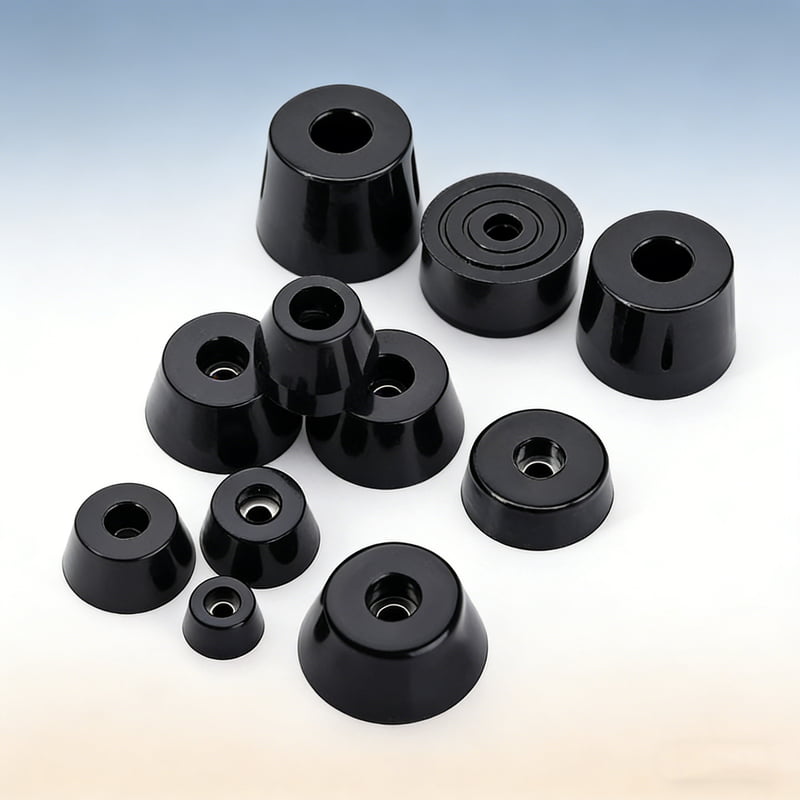
This shift in testing focus has saved my clients from expensive mistakes that standard quality control would never catch.
Loss factor measurement quantifies energy dissipation7 capability directly. This single parameter tells you more about vibration isolation4 performance than any combination of tensile strength, hardness, or compression set values. A material with high strength but low loss factor10 will amplify vibrations regardless of its impressive mechanical properties.
Dynamic mechanical analysis reveals how material properties change with frequency and temperature. Real vibration isolation4 applications involve varying frequencies and environmental conditions. Static testing at room temperature provides almost no useful information about actual performance.
The storage modulus (E') represents energy storage capability - essentially how spring-like the material behaves. The loss modulus (E'') represents energy dissipation7 - how much vibration energy gets converted to heat rather than transmitted. The ratio E''/E' gives the loss factor10 that determines isolation effectiveness.
Frequency sweeps identify resonance3 behavior and isolation frequency ranges. A good vibration mount should show consistent damping across the operating frequency range with no sharp resonance3 peaks. Fiber reinforcement often creates additional resonance3 modes that weren't present in the base rubber.
Temperature effects become critical for outdoor applications or equipment that generates heat. Fiber-reinforced compounds often show more dramatic property changes with temperature because the fiber-matrix interface behavior is temperature sensitive.
Cyclic fatigue testing under dynamic loading6 conditions reveals long-term behavior changes that static testing cannot predict. This testing should continue for at least 100,000 cycles to capture the transition from rubber-dominated to fiber-dominated behavior.
Preconditioning protocols ensure test specimens represent actual service conditions. New rubber compounds often show different properties than aged materials. Proper preconditioning accelerates the aging process to reveal mature material behavior.
| Test Method | Key Information | Standard Alternative |
|---|---|---|
| Loss Factor | Energy Dissipation | Hardness |
| Dynamic Modulus | Frequency Response | Tensile Strength |
| Frequency Sweep | Resonance Behavior | Compression Set |
| Fatigue Testing | Long-term Changes | Short-term Durability |
How Can Structural Design Overcome Material Limitations?
When fiber reinforcement reduces damping capability, can clever design restore vibration isolation4 performance? The answer lies in structural energy dissipation7 rather than material properties alone.
Shear-dominant geometries, multi-layer composites11, and preload design12s can dissipate energy through structural deformation even when material damping is compromised by fiber reinforcement.
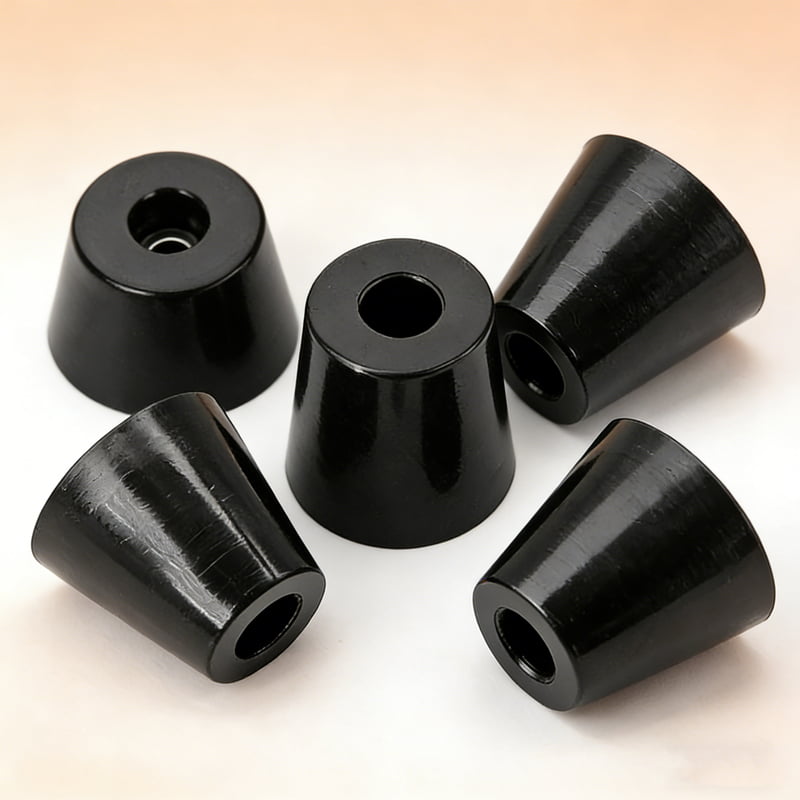
These design approaches have allowed me to use fiber-reinforced materials successfully where pure material solutions failed.
Shear loading geometries force energy dissipation7 through controlled deformation modes. When vibration forces create shear stress in the rubber, even fiber-reinforced compounds maintain reasonable damping characteristics. The key is designing the mount geometry to convert compression and tension forces into shear deformation.
Multi-layer construction alternates soft and stiff materials to create internal energy dissipation7. The interfaces between layers create additional damping mechanisms that don't depend solely on material properties. This approach works particularly well when the outer layers use fiber reinforcement for durability while inner layers provide pure damping.
Preload design creates controlled stress states that optimize damping behavior. Proper precompression can shift the material into its optimal damping range while preventing the tensile loading conditions where fiber reinforcement becomes problematic. The preload also ensures consistent contact and prevents impact loading.
Constrained layer damping uses thin layers of high-damping material between stiffer structural elements. This approach separates the structural function from the damping function, allowing each layer to be optimized independently. The fiber-reinforced layers provide strength while dedicated damping layers handle vibration isolation4.
Resonance tuning through geometry can shift natural frequencies away from operating frequencies even when material stiffness2 increases. By carefully designing the mount geometry, you can maintain isolation performance despite higher material stiffness2 from fiber reinforcement.
Progressive stiffness2 designs start soft for small vibrations and become stiffer for large displacements. This provides good isolation for normal operating vibrations while preventing damage during shock loading. The transition can be achieved through geometry rather than material property changes.
| Design Strategy | Primary Benefit | Implementation Method |
|---|---|---|
| Shear Geometry | Maintained Damping | Geometry Optimization |
| Multi-layer | Interface Dissipation | Material Stratification |
| Preload | Optimized Stress State | Controlled Compression |
| Constrained Layer | Separated Functions | Dedicated Damping Layers |
Conclusion
Fiber reinforcement in vibration mounts isn't automatically high quality - it requires strategic application to enhance durability without destroying isolation performance through excessive stiffness2 increases.
Understanding the mechanics of fiber-reinforced mounts can help you make informed purchasing decisions. ↩
Understanding stiffness can help you choose the right materials for vibration control. ↩
Avoid costly mistakes by understanding resonance and its impact on vibration mounts. ↩
Learn about the significance of vibration isolation in various applications to enhance performance. ↩
Discover how natural frequency affects vibration performance and system stability. ↩
Gain insights into dynamic loading and its implications for material performance in real-world applications. ↩
Explore the concept of energy dissipation to understand its role in effective vibration control. ↩
Learn about cyclic loading to better understand material fatigue and performance over time. ↩
Understanding fiber orientation can help optimize the effectiveness of vibration mounts. ↩
Discover why loss factor is crucial for evaluating the effectiveness of vibration isolation. ↩
Understand the benefits of multi-layer composites for effective vibration management. ↩
Discover how preload design can optimize damping behavior in vibration isolation applications. ↩