

Choosing the wrong anti vibration mount type is a costly mistake that can lead to equipment failure, increased maintenance costs1, and project delays.
Anti vibration mounts come in four main types: rubber mounts2, spring mounts3, air spring mounts4s](https://arxiv.org/pdf/2103.04823)%%%FOOTNOTE_REF_3%%%, and combination mounts5. Each type serves different vibration frequencies, load capacities6, and environmental conditions. Selecting the right type depends on your equipment's specific vibration characteristics7 and operating environment.
I have seen many projects fail because teams picked generic mounts without considering their equipment's actual needs. Understanding each mount type helps you avoid these expensive mistakes and ensures your equipment runs smoothly.
What makes rubber anti vibration mounts8 ideal for light to medium loads?
Rubber mounts handle vibrations through material compression and are perfect for equipment with moderate vibration levels.
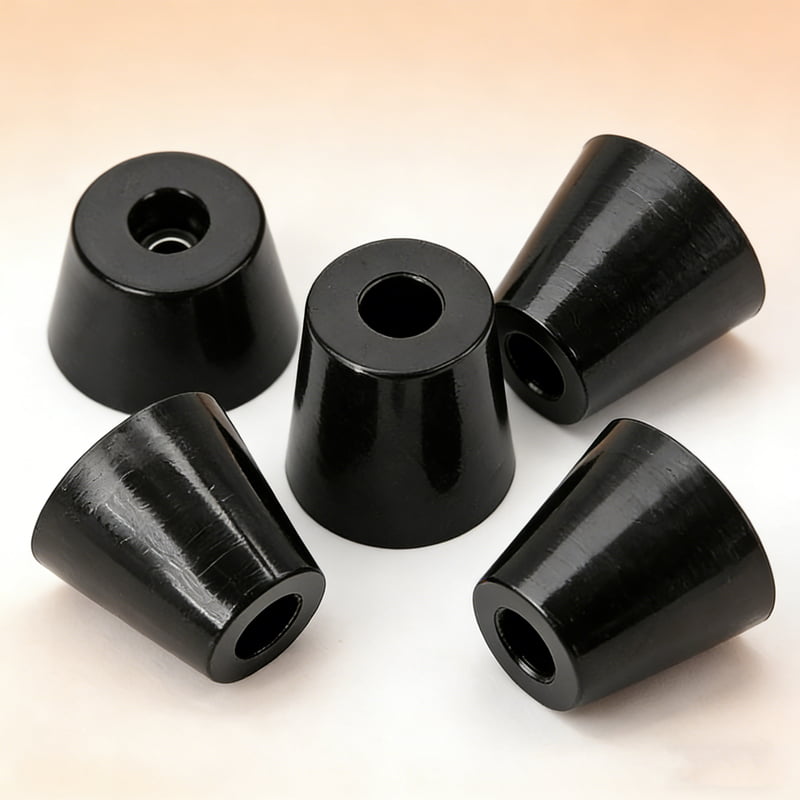
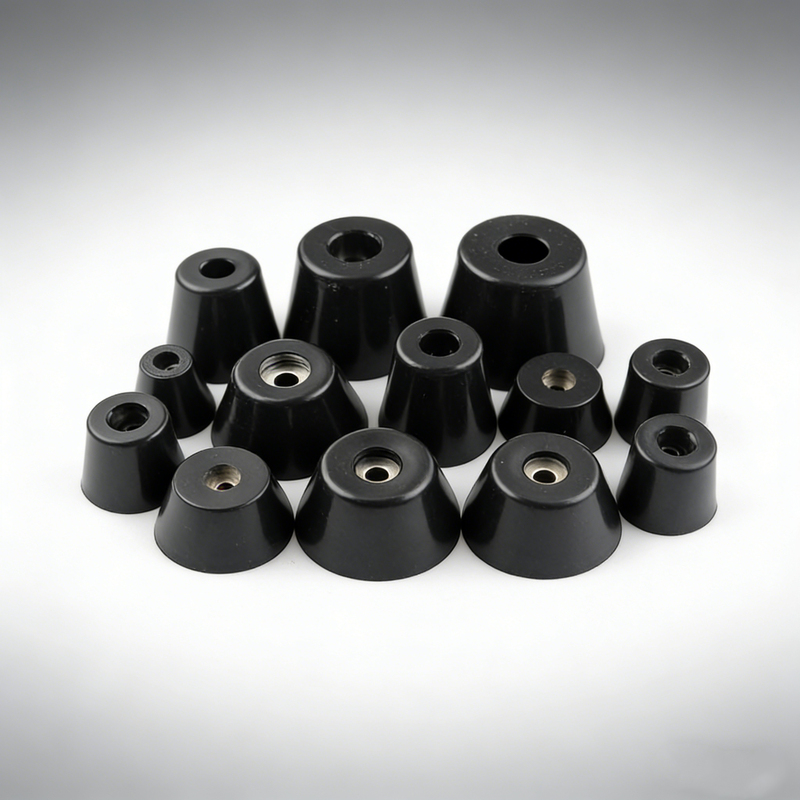
Rubber anti vibration mounts8 use elastomer materials9 to absorb vibrations through deformation. They work best for frequencies between 10-100 Hz and loads up to 500 kg per mount. These mounts offer excellent chemical resistance10 and cost-effectiveness for most industrial applications.


Rubber mounts come in several configurations that serve different needs. The most common types include cylindrical mounts11, sandwich mounts12, and cone mounts13. Cylindrical mounts provide equal stiffness in all directions, making them suitable for equipment that vibrates uniformly. Sandwich mounts offer higher load capacity and better isolation for heavier equipment. Cone mounts provide progressive stiffness, which means they get stiffer as the load increases.
The rubber material itself varies based on application requirements. EPDM rubber works well in outdoor environments due to its weather resistance. NBR rubber handles oil and fuel exposure better. Silicone rubber maintains performance in extreme temperatures from -60°C to 200°C. Natural rubber provides the best vibration damping but has limited chemical resistance10.
| Mount Type | Load Range | Frequency Range | Best Applications |
|---|---|---|---|
| Cylindrical | 10-200 kg | 15-80 Hz | Pumps, fans, small motors |
| Sandwich | 50-500 kg | 10-60 Hz | Generators, compressors |
| Cone | 20-300 kg | 12-100 Hz | HVAC equipment, engines |
Installation requires proper alignment and load distribution. The mount should compress 10-25% under static load for optimal performance. Too little compression reduces vibration isolation14, while too much compression causes premature failure.
Why do spring mounts3 excel in heavy-duty industrial applications?
Spring mounts use metal coils to isolate vibrations and can handle much heavier loads than rubber alternatives.
Spring anti vibration mounts8 use steel coils to provide isolation for heavy equipment generating low-frequency vibrations. They handle loads from 100 kg to over 5000 kg per mount and work best for frequencies below 30 Hz. Spring mounts offer superior longevity and consistent performance under extreme conditions.
Spring mounts excel where rubber mounts2 fail. Large compressors, diesel generators, and heavy pumps generate powerful low-frequency vibrations that rubber cannot effectively isolate. The steel spring construction maintains consistent stiffness over time, unlike rubber which can harden or soften with age and temperature changes.
Free-standing spring mounts3 work well for equipment that needs easy access for maintenance. These mounts sit between the equipment base and foundation without permanent attachment. Enclosed spring mounts3 protect the coil from debris and provide lateral stability for equipment with unbalanced forces. Restrained spring mounts3 include limit stops that prevent over-travel during equipment startup or shutdown.
Spring selection depends on deflection requirements15. Larger deflection provides better isolation but requires more installation height. A 25mm deflection spring isolates vibrations above 6 Hz, while a 50mm deflection spring starts working above 4 Hz. The trade-off is installation space and stability during operation.
| Spring Type | Deflection Range | Isolation Frequency | Typical Load Range |
|---|---|---|---|
| Low deflection | 6-15 mm | Above 8 Hz | 100-1000 kg |
| Medium deflection | 20-40 mm | Above 5 Hz | 500-3000 kg |
| High deflection | 50-75 mm | Above 3 Hz | 1000-5000+ kg |
Environmental factors affect spring mount selection. Outdoor installations need galvanized or stainless steel coils to prevent corrosion. High-temperature applications require special steel alloys that maintain spring properties above 150°C.
When should you consider air spring mounts4s](https://arxiv.org/pdf/2103.04823)%%%FOOTNOTE_REF_3%%% for precision equipment?
Air spring mounts3 provide the ultimate vibration isolation14 for sensitive equipment that demands near-perfect stability.
Air spring mounts3 use compressed air chambers to isolate vibrations and can achieve isolation efficiencies above 95%. They work across all frequency ranges16 and provide adjustable stiffness through air pressure control. These mounts suit precision manufacturing equipment, optical instruments, and research facilities requiring minimal vibration transmission.


Air spring technology represents the premium solution for vibration isolation14. Unlike passive rubber or spring mounts3, air springs can actively adjust to changing conditions. The air pressure controls the mount stiffness, allowing fine-tuning for different operating conditions. This adjustability makes air springs perfect for equipment that operates at variable speeds or loads.
The air spring construction typically includes a rubber bladder, metal end plates, and air supply connections. The bladder material must resist fatigue from constant flexing while maintaining air-tight seals. Reinforced fabric layers provide strength and prevent ballooning under pressure. The end plates distribute loads evenly and provide mounting surfaces for equipment attachment.
Active air spring systems include pressure sensors and automatic leveling controls. These systems maintain constant equipment height regardless of load changes. When equipment loads shift during operation, the system automatically adjusts air pressure to compensate. This feature is essential for precision manufacturing where even small height changes affect product quality.
Maintenance requirements differ significantly from passive mounts. Air springs need clean, dry compressed air to prevent internal corrosion and contamination. Regular pressure checks ensure optimal performance, and air line filters require periodic replacement. The complexity adds maintenance costs1 but provides unmatched performance for critical applications.
| System Type | Pressure Range | Load Capacity | Isolation Efficiency |
|---|---|---|---|
| Low pressure | 0.5-2 bar | 50-500 kg | 90-95% |
| Medium pressure | 2-6 bar | 200-2000 kg | 95-98% |
| High pressure | 6-16 bar | 1000-10000+ kg | 98-99% |
Installation requires compressed air infrastructure and control systems. Simple manual systems work for static loads, while automatic systems suit dynamic applications. The initial cost is higher than passive mounts, but the performance benefits justify the investment for critical applications.
How do combination mounts5 provide versatile solutions for complex applications?
Combination mounts merge different isolation technologies to address multiple vibration challenges in a single solution.
Combination anti vibration mounts8 integrate rubber and spring elements or include damping mechanisms to control both vibration isolation14 and motion control. They provide customized solutions for equipment with complex vibration patterns, multiple frequency ranges16, or specific stability requirements that single-technology mounts cannot address effectively.


Real-world equipment often generates complex vibration patterns that challenge single-technology mounts. A diesel generator might produce low-frequency vibrations from the engine and higher frequencies from the alternator. Combination mounts address this by using springs for low-frequency isolation and rubber elements for high-frequency damping.
Spring-rubber combinations are the most common design. The spring provides primary isolation for heavy loads and low frequencies, while the rubber element adds damping to prevent resonance and handles higher frequency vibrations. This design works well for equipment with variable operating speeds that pass through resonant frequencies during startup and shutdown.
Hydraulic dampers integrated with spring or rubber mounts2 provide motion control without compromising isolation. These dampers resist rapid movements while allowing slow deflections for vibration isolation14. The combination prevents excessive motion during equipment startup while maintaining isolation during normal operation.
Some combination mounts5 include multiple stiffness zones. Soft initial stiffness provides good isolation for small vibrations, while progressive stiffness increases load capacity for larger deflections. This design suits equipment with widely varying dynamic loads or installations where space limits mount deflection.
| Combination Type | Primary Element | Secondary Element | Best Applications |
|---|---|---|---|
| Spring-Rubber | Spring isolation | Rubber damping | Variable speed equipment |
| Rubber-Damper | Rubber isolation | Hydraulic damping | Shock-sensitive equipment |
| Progressive | Soft rubber | Firm backup | Limited space installations |
Custom combination designs address specific application challenges. We often develop specialized mounts for customers with unique requirements that standard products cannot meet. The design process involves analyzing the equipment vibration characteristics7, environmental conditions, and performance requirements to create an optimal solution.
Conclusion
Selecting the right anti vibration mount type prevents equipment problems and ensures reliable operation. Match your equipment's specific needs with the appropriate mount technology for best results.
Learn how selecting the right mounts can lead to lower maintenance costs over time. ↩
Learn about the advantages of rubber mounts for light to medium loads and their applications. ↩
Discover how spring mounts excel in heavy-duty applications and their unique features. ↩
Find out why air spring mounts are ideal for precision equipment and their performance advantages. ↩
Understand how combination mounts provide versatile solutions for complex vibration challenges. ↩
Learn about the load capacities of various mount types to choose the right one for your needs. ↩
Understand the key vibration characteristics that influence mount selection. ↩
Explore this resource to understand the various types of anti vibration mounts and their applications. ↩
Discover the types of elastomer materials that enhance the performance of rubber mounts. ↩
Find out which mounts are best suited for environments with chemical exposure. ↩
Explore the applications and benefits of cylindrical mounts in various industries. ↩
Discover how sandwich mounts provide higher load capacity and better isolation. ↩
Learn about the unique features of cone mounts and their applications. ↩
Explore the concept of vibration isolation and its significance in equipment performance. ↩
Understand the importance of deflection in selecting the right spring mounts. ↩
Discover the frequency ranges that different mounts can handle for optimal performance. ↩