

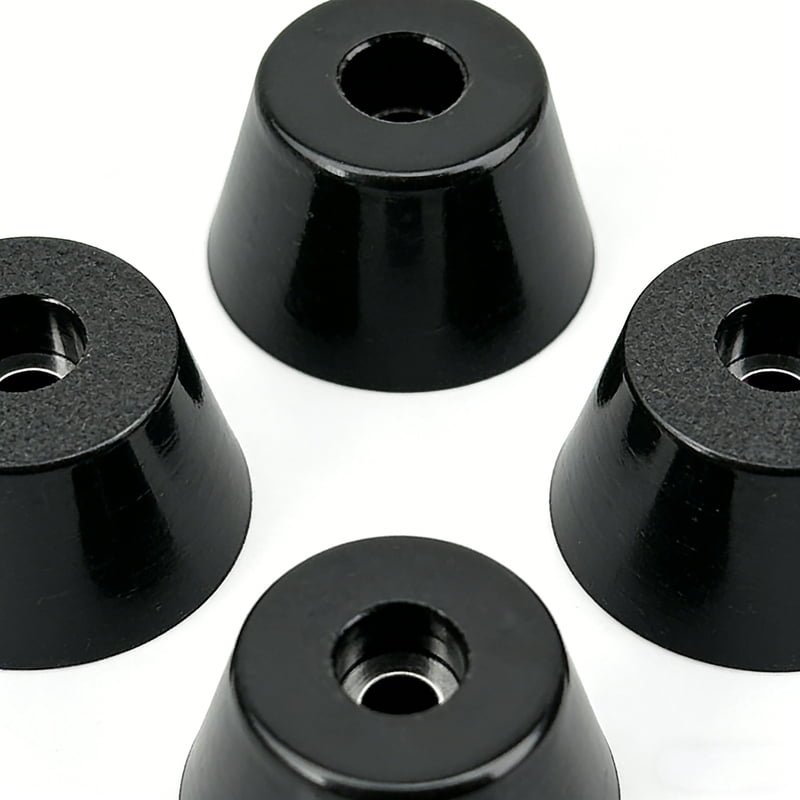
Choosing the wrong anti-vibration rubber mounts1 can lead to equipment failure, increased maintenance costs, and operational downtime that could have been easily avoided.
Anti-vibration rubber mounts are specialized components designed to isolate machinery from vibrations and reduce noise transmission. The right mount selection depends on load capacity2, vibration frequency3, environmental conditions4, and material compatibility5 with your specific application.


I have seen too many projects fail because teams rushed into mount selection without understanding their equipment's specific needs. Let me share what I learned from 27 years in this industry.
Why Do Anti Vibration Rubber Mounts Fail in Real Applications?
Equipment vibrations can destroy even the most expensive machinery if you choose the wrong isolation solution.
Common failure modes include material degradation6, resonance amplification7, and load mismatching. Poor mount selection leads to increased vibration transmission8, accelerated wear, and potential equipment damage that costs far more than proper initial selection.
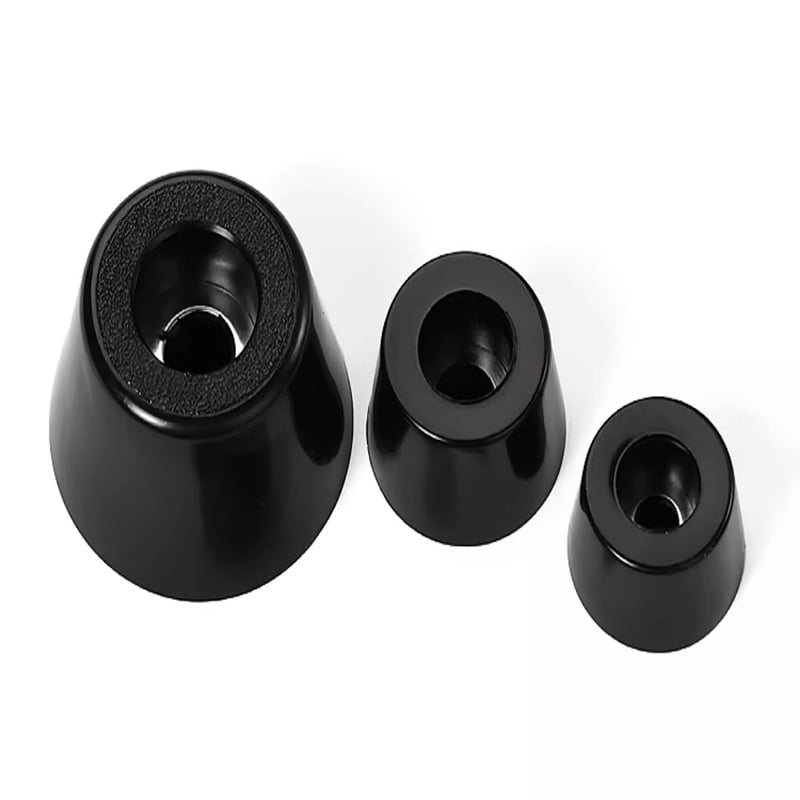
I remember working with a precision manufacturing client who installed generic rubber mounts on their high-frequency equipment. Within six months, they experienced severe resonance issues. The equipment started producing defective parts because the mounts actually amplified certain frequencies instead of dampening them.
The root problem was material selection. They chose standard natural rubber mounts for equipment that generated high-frequency vibrations. Natural rubber works well for low-frequency applications, but it cannot handle the rapid oscillations their machinery produced. The mounts became heat generators instead of vibration absorbers.
This taught me that mount selection requires understanding three critical factors: vibration frequency3 characteristics, load distribution patterns, and environmental operating conditions. Generic solutions rarely work for specialized applications.
| Mount Type | Frequency Range | Best Applications | Common Issues |
|---|---|---|---|
| Natural Rubber | 5-50 Hz | Heavy machinery, pumps | Heat buildup at high frequencies |
| Neoprene | 10-100 Hz | HVAC, generators | Chemical sensitivity |
| Silicone | 20-500 Hz | Electronics, precision equipment | Higher cost, load limitations |
| EPDM | 5-200 Hz | Outdoor equipment, automotive | UV resistance9 varies by formulation |
How Do You Calculate the Right Load Capacity for Your Mounts?
Overloaded mounts compress beyond their effective range and lose their vibration isolation10 properties completely.
Load capacity calculation involves determining static load11, dynamic load factors12, and safety margins13. Proper sizing requires considering equipment weight distribution, operational forces, and potential load variations during different operating modes.


Most engineers make a critical mistake here. They calculate only the static weight of their equipment and forget about dynamic loads. When machinery operates, it creates additional forces that can double or triple the actual load on the mounts.
I worked with an automotive manufacturer who installed mounts rated for their press machine's static weight. They did not account for the massive forces generated during the stamping process. The mounts failed within weeks because the dynamic loads exceeded their capacity by 300%.
The correct approach involves three calculations. First, determine the static load11 by dividing total equipment weight by the number of mounting points14. Second, apply dynamic load factors12 based on your equipment type. Reciprocating machinery typically requires 2-3x static load11d capacity](https://arxiv.org/html/2503.17988v1)%%%FOOTNOTE_REF_2%%%. Third, add safety margins13 of 25-50% for unexpected conditions.
Dynamic load factors vary significantly by equipment type. Rotary equipment like fans or pumps creates different load patterns than reciprocating compressors or stamping presses. Each requires different mount characteristics to handle their specific force profiles effectively.
Environmental factors also affect load calculations. Temperature changes cause rubber to stiffen or soften, altering its load-bearing capacity. Chemical exposure can degrade material properties over time. Outdoor installations face UV radiation and ozone exposure that gradually reduce mount effectiveness.
What Materials Work Best for Different Operating Environments?
The wrong rubber compound will degrade rapidly in harsh environments, leading to premature mount failure and equipment damage.
Material selection depends on temperature range, chemical exposure15, ozone resistance, and dynamic properties. Silicone handles extreme temperatures, EPDM resists weathering, NBR provides oil resistance, and natural rubber offers excellent vibration damping for indoor applications.
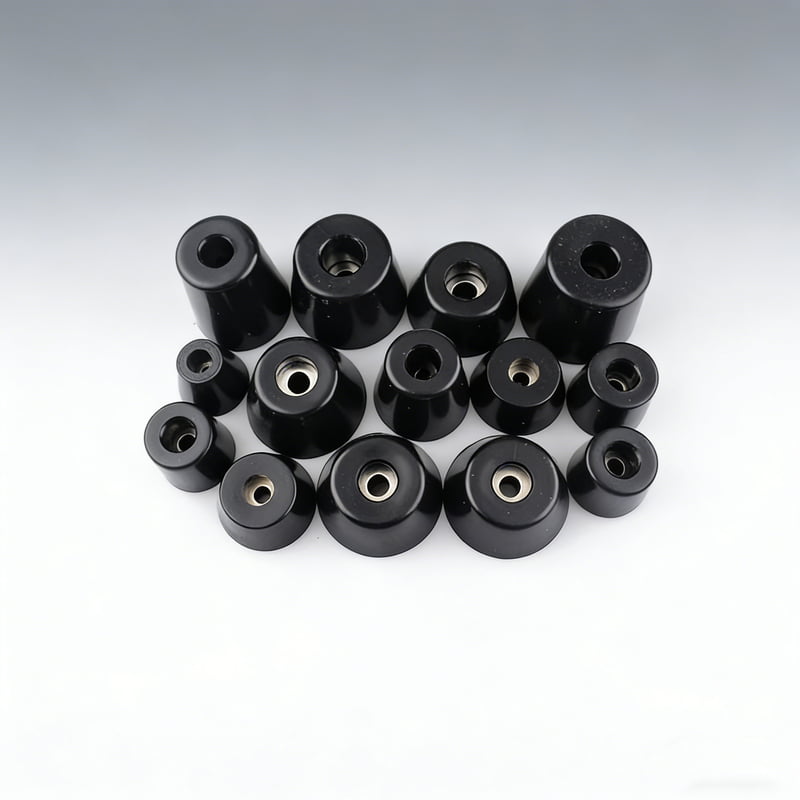
Material selection determines mount lifespan and performance consistency. I have seen mounts fail within months because teams chose materials unsuitable for their operating environment.
A chemical processing client contacted me after their rubber mounts dissolved in six months. They had installed natural rubber mounts near equipment that released hydrocarbon vapors. Natural rubber swells and degrades when exposed to oils and solvents. The mounts lost their shape and vibration isolation10 properties completely.
We replaced them with NBR (nitrile rubber) mounts specifically formulated for oil resistance. These mounts have operated successfully for over five years in the same environment. The initial cost was 40% higher, but the total cost of ownership decreased dramatically due to eliminated replacement cycles.
Temperature resistance becomes critical in many applications. Standard rubber compounds lose effectiveness at temperature extremes. Silicone mounts maintain their properties from -65°C to +200°C, making them ideal for automotive and aerospace applications where temperature cycling occurs regularly.
| Material | Temperature Range | Chemical Resistance | UV Resistance | Cost Factor |
|---|---|---|---|---|
| Natural Rubber | -40°C to +80°C | Poor | Poor | 1.0x |
| EPDM | -45°C to +150°C | Excellent | Excellent | 1.3x |
| Silicone | -65°C to +200°C | Good | Excellent | 2.5x |
| NBR | -35°C to +120°C | Excellent (oils) | Fair | 1.8x |
| Neoprene | -40°C to +100°C | Good | Good | 1.5x |
Hardness selection affects both vibration isolation10 and load capacity2. Softer compounds provide better vibration isolation10 but have lower load limits. Harder compounds support more weight but transmit more vibration. The optimal hardness depends on your specific balance between load requirements and isolation needs.
How Do You Install Anti Vibration Mounts for Maximum Effectiveness?
Poor installation practices16 can completely eliminate the vibration isolation10 benefits of even the best mounts.
Proper installation requires correct torque specifications, alignment procedures, and consideration of thermal expansion17. Over-tightening compresses rubber beyond its effective range, while under-tightening allows movement that reduces isolation effectiveness and accelerates wear.


Installation errors cause more mount failures than material selection problems. I regularly see mounts that would perform well if installed correctly, but poor practices destroy their effectiveness.
The most common mistake involves over-tightening mounting bolts. When you compress rubber mounts too much, they become rigid and transmit vibrations instead of isolating them. Each mount design has specific compression limits that maintain optimal performance.
I worked with a facility where maintenance technicians routinely over-tightened all fasteners as a general practice. Their vibration mounts were compressed to 50% of their original height. The equipment experienced worse vibration levels than without mounts at all. We retrained their team on proper torque specifications and saw immediate improvements.
Alignment becomes critical for multi-point mounting systems. If mounts are not level or properly aligned, some points carry more load than others. This creates uneven stress distribution that leads to premature failure of overloaded mounts.
Thermal expansion considerations often get overlooked. Equipment heats up during operation and expands. If mounts cannot accommodate this movement, they experience additional stress that reduces their lifespan. Some applications require mounts with built-in expansion capabilities.
Installation environment affects mount performance. Mounting surfaces must be clean, flat, and properly prepared. Contamination or surface irregularities create stress concentrations that initiate crack formation. We always recommend surface preparation guidelines specific to each mount type.
Conclusion
Selecting the right anti-vibration rubber mounts1 requires understanding your equipment's specific vibration characteristics, load requirements, environmental conditions4, and proper installation practices16 to ensure long-term performance and cost-effectiveness.
Explore the advantages of anti-vibration rubber mounts to enhance machinery performance and reduce noise. ↩
Learn the essential calculations for determining load capacity to ensure optimal mount performance. ↩
Understanding vibration frequency is crucial for selecting the right mounts for your equipment. ↩
Explore how different environments affect mount selection and longevity. ↩
Discover which materials withstand harsh conditions to prolong mount lifespan and performance. ↩
Learn about material degradation to prevent premature mount failure and equipment damage. ↩
Learn about resonance amplification to avoid costly equipment failures due to improper mount selection. ↩
Learn strategies to minimize vibration transmission for better equipment performance. ↩
Explore the importance of UV resistance in prolonging the life of outdoor mounts. ↩
Explore the concept of vibration isolation to enhance machinery performance and longevity. ↩
Understanding static load is essential for proper mount sizing and performance. ↩
Understanding dynamic load factors is key to ensuring mounts can handle operational forces effectively. ↩
Learn about safety margins to ensure mounts can handle unexpected load variations. ↩
Discover how proper mounting point distribution can enhance mount effectiveness. ↩
Learn how chemical exposure can degrade rubber mounts and how to choose resistant materials. ↩
Proper installation is crucial; discover best practices to maximize mount effectiveness. ↩
Understanding thermal expansion is vital for ensuring mounts accommodate equipment movement. ↩