

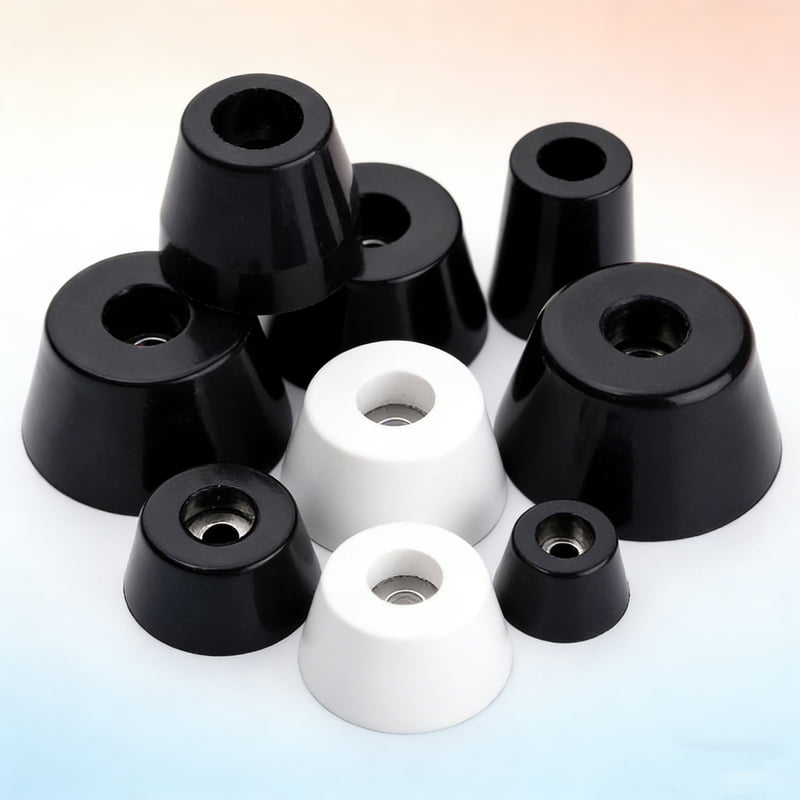
The hidden costs of vibration isolation1 are vast and can drain your profits. Don't let "hard connections" shatter your bottom line.
Choosing the right vibration isolation1 and shock mounts2 is crucial for heavy machinery, precision labs, and electronic assembly lines. If done incorrectly, you risk amplifying resonance instead of reducing it.


The issues surrounding vibration isolation1 can be complex. Many people treat vibration isolation1 as an afterthought. I have seen countless projects where the wrong mounts caused more damage than good. It's essential to understand the key elements that contribute to effective vibration isolation1.
What is the Disconnect Between Static Load and Dynamic Frequency?
When selecting vibration mounts, many focus solely on the static load capacity. This can lead to serious issues. I remember a situation where a company chose a robust metal mount to support a heavy machine. While it did reduce movement, it also transmitted high-frequency noise throughout the facility. This noise not only disrupted operations but also caused frequent errors in the expensive control panel.
The real problem? The natural frequency3 of the mount was too close to the machine's excitation frequency. This led to a terrifying resonance effect. Many suppliers only inquire about the load but overlook crucial factors like the machine's RPM or impact frequency. This oversight can cause vibration energy to feedback into the machine. It shortens the machine's lifespan and creates significant stress in identifying these "ghost faults".
How to Avoid the Pitfall?
To ensure your machinery runs smoothly, focus on these two crucial points during selection:
-
Check the Interference Frequency Ratio: The natural frequency3 of the isolation system should be at least $\sqrt{2}$ times lower than the equipment's operating frequency. This ensures you enter the effective "isolation zone."
-
Distinguish Between Steady-State Vibration and Impact Loads: Different damping ratios4 are needed for continuously rotating fans and sudden-impact machines.
How do we tackle this resonance challenge? I firmly believe that isolation solutions should undergo dual modeling of load and frequency. Last year, a partner with high-precision laser cutting equipment approached me. They faced micro-vibrations at specific speeds that led to a serrated cutting edge. Instead of suggesting a more expensive component, our team calculated the dynamic load5 and developed a composite mount with nonlinear stiffness. This mount provided ample support under initial compression while showing low dynamic stiffness at high frequencies. In the end, we reduced vibrations transmitted to the cutting head by over 90%. We helped solve a quality bottleneck that had troubled his team for months.
Why Your Precision Engineering Deserves a Scientific Approach
If you pursue ultimate stability and zero-failure operation, you should not take risks with "vibration isolation1." You need a tailored solution to prevent resonance, excessive noise, or other challenges in high-precision projects.
If you find yourself facing these issues, reach out to us. Our expert engineering team can assist you with frequency modeling and provide comprehensive technical support, from material formula optimization to load validation. Contact us, and let our professionals build an unbreakable silent defense for your core equipment.
Conclusion
Investing in the correct vibration isolation1 solutions is essential for the longevity and efficiency of your equipment.
Explore this link to understand effective vibration isolation techniques that can enhance machinery performance. ↩
Learn about shock mounts and their role in minimizing vibrations, crucial for maintaining equipment integrity. ↩
Discover the significance of natural frequency in vibration isolation to prevent resonance issues. ↩
Explore the concept of damping ratios to optimize vibration isolation for different machinery types. ↩
Understanding dynamic load calculations can help you choose the right isolation systems for your machinery. ↩