

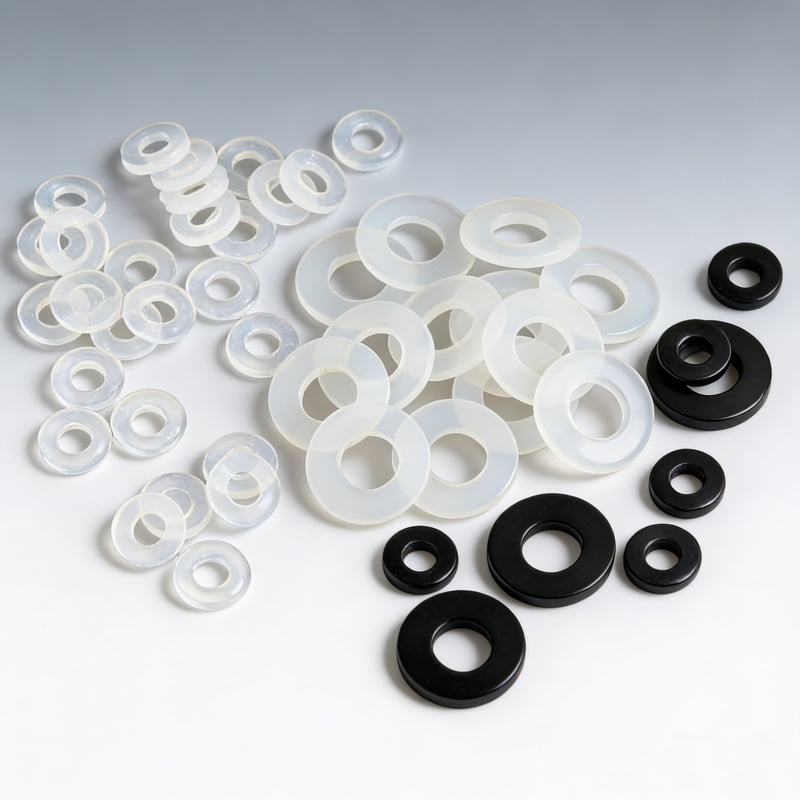
In my years of working with rubber gaskets and seals1, I've noticed a common misconception. Many projects are very careful with material selection, even using high-grade materials, yet they still face issues like leaks, short lifespans, and frequent replacements.
The biggest pitfall? Overlooking tolerance stacking2 and designing solely based on theoretical dimensions3.
Many people assume that if they design the dimensions correctly, the seal will work perfectly. But the reality is that assembly isn't always in an ideal state.
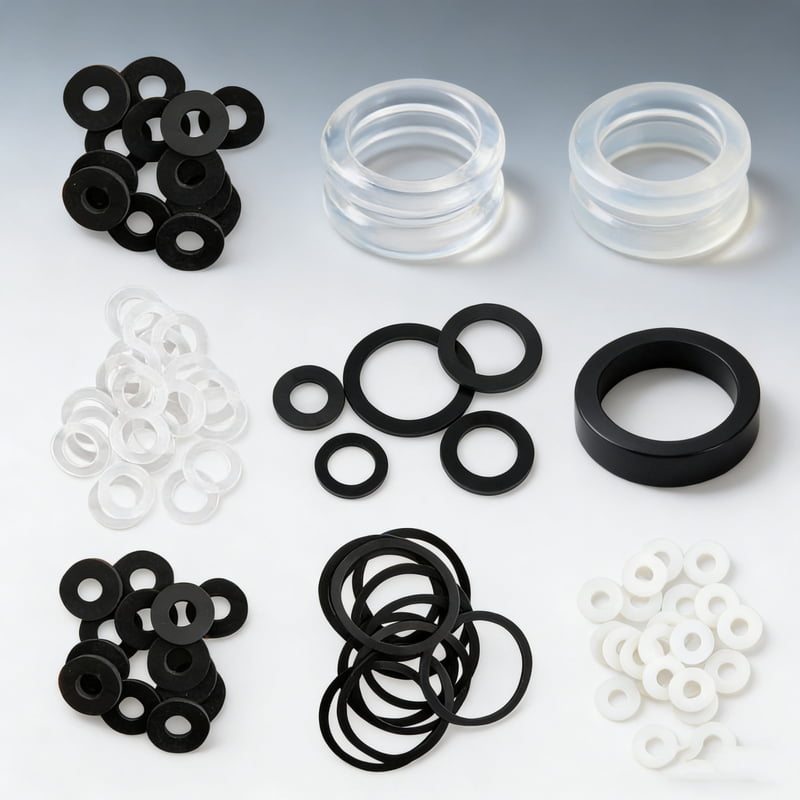
In practical applications, every component has tolerances. There can be variances in groove dimensions4, mating parts, and even the rubber itself. When these tolerances stack together, two extreme situations can arise:
- Larger gaps lead to seal failure or insufficient compression, resulting in micro-leaks, especially noticeable under pressure or vibration.
- Excessive compression makes installation difficult, damages the rubber, or causes long-term compression set5.
The issue often isn't the material itself but rather the lack of consideration for tolerance stacking2.
What Are the Common Misunderstandings?
In a past project, I encountered a situation where a sealing ring passed testing but faced massive leakage during mass production. Initially, we suspected issues with the material, the manufacturing process, or even switched suppliers.
Upon review, we found that:
- The design compression6 was set at 25% (theoretical).
- In actual assembly, some were at only 10%, while others approached 40%.
This variance stemmed from discrepancies in groove dimensions4 and the mating parts.
Afterward, we took two key actions:
- Adjusted the seal cross-section to enhance tolerance adaptability.
- Optimized the hardness range.
This resulted in a stable solution.
Practical Steps to Avoid These Pitfalls
If you're involved in selecting or designing rubber gaskets and seals1, pay attention to these three critical points:
-
Look Beyond Nominal Dimensions: Assess the Extreme Tolerance Combinations
It’s crucial to evaluate more than just the ideal scenario. Consider the maximum and minimum gaps to ensure that the seal remains effective under both extremes.
-
Design for Tolerance Space Instead of Just Perfect Fit
Many designs aim for a "perfect fit," which can be risky. A more reliable approach is to design with a margin of error to prevent over-reliance on a single dimension.
-
Match Material Hardness with Tolerances Rather Than Making It a Standalone Decision
Hardness (Shore A) is not simply better at higher or lower levels. It must align with the compression range and tolerance variations. The right hardness can absorb some dimensional errors.
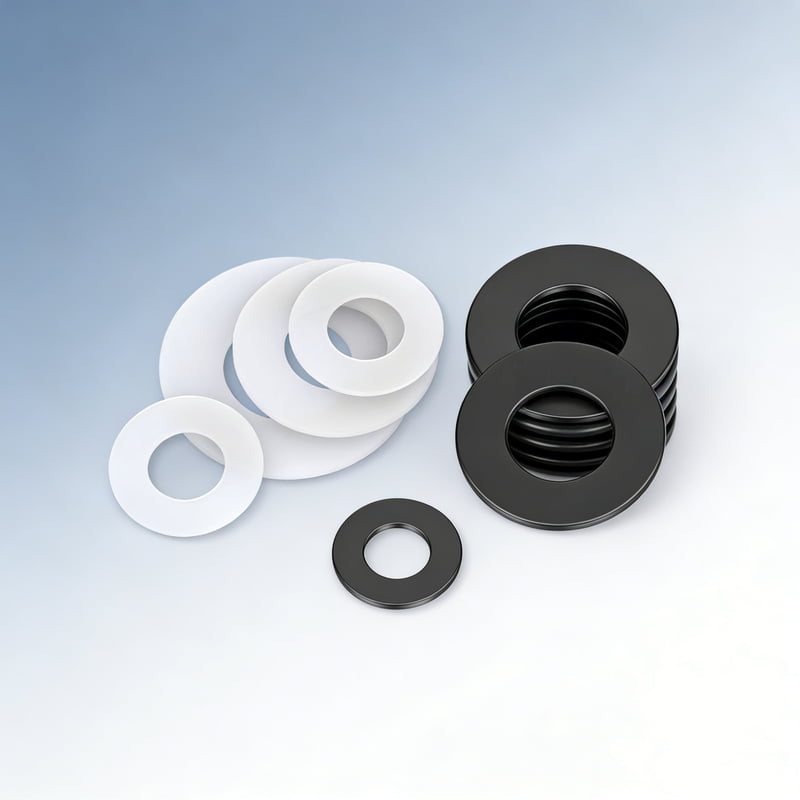
What Should Suppliers Do?
Honestly, quoting and producing solely based on drawings is a setup for issues. A more effective approach involves:
- Participating in tolerance assessments7 during the design phase.
- Helping calculate the actual compression range instead of relying on theoretical values.
- Providing structural or hardness optimization recommendations.
- Validating extreme conditions through samples when necessary.
Often, it’s not that the design is wrong; it’s that real assembly environments have not been considered.
A Final Piece of Advice
Rubber gaskets and seals might seem like standard components, but the details outside the drawings fundamentally determine their success. In my early projects, I, too, fell into the trap of ignoring tolerance stacking2. Now, whenever I see a design, I first ask myself:
"If all dimensions are offset to the extremes, will this seal still work?"
If there’s an answer, the project is usually on solid ground.
If you are evaluating a sealing solution or suspect potential risks in your current design during mass production, feel free to share your structure or application details. I’d be happy to help identify and address any hidden concerns early on.
Explore best practices to enhance the durability and effectiveness of rubber gaskets and seals in your projects. ↩
Understanding tolerance stacking is crucial for ensuring effective seal performance and preventing leaks. ↩
Explore the limitations of theoretical dimensions to improve your design accuracy and assembly outcomes. ↩
Discover the significance of groove dimensions in ensuring proper seal function and preventing leaks. ↩
Learn about compression set and strategies to minimize it for longer-lasting rubber seals. ↩
Learn how design compression affects seal performance to avoid common pitfalls in your projects. ↩
Understanding tolerance assessments can help prevent costly errors in the design and manufacturing process. ↩