

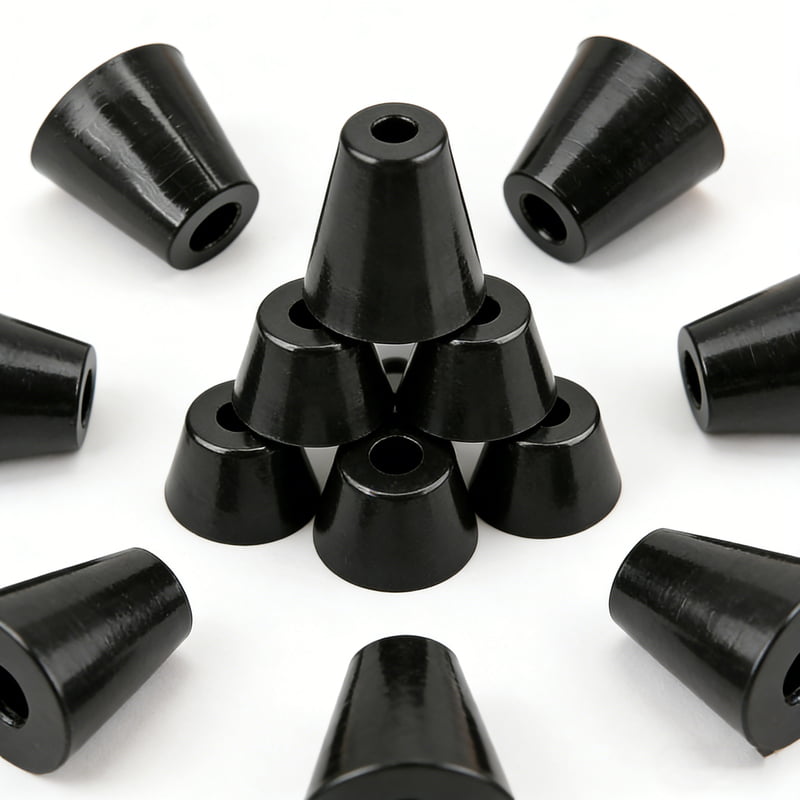
The first paragraph grabs attention: In the world of equipment design, the Rubber Foot1 is often seen as a basic but crucial component, yet it can be the source of unexpected issues.
It's common to find that after selecting the right Rubber Foot1 based on weight, the device still experiences shaking, noise, and stability problems during operation.


When dealing with this issue, it can be frustrating. Many people assume the problem lies in the quality of the rubber feet. However, the real issue often stems from a critical and often overlooked point.
What’s the Biggest Pitfall?
Most of us tend to approach the selection of a Rubber Foot1 in a straightforward manner:
- Calculate the total weight of the device.
- Distribute the weight evenly across all support points.
- Choose rubber feet that fit the corresponding load range. ✔
This method works under static conditions. But in reality, equipment is rarely static.
When equipment operates, it generates vibrations, uneven loads, impacts, and frequent starts and stops. All of these factors change the stress states on the feet.
I once worked on a project involving a device with an electric motor. During static tests, everything seemed fine. However, while operating, it exhibited noticeable shaking along with structural resonance.
After investigation, we found that:
The chosen Rubber Foot1 performed well under static load but had low stiffness when subjected to dynamic loads, causing the device to amplify displacements at its operating frequency2.
In simple terms: It could handle the weight but couldn’t stabilize under dynamic conditions.
How to Avoid This Problem?
If you're in the process of selecting rubber feet, I typically recommend not just focusing on load capacity. Pay attention to:
- Dynamic stiffness
- Operating frequency
- Mode of stress
Key considerations include:
- Does the equipment have rotating components (like motors, fans, compressors)?
- Is there persistent vibration or periodic impacts?
- Is there any uneven loading3 or center of gravity shift?
- Is the equipment operating under variable frequency or speed conditions?
A key principle here is: Rubber Feet are not just support components; they are part of a dynamic system.
In designing or selecting, aim to:
- Retain enough compression margin4 within the load range.
- Avoid approaching the limit of compression (which can reduce cushioning capacity).
- Select the right hardness and structure based on vibration frequency.
How Did I Solve This Issue in Projects?
In my projects, I don’t simply recommend Rubber Feet based on weight. Instead, I strive to understand the full application context:
- Is the device operating under stable conditions or experiencing frequent changes?
- Are there vibration sources5 present, and if so, what is the frequency range?
- Is the device structure sensitive to stability?
- Is there uneven loading3 or stress distribution?
Then we:
- Assess both static load and dynamic conditions together, rather than relying on a single dimension for selection.
- Adjust the material's hardness6 and structural design to enhance stability during operation.
- Optimize contact area and height when necessary to reduce shaking risk.
Many projects show a significant improvement in stability and operating noise after adjusting to match dynamic parameters.
Conclusion
Rubber Feet may seem straightforward, but the real impact comes from whether they provide stability under operational conditions. Merely focusing on weight can lead to issues like shaking, noise, and structural instability.
If you're involved in equipment design or selection, or if you've encountered similar stability issues7, feel free to share the operational context of your device with me.
I can help analyze the dynamic conditions and provide better-matched Rubber Foot1 selections and optimization tips, ensuring your equipment maintains better stability and reliability in real-world environments.
Explore this resource to understand how to choose the right Rubber Feet for optimal stability and performance. ↩
Discover how operating frequency impacts the effectiveness of rubber feet in real-world applications. ↩
Understanding uneven loading is crucial for selecting the right rubber feet to prevent instability. ↩
Explore why maintaining a proper compression margin is vital for rubber foot effectiveness. ↩
This link will help you identify vibration sources that can affect the performance of rubber feet. ↩
Learn how the hardness of rubber materials affects their performance in dynamic conditions. ↩
This resource will provide insights into stability issues and how to address them effectively. ↩