

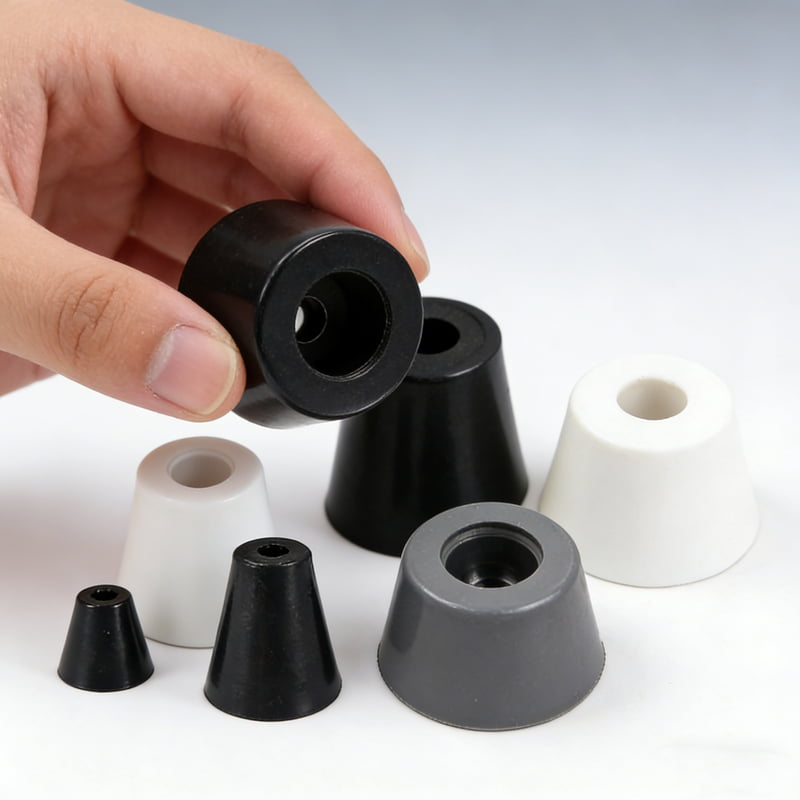
Rubber Feet seem simple. They are just small components meant to provide grip, reduce vibrations, and protect surfaces. However, I have seen many projects where these parts fail over time.
Why do rubber feet sometimes slide, harden, or leave marks after a short period? In most cases, this issue stems from a critical factor that is often overlooked.
What is the Biggest Pitfall?
The biggest mistake is ignoring the match between the rubber material1 and the surface it contacts. Many people focus only on:
- Size
- Thickness
- Hardness
While these factors are important, the match between the rubber material1 and the surface type (like wood, glass, metal, or plastic) is crucial.
I remember working on a device project where we used standard rubber feet. Initially, they worked great, but after two months on a glass surface, we faced two issues:
- The friction dropped significantly, making the device easy to push.
- There were light oil marks left on the surface.
What went wrong? We used ordinary NR rubber. On a smooth surface with some heat, it degraded and lost friction.
How Can You Avoid This Problem?
If you are in the process of choosing rubber feet, prioritize this question instead of going with a "universal option":
What kind of surface will your product be on?
Different applications call for different materials:
- Smooth Surfaces (Glass/Metal): Use high-friction formulations2 (like modified TPE or silicone).
- Elevated Temperatures or Constant Pressure: Opt for materials that resist aging and compression (like EPDM or silicone3).
- Appearance-Sensitive Applications: Choose low-migration, non-staining compounds4.
In short, my experience shows that grip is not just about being "soft," but about being "matched."
How Do I Help Projects Avoid This Issue?
In actual projects, I do not recommend any rubber foot directly. Instead, I first gather details about the application:
- What is the surface material?
- Will it be under continuous stress?
- Will there be temperature changes or outdoor use?
Then, I take the following steps:
- Match the right material system (instead of just defaulting to NR).
- Adjust the formulation to enhance friction while controlling migration.
- If needed, provide different testing options rather than settling on one choice.
Many projects can prevent the "slipping" problem just by taking this extra step at the beginning.


Conclusion
Rubber Feet may be small components, but they have a big impact on user experience and device stability. The real difference lies in the details of the materials used. If you're currently selecting rubber feet or facing issues like decreased grip or marks, share your application scenario with me. Together, we can fine-tune the details to make your product more reliable from the start.
Understanding the right rubber material can significantly enhance grip and durability for your projects. ↩
Explore high-friction formulations to ensure your rubber feet perform optimally on various surfaces. ↩
Discover the advantages of EPDM and silicone for rubber feet, especially in high-temperature or pressure applications. ↩
Learn about low-migration compounds to prevent surface marks and maintain aesthetics in your applications. ↩