

Many urgent projects come with a common question:
“Do you have stock? We need it right away.”
I completely understand this pressure—project timelines, delivery dates, and on-site installations all depend on it. But to be honest, the very idea of "in stock" hides a pitfall that's easy to fall into.
The biggest pitfall: Choosing stock items for quick delivery while ignoring "operating condition matching1."
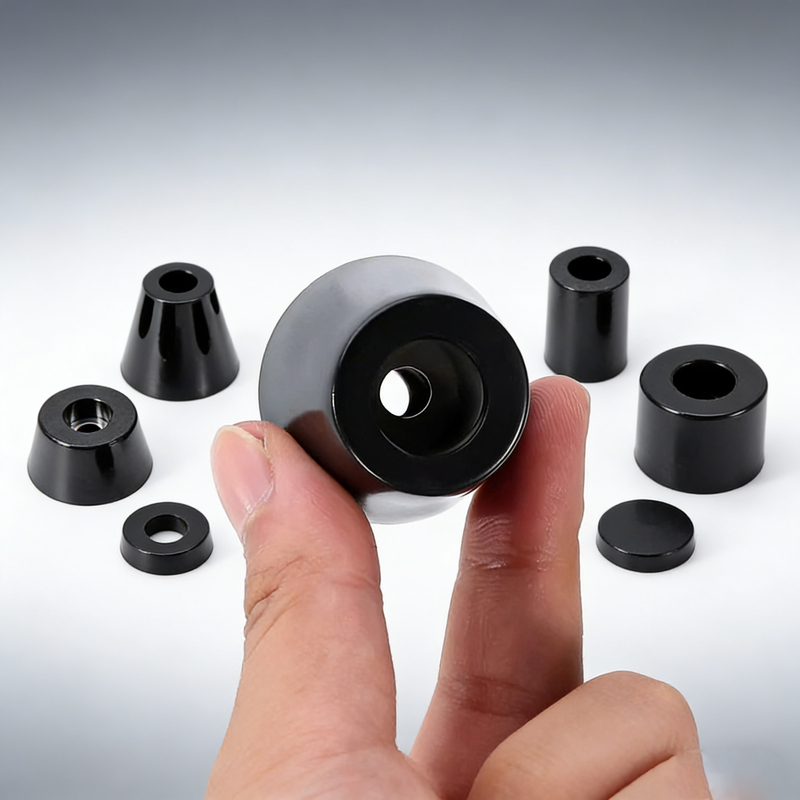
The advantages of stock vibration isolators2 are clear:
👉 Quick delivery, no waiting for molds or custom cycles.
But there’s a catch:
👉 Stock items are designed for "standard operating conditions," while your project often isn't.
I encountered a typical case before:
A piece of equipment needed urgent shipment. They chose a vibration isolator model from stock:
Load capacity matched ✔
Installation dimensions matched ✔
Available for immediate shipment ✔
But once installed and operational, the problems arose quickly:
Vibration levels didn’t decrease significantly. In some frequency ranges, vibrations even intensified.
The reason was simple:
👉 The "stock model" had a natural frequency3 that didn’t suit the equipment's operating frequency.
The result? Time was saved, but they paid with repeated replacements and downtime.
How can you avoid this problem?
If you're considering using stock items, I usually suggest making a "quick but critical" judgment.
Instead of asking, "Is there stock?" ask: "Is this stock item suitable for my operating conditions?"
You can prioritize confirming three core points:
- Actual load of the equipment (does it include dynamic changes?)
- Operating frequency (RPM / Hz)
- Usage environment (are there shocks, temperature changes, etc.?)
Then, align with a basic principle:
👉 The natural frequency3 of the isolator must be significantly lower than the equipment's excitation frequency4 (typically ≤1/3).
If this step isn’t confirmed, stock items might just be a "temporary fix," not a "real solution."
How do I balance "timeline" and "performance"?
In actual projects, I don’t simply answer “yes” or “no” about stock availability. I make a more practical assessment:
👉 Is there a “perfect fit” in the stock models, rather than something that’s “close enough”?
Here’s how we typically handle it:
- Use existing stock for a quick matching calculation (not a blind pick).
- If it’s a close match, I recommend and verify it first.
- If it’s not a match, I clearly state the risks instead of forcing a shipment.
Sometimes, we also make slight adjustments to structure or hardness based on stock, ensuring performance gets closer to the ideal without affecting delivery timelines.
In conclusion,
“In Stock” sounds like an advantage, but the key is—
It must be “suitable for you,” not just “usable now.”
Otherwise, the time saved might only be a few days, while the costs incurred could stretch into weeks or longer for adjustments.
If you have urgent projects and worry about choosing the wrong model, feel free to send me your equipment parameters or application scenarios.
I can help you make a quick assessment:
👉 Is it better to use stock, or should we make slight adjustments for better stability and cost savings?
We have a mature inventory system and a technical team ready to help you find a reliable balance between delivery and performance.
Understanding operating condition matching can prevent costly mistakes in equipment performance. ↩
Explore the advantages of vibration isolators to enhance project performance and stability. ↩
Learn how natural frequency impacts equipment performance and vibration control. ↩
Gain insights into excitation frequency to ensure proper isolator selection. ↩