

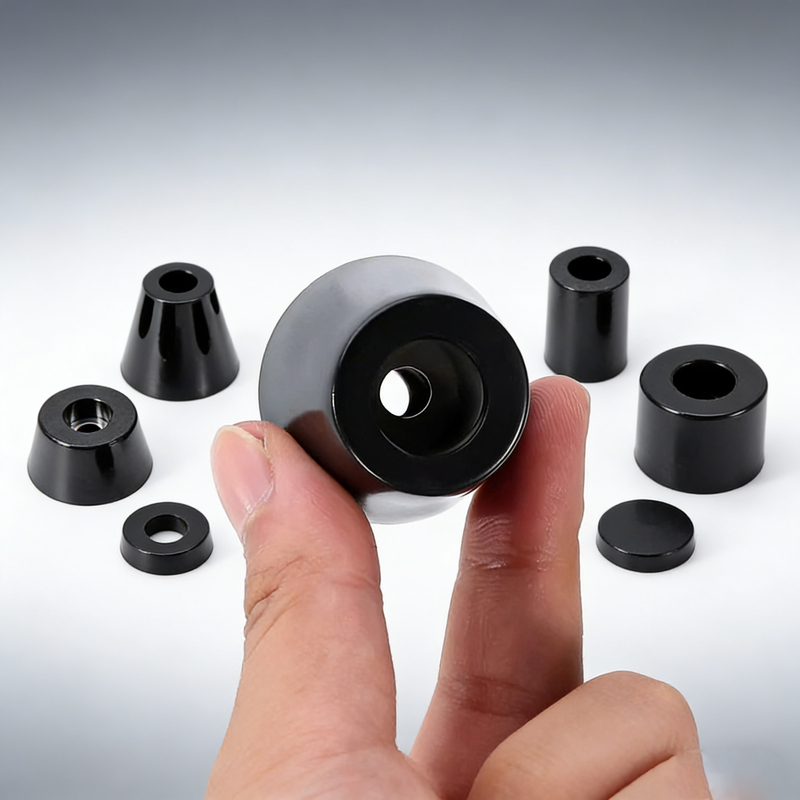
Equipment vibration can destroy your machinery and reduce its lifespan. Poor mount selection leads to costly repairs and downtime.
Selecting the right anti-vibration mounts1 requires understanding your equipment's load, frequency, and environment. Match the mount's material properties and damping characteristics2 to your specific application needs for optimal vibration control and equipment protection.


After 27 years in the rubber manufacturing industry, I have seen countless equipment failures caused by improper mount selection. The right choice can save you thousands in repairs and extend your equipment's life significantly.
What Are the Key Factors When Choosing Anti-Vibration Mounts?
Poor vibration control damages equipment and creates noise problems. Many engineers overlook critical selection factors.
Key factors include load capacity3, vibration frequency4, environmental conditions5, mounting orientation6, and material compatibility7. Consider deflection requirements8, temperature range9, chemical resistance10, and installation constraints11 for proper mount selection.
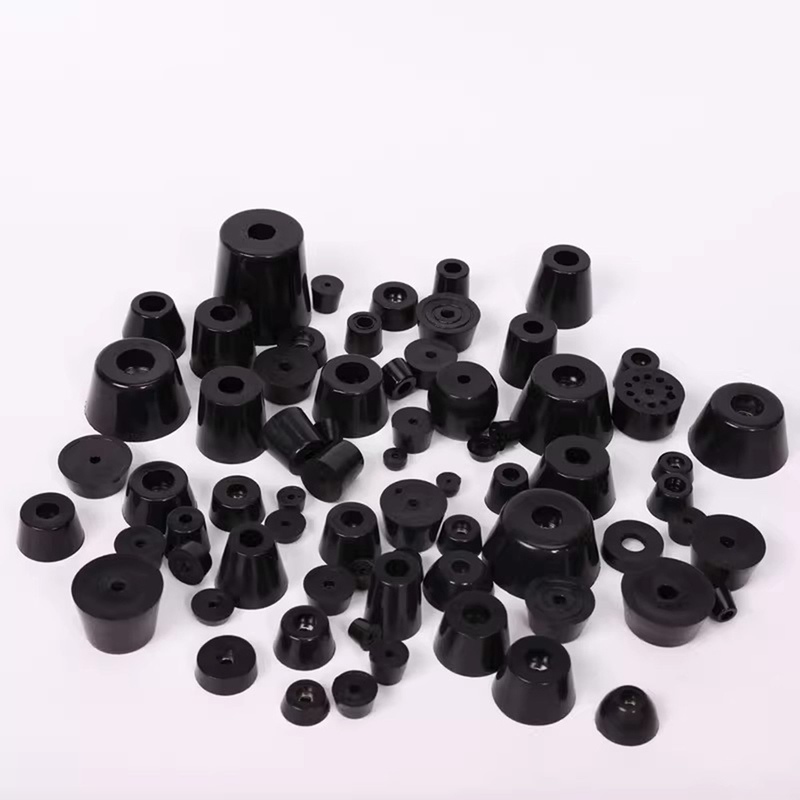
Load capacity forms the foundation of proper mount selection. You must calculate the static load12 each mount will carry. This includes the equipment weight plus any dynamic loads13 during operation. I remember a project where the customer calculated only the equipment weight. They ignored the dynamic forces from the rotating machinery. The mounts failed within six months because they were undersized.
Vibration frequency determines the mount's effectiveness. Different materials respond differently to various frequencies. Natural rubber works well for low-frequency applications. Silicone handles high-temperature and high-frequency vibrations better. EPDM provides excellent weather resistance for outdoor installations.
| Mount Material | Best Frequency Range | Temperature Range | Key Benefits |
|---|---|---|---|
| Natural Rubber | 5-100 Hz | -40°C to +80°C | High damping, cost-effective |
| Silicone | 10-1000 Hz | -60°C to +200°C | Temperature stability, chemical resistance10 |
| EPDM | 5-200 Hz | -40°C to +120°C | Weather resistance, ozone protection |
| Neoprene | 10-500 Hz | -40°C to +100°C | Oil resistance, flame retardant |
Environmental conditions affect mount performance and lifespan. Temperature extremes can change the mount's stiffness and damping properties. Chemical exposure can degrade certain materials. UV radiation breaks down some rubber compounds. I worked with a customer who installed natural rubber mounts outdoors. The mounts cracked and failed within two years due to ozone exposure. We replaced them with EPDM mounts that lasted over ten years in the same conditions.
How Do You Calculate the Correct Mount Stiffness and Damping?
Wrong stiffness calculations lead to poor vibration isolation. Many people guess instead of calculating properly.
Mount stiffness should be 10-20 times lower than the disturbing frequency to achieve effective isolation. Calculate the natural frequency14 using the formula: fn = 1/(2π) × √(k/m), where k is stiffness and m is mass.
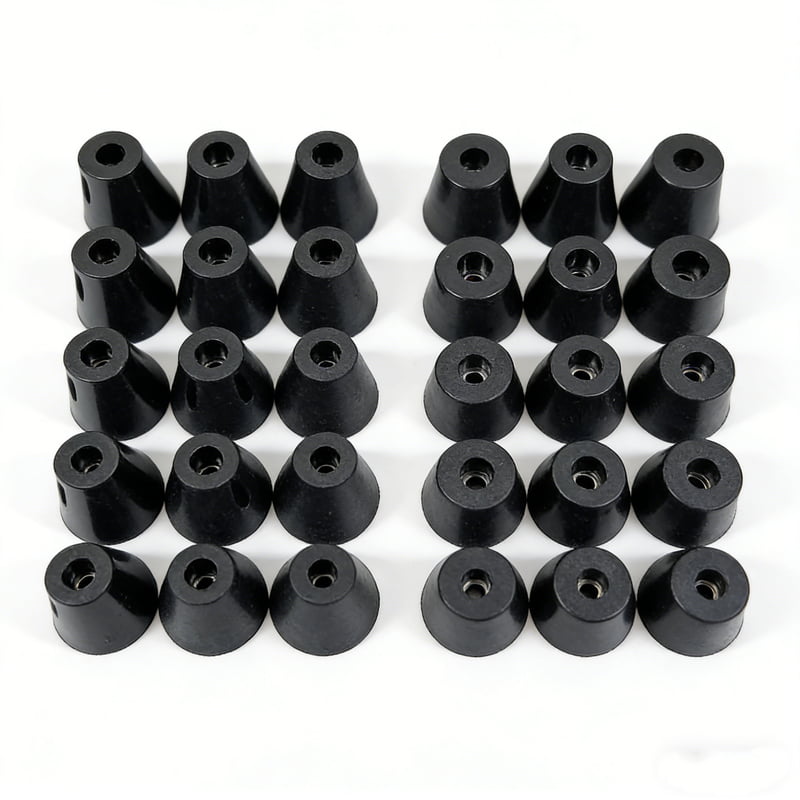
The transmissibility curve shows how well a mount isolates vibration. Below the natural frequency14, the mount amplifies vibration. Above √2 times the natural frequency14, it provides isolation. The isolation improves as the frequency ratio increases. This is why we target a natural frequency14 much lower than the disturbing frequency.
Damping controls resonance amplitude but reduces high-frequency isolation. Too much damping prevents effective isolation at higher frequencies. Too little damping allows excessive motion at resonance. Most applications work best with damping ratios between 0.05 and 0.15.
I once helped a customer with a compressor that vibrated excessively. The original mounts had the wrong stiffness. The compressor's operating frequency was 25 Hz. The mounts had a natural frequency14 of 22 Hz, which amplified the vibration. We calculated new mounts with a natural frequency14 of 4 Hz. The vibration levels dropped by 80%.
Static deflection provides a quick stiffness check. For most applications, target 2-6 mm of static deflection under full load. More deflection gives better isolation but may cause stability problems. Less deflection provides poor low-frequency isolation.
Mount orientation affects stiffness and load distribution. Compression mounts handle higher loads than shear mounts. Shear mounts provide better isolation in some applications. Combined compression-shear mounts offer versatility but require careful design.
What Common Mistakes Should You Avoid in Mount Selection?
Poor mount selection wastes money and damages equipment. I have seen the same mistakes repeated many times.
Common mistakes include ignoring environmental conditions5, undersizing for dynamic loads13, choosing wrong materials for the application, poor installation practices, and failing to consider maintenance requirements15 over the equipment's lifetime.
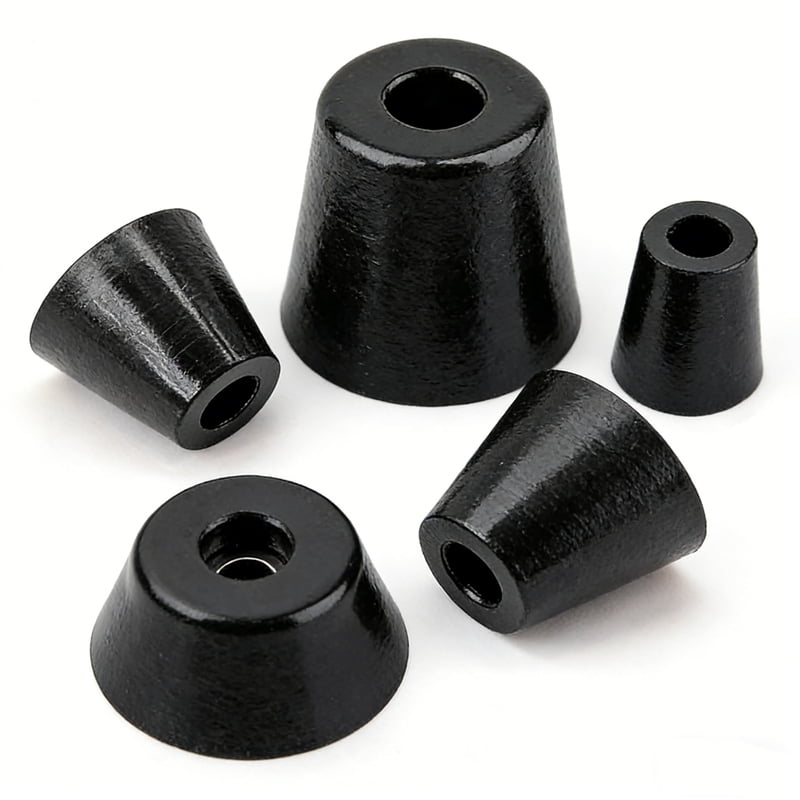
Ignoring environmental conditions5 causes premature failure. One customer installed standard rubber mounts in a chemical processing plant. The mounts dissolved within months due to chemical attack. We replaced them with fluorocarbon mounts that resisted the chemicals. The new mounts lasted over five years without problems.
Undersizing for dynamic loads13 leads to mount failure. Static calculations miss the dynamic forces from equipment operation. Reciprocating machinery creates much higher dynamic loads13 than rotating equipment. Impact loads from sudden starts and stops stress the mounts beyond their design limits.
Wrong material selection affects performance and lifespan. Some engineers choose based on price alone. Others select familiar materials without considering the specific application. Natural rubber costs less but fails in high-temperature applications. Silicone costs more but handles extreme temperatures. The total cost of ownership often favors the more expensive material.
Poor installation practices negate good mount selection. Misaligned mounts create uneven loading. Overtightened fasteners preload the mounts incorrectly. Missing washers allow bolt heads to damage the mount material. We provide detailed installation instructions with our mounts to prevent these problems.
Failing to plan for maintenance creates long-term issues. Some mount designs make inspection difficult. Others require special tools for replacement. Consider accessibility during the design phase. Plan inspection schedules based on the application severity. Replace mounts before they fail completely.
Temperature cycling accelerates mount aging. Many applications have temperature variations that stress the mount material. Outdoor equipment sees daily temperature cycles. Some processes have heating and cooling phases. Choose materials that handle the expected temperature range9 with adequate safety margins.
How Do You Test and Validate Mount Performance?
Testing confirms your mount selection works correctly. Many people skip this step and discover problems later.
Validate mount performance through vibration measurements16, deflection checks, load testing17, and long-term monitoring18. Compare actual performance against design predictions to verify proper selection and identify potential improvements.
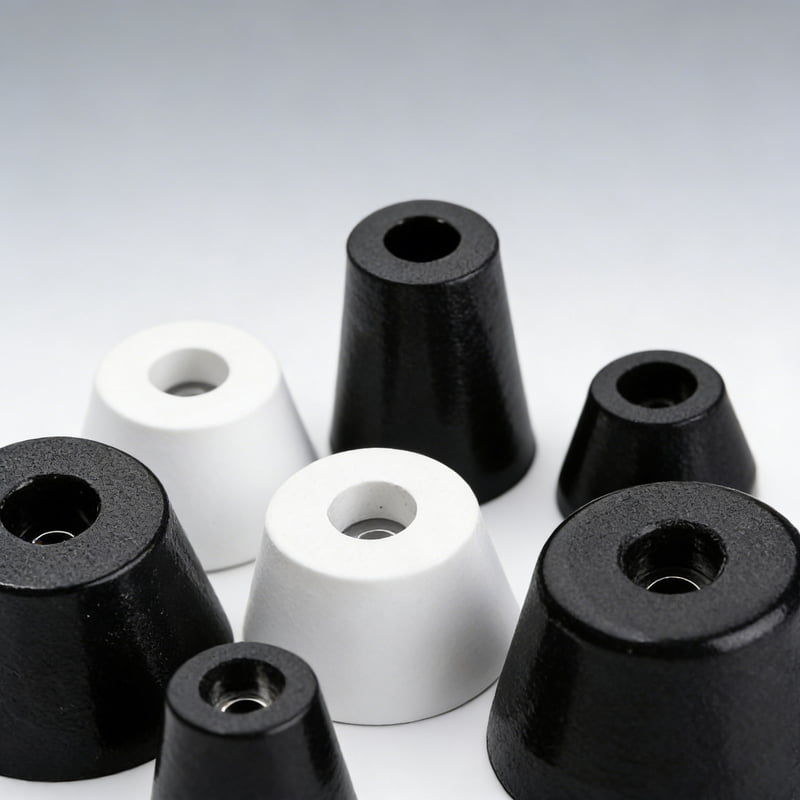
Vibration measurements show the mount's effectiveness. Measure vibration levels before and after mount installation. Use accelerometers to capture the full frequency range. Compare the results against your isolation targets. Good mounts should reduce vibration by 80-95% at frequencies above the isolation range.
Deflection checks verify proper loading. Measure the static deflection under full equipment load. Compare this against your calculations. Large differences indicate problems with the load distribution or mount stiffness. Uneven deflection between mounts shows alignment issues.
Load testing confirms the mount's capacity. Apply the maximum expected load and check for excessive deflection or damage. Cycle the load to simulate normal operation. Look for permanent deformation or cracking. Quality mounts should handle 150% of their rated load without permanent damage.
Long-term monitoring catches developing problems. Set up regular inspection schedules. Check for cracks, hardening, or softening of the mount material. Monitor vibration levels over time. Increasing vibration often indicates mount degradation before visible damage appears.
I worked with a customer who experienced gradual vibration increases over several months. Regular monitoring showed the trend before equipment damage occurred. Investigation revealed that oil leaks were attacking the mount material. We switched to oil-resistant mounts and added leak protection. The problem disappeared.
Temperature monitoring helps predict mount life. Track the actual temperatures the mounts experience. Compare these against the material's temperature ratings. High temperatures accelerate aging. Plan replacement schedules based on actual operating conditions rather than theoretical calculations.
Conclusion
Proper anti-vibration mount selection protects equipment and reduces maintenance costs. Consider all factors including load, frequency, environment, and installation requirements for optimal results.
Explore expert insights on selecting the right anti-vibration mounts to enhance equipment longevity. ↩
Explore how damping characteristics influence vibration control and mount performance. ↩
Understanding load capacity is crucial for mount selection; find detailed guidelines to ensure optimal performance. ↩
Learn how vibration frequency impacts mount effectiveness and how to choose accordingly. ↩
Discover how different environments influence mount performance and lifespan. ↩
Explore how mounting orientation can affect load distribution and isolation effectiveness. ↩
Find out which materials work best for specific applications to avoid premature failure. ↩
Learn about deflection requirements to ensure effective isolation and stability. ↩
Explore the importance of selecting mounts that can withstand specific temperature ranges. ↩
Discover why chemical resistance is vital for mount longevity in harsh environments. ↩
Understanding installation constraints can prevent future issues; find out more. ↩
Learn the importance of calculating static load to ensure proper mount selection. ↩
Understanding dynamic loads is key to preventing mount failure; explore this critical concept. ↩
Get insights on calculating natural frequency to achieve effective vibration isolation. ↩
Learn about maintenance practices to extend the life of your anti-vibration mounts. ↩
Learn the techniques for measuring vibration to validate mount performance. ↩
Find out how to conduct load testing to ensure mounts can handle expected loads. ↩
Discover strategies for long-term monitoring to catch potential issues early. ↩