

Are you tired of watching your production line fail because of cheap rubber sheets that crack under pressure?
Industrial rubber sheets1 deliver superior performance through precise material formulation2, targeted application design, and rigorous quality control3 that prevents costly production downtime and equipment damage.
I have seen too many factories make the same costly mistake. They choose generic rubber sheets based on price alone, only to face production shutdowns weeks later.
Why Do Generic Rubber Sheets Fail Your Production Line?
Most manufacturers face this painful reality when their equipment breaks down unexpectedly.
Generic rubber sheets contain high amounts of recycled rubber4 and cheap fillers like calcium powder, which dramatically reduces tear strength and dynamic fatigue life5 despite meeting basic appearance standards.
Let me share a real example that highlights this problem. A mining company installed 20mm thick "wear-resistant" rubber liners on their heavy ore conveyor system. The supplier had reduced natural rubber content to cut costs. Within one month, the liners shattered into pieces under continuous ore impact. This caused several days of downtime, and replacement costs were ten times the original purchase price.
The core issue lies in the material formulation2. Many suppliers prioritize low prices over performance. They use excessive amounts of recycled rubber4 or inferior fillers. These materials may look good initially. They might even pass basic hardness tests. However, they lack the molecular structure needed for industrial applications.
Recycled rubber loses its cross-linking density during the reclamation process. This makes it prone to fatigue failure under repeated stress. Cheap fillers like calcium carbonate reduce the rubber's ability to absorb impact energy. The result is premature cracking and delamination.
Temperature resistance also suffers with poor formulations. Generic sheets often become sticky and deform at elevated temperatures. This creates safety hazards and contamination issues in food processing or pharmaceutical applications.
How Can Material Selection Transform Your Operations?
The wrong material choice creates a cascade of problems that affect your entire operation.
Proper material selection based on tensile strength6, elongation properties7, and environmental resistance8 ensures rubber sheets maintain structural integrity throughout their intended service life.
You need to understand the specific demands of your application. Oil resistance requires NBR (nitrile) compounds. Chemical resistance needs EPDM formulations. Anti-static properties require conductive carbon black additives. No single rubber compound can solve every industrial challenge.
Physical property data becomes your most important selection tool. Tensile strength indicates how much force the material can withstand before breaking. Values below 10 MPa suggest poor quality compounds. Elongation at break shows flexibility and impact absorption capability. Materials with less than 300% elongation often crack under dynamic loading.
Shore hardness9 affects both performance and application suitability. Softer compounds (60-70 Shore A) provide better sealing and vibration dampening. Harder materials (80-90 Shore A) offer superior wear resistance for high-abrasion environments.
Temperature range specifications prevent costly failures. Standard rubber degrades rapidly above 80°C. High-temperature compounds maintain properties up to 200°C or higher. Cold temperature flexibility ensures materials remain pliable in refrigerated environments.
Chemical compatibility charts help you avoid catastrophic failures. Incompatible chemicals cause swelling, hardening, or complete dissolution. This leads to contamination and equipment damage that far exceeds material costs.
What Manufacturing Processes Ensure Reliable Performance?
Poor manufacturing processes create hidden defects that cause unexpected failures.
Advanced vulcanization control10, precise compound mixing11, and comprehensive quality testing12 ensure rubber sheets deliver consistent performance under demanding industrial conditions.
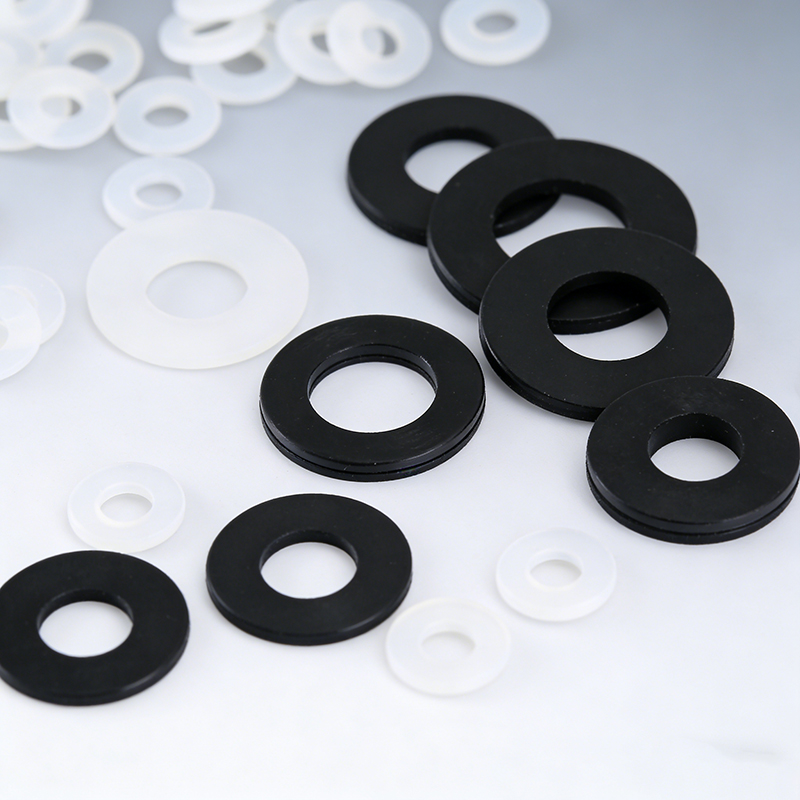
Vulcanization represents the most critical manufacturing step. This process creates cross-links between polymer chains that give rubber its elastic properties. Temperature and time must be precisely controlled. Under-vulcanized rubber remains sticky and weak. Over-vulcanized material becomes brittle and prone to cracking.
We monitor vulcanization curves throughout production. These graphs show how the rubber's properties develop during heating. Peak torque indicates optimal cross-link density. Reversion points reveal when degradation begins. This data ensures every batch meets specification requirements.
Compound mixing requires careful attention to ingredient distribution. Uneven mixing creates weak spots that fail under stress. Carbon black must be thoroughly dispersed to provide uniform reinforcement. Accelerators and activators need complete integration for consistent vulcanization.
Calendering operations control thickness uniformity and surface finish. Uneven thickness creates stress concentrations that lead to premature failure. Surface defects allow crack initiation and propagation. Our multi-roll calenders maintain thickness tolerance within ±0.05mm across the entire sheet width.
Quality testing validates every production run. Tensile testing confirms strength properties. Tear resistance testing evaluates crack propagation resistance. Compression set testing measures long-term elastic recovery. These tests identify potential problems before materials reach your facility.
Batch traceability systems track every ingredient and process parameter. This enables rapid problem resolution if issues arise. Complete documentation supports regulatory compliance and quality audits.
How Do Custom Solutions Address Specific Challenges?
Standard products rarely match your exact requirements and operating conditions.
Custom rubber sheet formulations address specific environmental challenges, load requirements, and dimensional constraints that standard products cannot accommodate effectively.
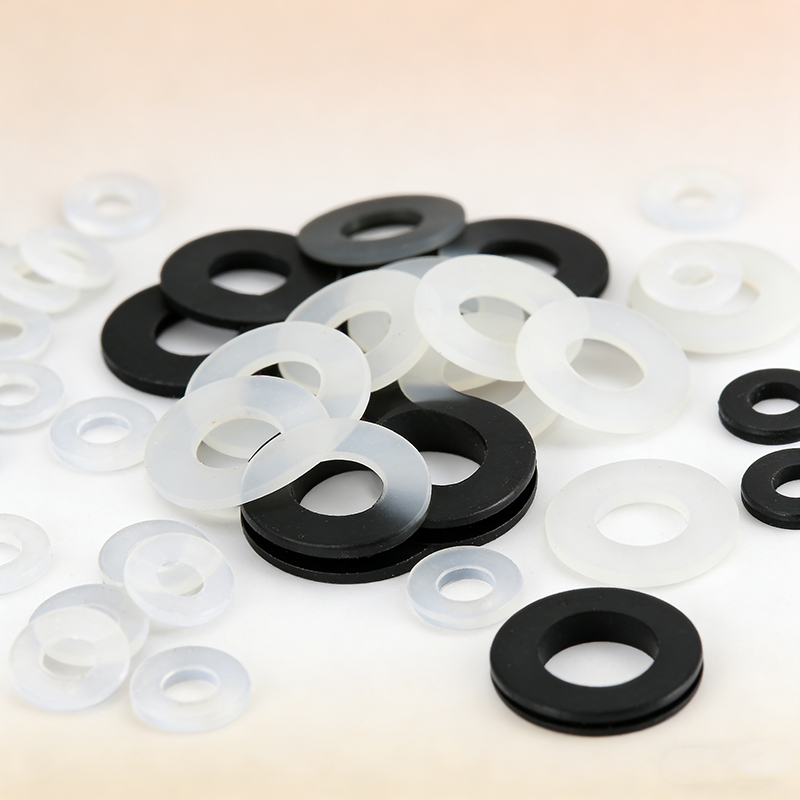
Every industrial application presents unique challenges that require tailored solutions. Conveyor systems need specific friction coefficients for proper material handling. Gasket applications require precise compression characteristics for effective sealing. Vibration isolation demands specific dynamic properties for noise control.
Environmental factors significantly influence material selection. UV exposure requires special antioxidants and UV stabilizers. Ozone resistance needs specific polymer types like EPDM or silicone. Oil contamination mandates nitrile compounds with appropriate acrylonitrile content.
Load analysis determines thickness and durometer requirements. Static loads require different properties than dynamic applications. Impact loading needs high tear strength and energy absorption capability. Continuous flexing demands excellent fatigue resistance.
Temperature cycling creates additional stress through thermal expansion and contraction. Materials must maintain flexibility at low temperatures while resisting degradation at high temperatures. Thermal conductivity affects heat dissipation in electrical applications.
We conduct application analysis to understand your specific requirements. This includes stress calculations, environmental assessment, and performance criteria definition. Our engineering team designs compounds that optimize properties for your exact conditions.
Prototype testing validates design assumptions before full production. Small-scale trials identify potential issues and allow refinement. This approach prevents costly mistakes and ensures optimal performance from day one.
What Quality Systems Protect Your Investment?
Inadequate quality control3 systems allow defective materials to reach your production line.
Comprehensive quality management systems13 including incoming inspection, process monitoring, and final testing ensure rubber sheets meet specifications and deliver reliable long-term performance.
Quality begins with raw material inspection. Every polymer batch undergoes testing for molecular weight, viscosity, and purity. Fillers are analyzed for particle size distribution and chemical composition. Additives must meet purity standards to prevent contamination.
In-process monitoring prevents quality drift during production. Temperature sensors track vulcanization profiles. Pressure gauges monitor calendering forces. Thickness measurements ensure dimensional accuracy throughout production runs.
Statistical process control identifies trends before they affect product quality. Control charts track key parameters over time. Capability studies demonstrate process stability and consistency. This data-driven approach prevents quality problems rather than detecting them after occurrence.
Final inspection validates every quality attribute. Physical property testing confirms mechanical performance. Dimensional inspection ensures geometric accuracy. Visual examination identifies surface defects that could affect performance.
Traceability systems link every product to its production history. Batch records document all materials and process conditions. This information enables rapid problem resolution and supports continuous improvement efforts.
Customer feedback loops provide real-world performance data. Field failure analysis improves future designs. Application studies validate performance predictions. This knowledge base enhances our ability to solve challenging applications.
Conclusion
Industrial rubber sheets1 deliver maximum value through proper material selection, advanced manufacturing processes, and comprehensive quality systems that prevent costly production failures.
Explore how industrial rubber sheets can enhance your production efficiency and reduce downtime. ↩
Learn about the critical role of material formulation in ensuring rubber sheets meet industrial demands. ↩
Discover effective quality control measures that can prevent costly production failures. ↩
Understand the limitations of recycled rubber and its impact on performance. ↩
Gain insights into how dynamic fatigue life affects the longevity of rubber products. ↩
Learn how tensile strength influences the durability and performance of rubber materials. ↩
Discover how elongation properties affect the flexibility and impact absorption of rubber sheets. ↩
Learn about the importance of environmental resistance in choosing the right rubber for your needs. ↩
Understand the significance of Shore hardness in selecting the right rubber for your application. ↩
Explore the importance of vulcanization control in achieving optimal rubber properties. ↩
Discover how proper compound mixing can enhance the performance of rubber sheets. ↩
Understand the various quality tests that validate the performance of rubber materials. ↩
Explore comprehensive quality management systems that ensure reliable rubber sheet performance. ↩