

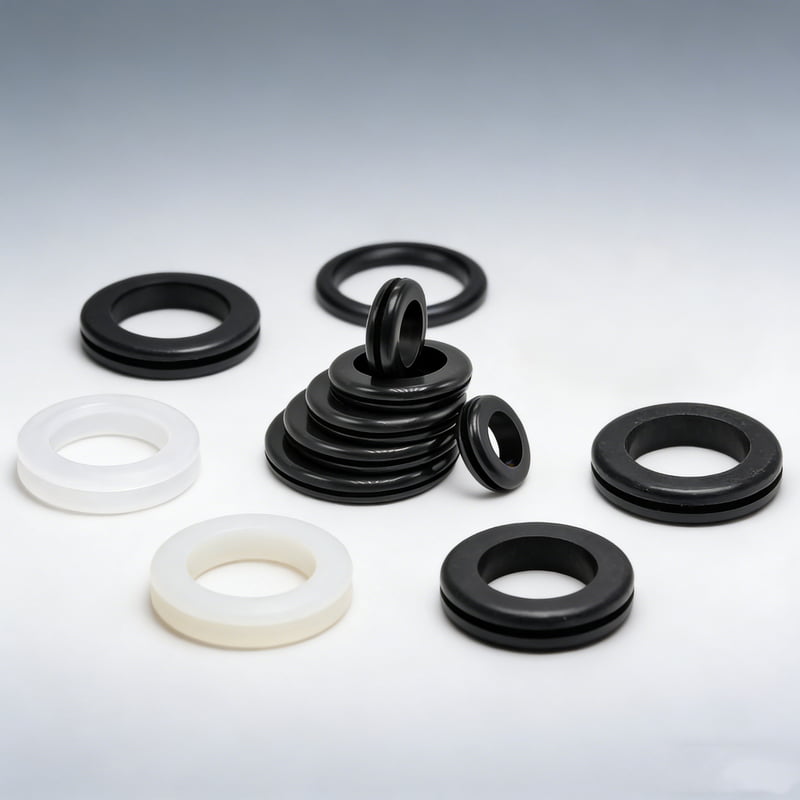
Rubber gaskets1 are crucial components in many applications. Yet, many people misunderstand how they function entirely.
Rubber gaskets1 work by creating a seal that prevents leaks through compression. This involves establishing a contact pressure2 that ensures the gasket functions correctly. Without this understanding, many projects encounter the same pitfalls.
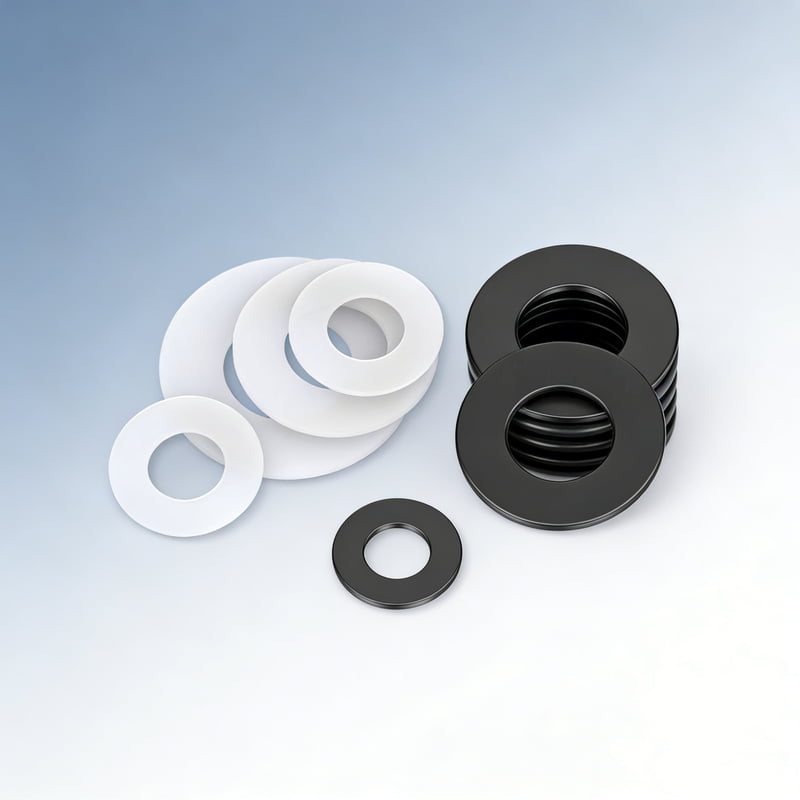
In my experience, the primary misconception about rubber gaskets is viewing them as mere fillers. This leads to significant issues that can affect the integrity of a project. The biggest mistake is treating sealing as just filling the gap, rather than acknowledging the force required for a proper seal.
What is the real principle behind rubber gaskets?
Many people think that rubber gaskets simply fill the gaps to prevent leaks. While this is partially true, it misses a vital point. The real principle is that gaskets work through compression, which produces contact pressure2 for sealing.
This means that rubber gaskets do not just seal by being placed in a gap. They need to operate under specific compressive conditions.
This understanding is crucial. When you wrongly assume that just filling the space is enough, you can face issues such as:
-
Inadequate compression: This may look acceptable but lacks actual sealing force, leading to leaks under pressure, vibration, or temperature changes.
-
Improper compression methods: This results in uneven force distribution. Some areas may seal while others fail.
I’ve observed a typical situation where a device casing project had a tight design. It seemed fine at first glance. The gasket fit matched well, and assembly went smoothly. Yet, it developed intermittent water leaks during actual use.
Upon disassembly, we found that while the gasket filled the gap, the compression was not uniform. Some spots received almost no compression. Although static testing was successful, dynamic conditions like vibration and temperature fluctuation caused the failure.
To resolve this, we redesigned the structure to ensure more even compression, completely fixing the issue.
How can you avoid these common pitfalls?
If you are evaluating rubber sealing solutions, focus on these three key aspects:
-
Clear compression design3: Ensure that compression is not just about matching sizes. Verify how much compression is expected (typically a range of 20%–30%) and whether it can be achieved uniformly. Without a solid compression design3, sealing success depends too much on chance.
-
Continuous force pathway: For effective sealing, there has to be consistent contact pressure2 all around the gasket. Avoid designs where parts are unsupported or under-compressed.
-
Test dynamic states4: Many sealing issues arise during conditions like vibration, temperature shifts, or pressure fluctuations. If you only conduct static tests, you risk misjudging the effectiveness of the seal.
What should suppliers do to address these issues?
Honestly, many challenges arise not from the products themselves but from misunderstandings. If production is merely based on the drawings, risks are hard to avoid. A more reasonable approach involves:
- Confirming the force application methods5 early on,
- Assessing whether the compression is appropriate,
- Offering structural or hardness optimization suggestions,
- Validating the actual force state through samples when necessary.
Often, just minor adjustments to the structure or hardness can change the sealing performance6 dramatically.
Final thoughts on rubber gaskets
The essence of rubber gaskets is not simply to fill spaces but to create stable contact pressure2. I have personally gone through the transition from only focusing on dimensions to understanding the importance of force application. After experiencing the pitfalls, I learned this key lesson.
Now, whenever I develop a solution, I always check one thing: "How is this seal being compressed?" Once I understand this, I can be confident that the sealing will perform well.
If you’re working on related designs or are unsure if your current sealing structure is sound, feel free to share your application scenario. I can help you assess and mitigate risks early on.
Explore the advantages of rubber gaskets to enhance your understanding of their importance in various sealing applications. ↩
Learn about the critical role of contact pressure in ensuring effective sealing and preventing leaks. ↩
Find out the best practices for compression design to ensure optimal sealing performance in your applications. ↩
Understand the significance of testing in dynamic conditions to ensure reliable sealing under real-world scenarios. ↩
Explore effective methods for applying force to rubber gaskets to enhance sealing performance and reliability. ↩
Investigate the various factors that impact sealing performance to ensure your designs are effective and reliable. ↩