

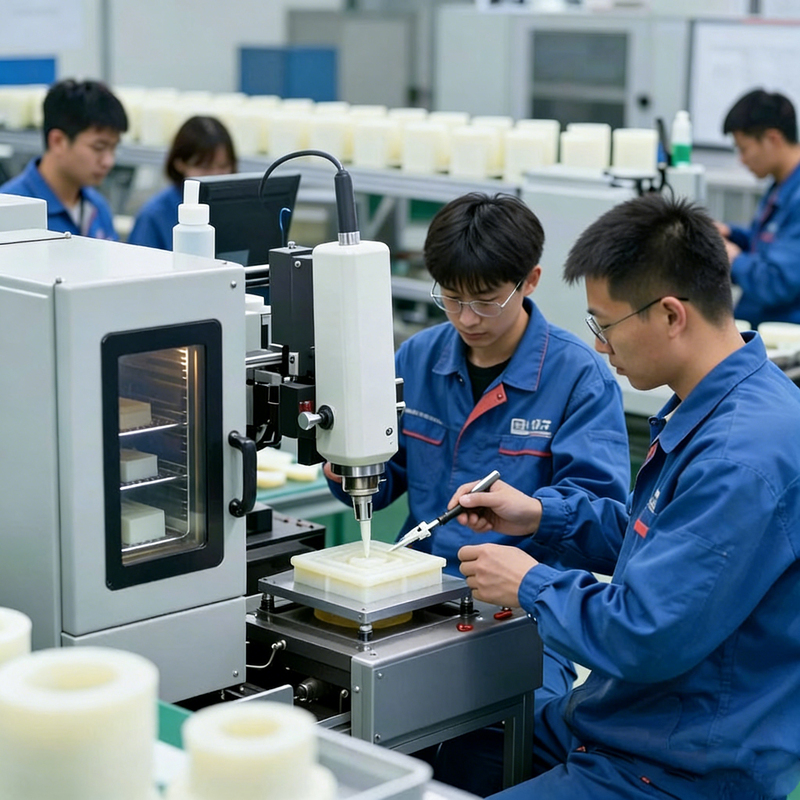
When it comes to custom rubber manufacturing1, choosing the wrong partner often leads to problems from the start.
Many projects I have been involved with have hit roadblocks. Some struggled with repeated mold modifications2, while others faced inconsistent batches or assembly issues.
If I had to sum up one key pitfall, it would be this:
👉 Selecting a supplier based only on price while ignoring engineering capabilities3.
This is a common mistake that is often underestimated.
How does this trap happen?
When people search for a custom rubber manufacturer, the process is usually straightforward:
Send the drawings. Compare prices. Choose the lowest one.
This seems reasonable, but the reality is:
👉 Rubber components are not standard parts; they heavily rely on engineering experience.
If the partner is just a "processing factory" rather than an "engineering supplier," issues will arise:
Problems in the drawings go unnoticed. Wrong materials are still produced. Mold designs are unreasonable, leading to repeated modifications.
The outcome is clear:
👉 Money saved initially will cost you time and risk later.
A typical example:
I once took over a project that was already in mass production but faced constant problems:
👉 Within the same batch, size fluctuations were significant, and assembly was unstable.
They had initially chosen a low-cost solution.
When I stepped in, the problem was straightforward:
👉 The mold design did not consider structural stress and shrinkage variations.
More importantly:
👉 There was no engineering validation in the early stages.
We later made adjustments:
We optimized the mold structure. Stabilized material and process parameters.
In the end, the product stabilized.
How can you avoid this pitfall?
If you are filtering potential partners, I suggest you prioritize one thing:
👉 Does the partner have the capability to question your drawings?
A truly reliable team should:
Proactively point out potential risks. Suggest material or structural optimizations. Conduct engineering evaluations4 before mold development.
They should not simply say:
👉 "No problem, we can do it."
How do we operate?
In our company, I adhere to one principle for every project:
👉 Conduct engineering assessments before discussing price and production.
This includes:
Manufacturability assessments (DFM). Material matching analysis. Mold and shrinkage predictions. Real application scenario validation.
Because I know:
👉 The stability of rubber components is designed, not produced.
In closing,
If you are experiencing:
Repeated modifications, Quality instability, Changing suppliers but still facing the same issues,
It may not be bad luck; it could be that you selected the wrong partner from the start.
If you're willing, send me your drawings or background applications. My team and I can help identify risks early and provide more reliable solutions.
Sometimes, a truly suitable custom rubber manufacturer is not the one with the lowest quote, but the one that helps keep problems at bay.
Explore this link to understand the essential practices that ensure quality and reliability in custom rubber manufacturing. ↩
Discover common challenges with mold modifications and how to address them effectively in your projects. ↩
Learn why engineering capabilities are crucial for successful manufacturing and how they can prevent costly mistakes. ↩
Explore the role of engineering evaluations in manufacturing to identify potential risks and improve product stability. ↩