

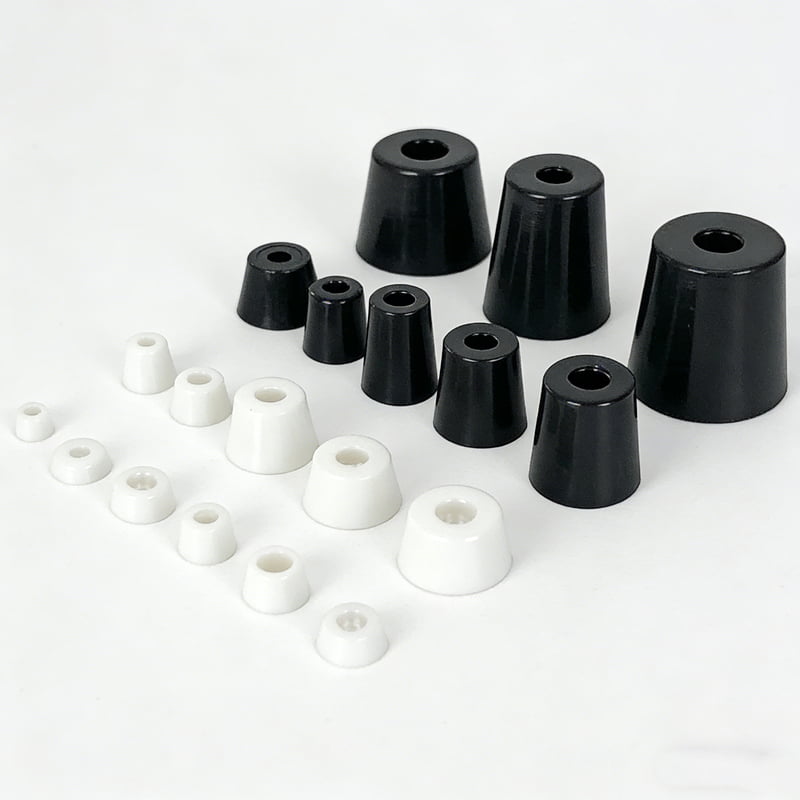
When it comes to machinery projects, Antivibration Machinery Mounts1 or Vibration Dampers are nearly standard. However, I often encounter a surprising situation:
👉 After installing the dampers, vibrations do not improve noticeably; instead, there are swaying, shifting, and even instability.
This isn’t a problem with the product itself. It's a very typical and critical "pitfall."
The biggest pitfall: Ignoring "load distribution2," leading to uneven force on each damper.
Many people choose dampers this way:
Total equipment weight ÷ Number of dampers = Weight per damper They select the model based on this value ✔
This seems logically correct but often does not hold up in reality.
I once participated in an installation project:
Total equipment weight: 800 kg Using 4 dampers Theoretical weight per damper: 200 kg
However, after actual operation, we encountered problems:
One side noticeably sank. The equipment had a slight tilt. The damping effect was unstable.
We re-measured and found that:
👉 The actual load distribution2 was:
Two points close to 300 kg The other two were under 100 kg
The result was: Some dampers were compressed "dead," while others hardly worked at all.
How can we avoid this issue?
If you are selecting dampers, I suggest confirming one thing first instead of directly calculating the average:
Where is the "center of gravity3" and "actual force distribution" of the equipment?
You can quickly assess this by checking:
Is there an eccentric structure (like a motor or compressor on one side)? Is the installation surface completely level? Are there dynamic loads4 (changes in the center of gravity3 during start/stop)?
A very practical experience is:
👉 Choose models based on the "heaviest load point," rather than the average.
You can also consider:
Using a combination of different load levels. Adjusting the structure to allow for more uniform force distribution. How did I help projects avoid this issue?
In actual projects, I do not just ask, "How heavy is the equipment?" I will certainly confirm further:
Location of the center of gravity3 Installation structure Presence of dynamic eccentric loads
Then we will:
Reallocate a reasonable load range for each damper. Suggest different model combinations if necessary, rather than using the same specification. Provide layout suggestions before installation, instead of just supplying products.
Many projects only adjusted the layout or model combinations, but the stability of the equipment improved significantly.
How Does Load Distribution Affect Performance?
When considering the effectiveness of Antivibration Machinery Mounts1, it’s essential to understand how load distribution2 impacts performance.
Effective vibration damping relies on even load distribution2 across all dampers. If one damper carries too much weight, it becomes ineffective. Meanwhile, other dampers may not engage at all. This creates instability.
Here’s a table summarizing how different factors affect load distribution2:
| Factor | Impact on Load Distribution |
|---|---|
| Eccentric Structures | Increases load on one side, causing imbalance. |
| Level Installation Surface | Uneven installation can lead to unequal weight distribution. |
| Dynamic Loads | Fluctuations in weight change load at various times. |
By examining these factors, you can better understand how to choose dampers that will effectively counteract vibrations and prevent instability.
Conclusion
Antivibration Machinery Mounts1 may seem like simple weight-bearing and damping solutions, but how forces are distributed truly affects their performance. If the forces are uneven, even the best dampers cannot function effectively.
Explore this link to understand the mechanics behind Antivibration Machinery Mounts and their importance in machinery projects. ↩
Learn about the critical role of load distribution in machinery performance and how to optimize it for better results. ↩
Discover the significance of the center of gravity in machinery and how it impacts stability and performance. ↩
Understanding dynamic loads is essential for effective machinery design; explore this link for in-depth insights. ↩