

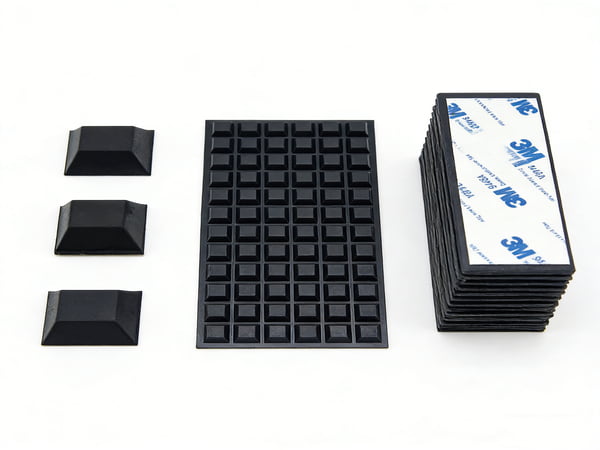
The right anti-vibration pads1 can make a huge difference. Choosing the wrong ones can negatively affect the precision and lifespan of your expensive equipment.
Choosing the right anti-vibration pads1 is crucial. Many people treat them as a low-cost consumable, but the wrong selection can cause more harm than good.
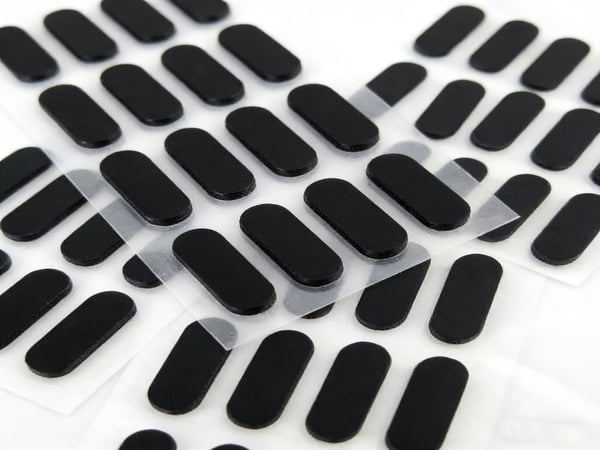
As a technical manager who has spent years solving equipment resonance issues in factories, I can tell you that many anti-vibration pads1 do not eliminate vibration. In fact, they can become accomplices in damaging bearings and precision components. Today, I want to uncover a hidden pitfall in the vibration isolation field: resonance amplification2 caused by incorrect hardness.
What is the Pitfall? Is Harder Always Better?
One of the biggest headaches is this: to support heavy equipment, you choose a rubber pad that seems sturdy and has a high hardness rating. But once installed, the noise from the equipment increases, and you may even feel a subtle vibration through the floor.
What’s the issue here? The essence of vibration isolation is damping balance. If the natural frequency of the anti-vibration pad is close to the operating frequency of the equipment (due to incorrect hardness), it will not absorb vibrations. Instead, resonance occurs.
Many suppliers do not ask about your equipment's RPM and load, simply handing you standard hardness rubber blocks. This one-size-fits-all approach prevents the vibration energy from being absorbed by the rubber molecular chains, leading to feedback into the internal components of the equipment. Over time, this causes overheating of motor bearings, drift in precision sensors, and even fatigue fractures in the overall structure of your machinery.
How Can You Avoid This Pitfall?
To ensure your equipment runs smoothly, you need to think beyond just the dimensions when selecting pads:
-
Check Static Compression Ratio3: True vibration calculations require knowing your equipment's single-point weight. This helps you calculate the percentage of rubber deformation under pressure, ensuring it falls within the optimal damping range.
-
Determine Equipment RPM (Interference Frequency): The rubber formulation and hardness needed for a 1400 RPM motor differ significantly from those required for a 3000 RPM centrifuge.
How Do Our Suppliers Solve the "Resonance Problem"?
I firmly believe that vibration isolation solutions should not be something you buy but rather something you calculate.
Last year, a partner producing high-precision CNC machines approached me. They experienced micro-vibrations at high speeds, leading to "ripples" on the machined parts' surfaces. Our technical team brought vibration analyzers on-site and discovered that the existing pads were too hard.
Instead of recommending an expensive imported option, we developed a gradient hardness nitrile rubber pad4 specifically for them. This structure provided strong support in the center while using a special wave design on the edges to absorb high-frequency micro-vibrations. Ultimately, not only did the ripples disappear, but the overall decibel level of the equipment also dropped by 15%.
Your Precision Engineering Deserves Scientific Support
You aim for extreme machining precision and equipment stability. You should not fall into pitfalls regarding vibration isolation.
If you face challenges with equipment resonance, excessive noise, or prematurely flattened anti-vibration pads1, please reach out to us. Our professional team has extensive experience in simulating working conditions and can provide comprehensive technical support from stress analysis to custom formulations.
Contact us, and let our expert vibration control technology5 safeguard your equipment.
Explore this link to discover top-rated anti-vibration pads that enhance equipment performance and longevity. ↩
Understanding resonance amplification is crucial for maintaining machinery efficiency; this resource provides in-depth insights. ↩
Learn why the Static Compression Ratio is vital for effective vibration isolation and how it impacts equipment performance. ↩
Discover the advantages of gradient hardness nitrile rubber pads for vibration control and precision engineering. ↩
Stay updated on the latest advancements in vibration control technology to enhance your equipment's performance. ↩